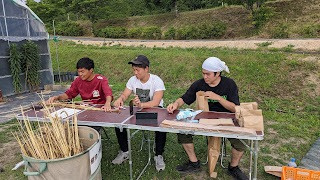
植物生命科学科研究室紹介!~コムギ遺伝資源の有効活用を目指して~【植物遺伝学研究室】
作成者有限会社アップルップル
作成日2016/04/26
コメント
サブカラムで使用しているエントリーリストを表示します| module_id | モジュールIDを指定します |
|---|
<!-- GET_Template id="entry_list" module_id="" -->
作成者有限会社アップルップル
作成日2016/04/26
コメント
デフォルトのヘッドラインを表示します| module_id | モジュールIDを指定します |
|---|
<!-- GET_Template id="headline_default" module_id="" -->
作成者有限会社アップルップル
作成日2016/04/26
作成者有限会社アップルップル
作成日2016/04/26
コメント
サマリーを表示します| module_id | モジュールIDを指定します |
|---|---|
| message | リード文を指定します |

5月1日~4日にかけて関西ボート連盟主催の朝日レガッタが開催されます。...
龍谷ミュージアム 春季特別展「ブッダのお弟子さん -教えをつなぐ物語-」展覧会図録とプレス内覧会のお知らせ(4月23日~6月19日)
【展覧会のポイント】 10人の弟子が十軀一具で揃う京都国立博物館蔵「重...
2022年3月30日18:00より龍谷大学犯罪学研究センターは、科学鑑定ユニッ...
【女子バレーボール部】2022年度関西大学バレーボール連盟春季リーグ戦(4/9~5/22)※UNIVASのHPで配信有
2022年度関西大学バレーボール連盟春季リーグ戦が開幕。 新型コロナウイ...
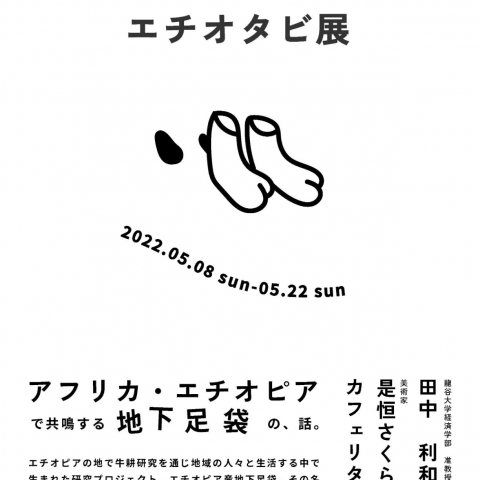
「エチオタビ展 in カフェリタ」初回イベントのお知らせ【経済学部】
田中 利和 准教授とカフェリタを運営する前田 滉太さん(国際学部グロ...

【端艇部】アジア競技大会(9 月:中国、 杭州)日本代表選手に卒業生2名が内定
本学端艇部で活躍した卒業生2名がアジア競技大会日本代表選手に内定しま...
<!-- GET_Template id="summary_imageMain" module_id="" message="" -->
作成者有限会社アップルップル
作成日2016/04/26
コメント
物件情報用カスタムフィールド画像を表示するためのサマリーですパラメーターがありません。
<!-- GET_Template id="summary_custom" -->
作成者有限会社アップルップル
作成日2016/04/26
作成者有限会社アップルップル
作成日2016/04/26
コメント
エントリー本文を表示します| module_id | モジュールIDを指定します |
|---|
【本件のポイント】
11月26日、27日に実施しました公募推薦入試(2教科型)(合格発表日12月9日)において、出題ミスが判明しました。
つきましては、その内容及び対応などにつきまして、下記のとおりお知らせいたします。
また、受験生ならびに関係者の皆様にはご迷惑をおかけしましたことを心からお詫び申しあげます。
本学では今後このようなことがないよう、再発防止に努める所存です。
【本件の概要】
1 出題ミスのあった科目
文系型 『国語』 11月26日実施分
※ 対象学部:文、経済、経営、法、政策、国際、心理、社会、農、短期大学部
2 出題ミス科目の受験者数
11月26日の文系型 『国語』 受験者数 合計4,452名
3 出題ミスの内容
対象設問: 〔三〕 問五 解答番号25
当該設問は、空所補充として選択させる問題で、問五の解答番号25に現代語訳で「召し上がる」を意味する動詞を選択させる問題でした。
空欄 A には、現代語訳で「召し上がる」を意味する動詞が入ります。補うものとして、最も適当なものを一つ選びなさい。
① まゐる ② きこしめす ③ さしあぐ ④ たぶ
正答は選択肢②「きこしめす」のみと企図しておりました。高校国語では「まゐる」について謙譲語として指導することが多いと思われます。しかし、派生義として「召し上がる」の義を含む尊敬語としての用法が存在します。設問文では、二重敬語などが多用される文脈であり、「きこしめす」が最適解だと考えておりましたが、それを判断することは高校国語の指導範囲を超えてしまっており、かつ問五の問題文では「召し上がる」に相当する語を選ぶよう限定してしまっておりました。そこで、選択肢①「まゐる」も正答となりうると判断いたします。
上記の理由により、①と②を正答にする対応が必要となりました。
4 出題ミスの発覚の経緯
試験実施後の問題精査を委託している外部精査機関からの指摘により発覚しました。
5 当該設問の配点 100点満点中の4点
6 出題ミスへの対応
当該設問については選択肢①および②を正答として取り扱います。
7 受験生への周知
本学Webサイトに本件に係る経緯及びその対応を掲出します。
<関連資料>「国語」(11月26日実施分)問題(当該部分)
本件に関するお問い合わせ:入試部 Tel 075-645-2187(担当:岡田・河合)

<関連資料>「国語」(11月26日実施分)問題(当該部分)
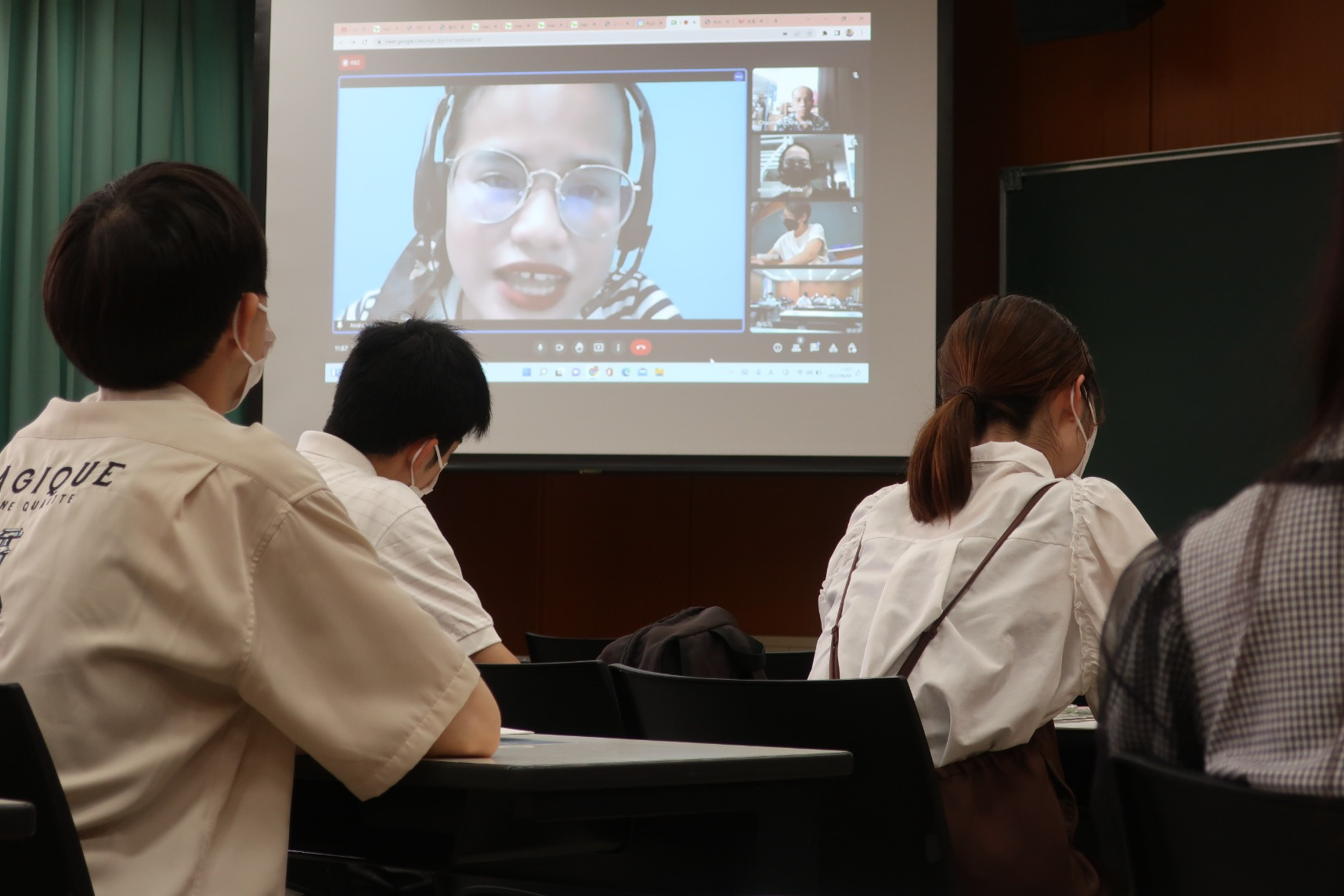
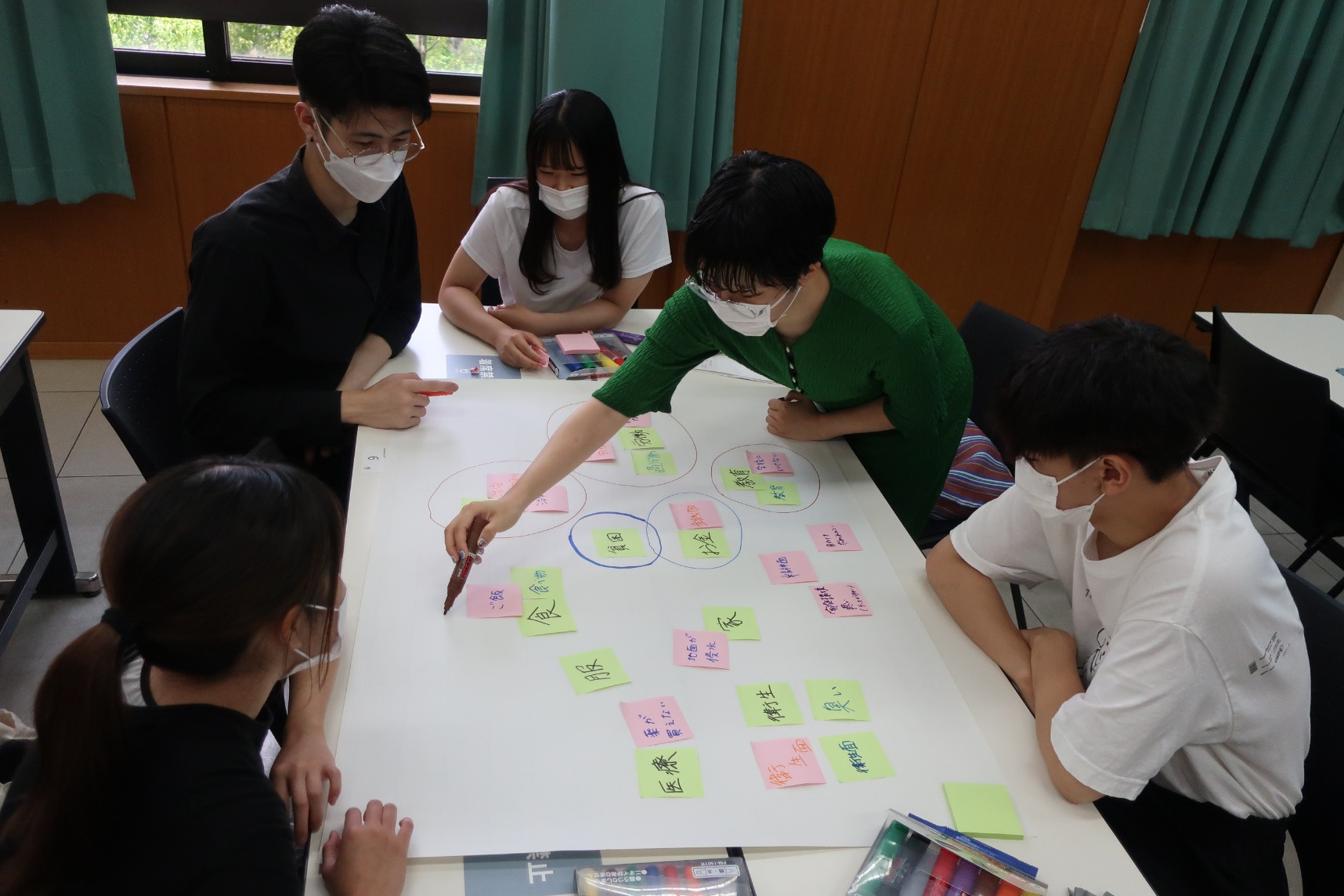
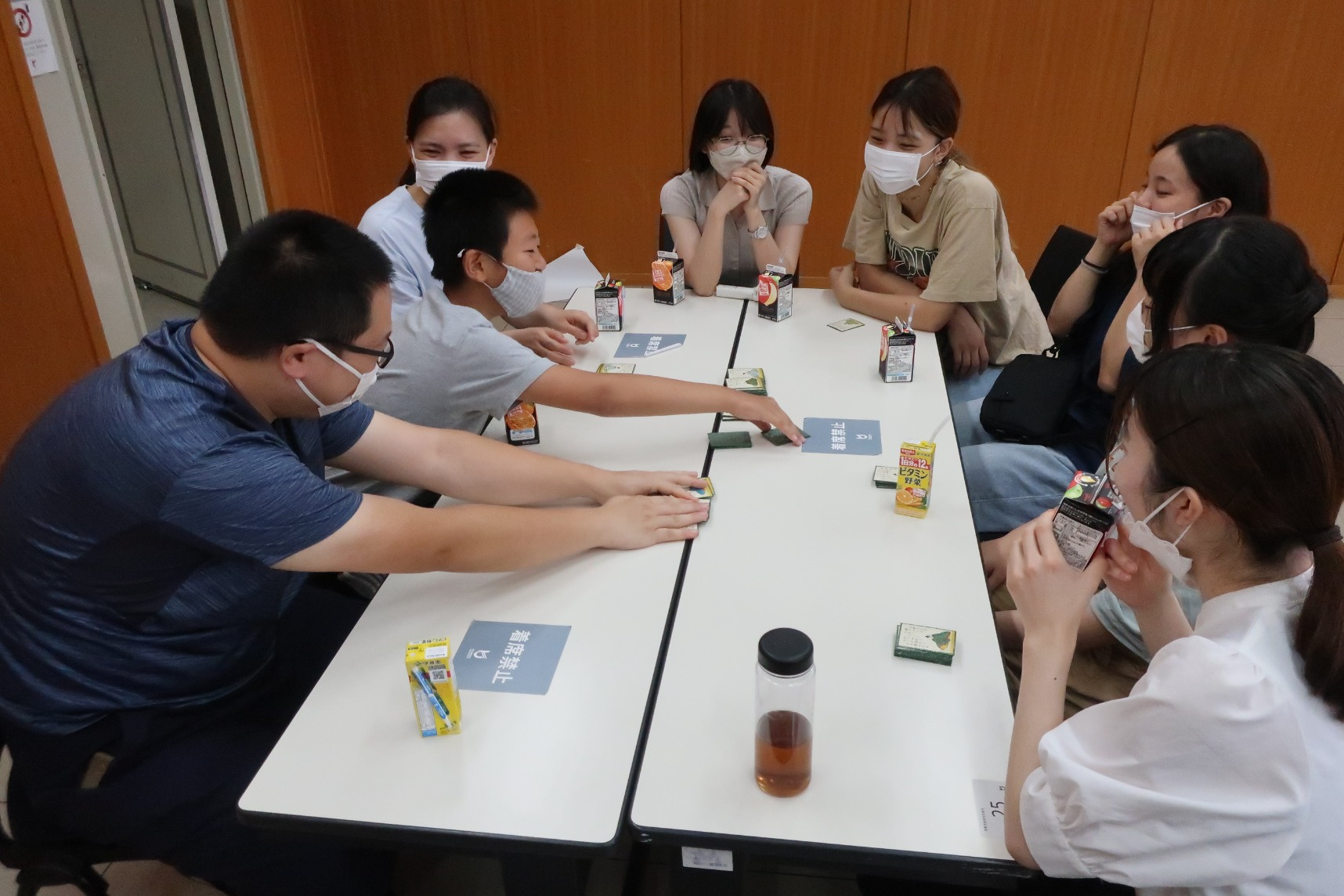
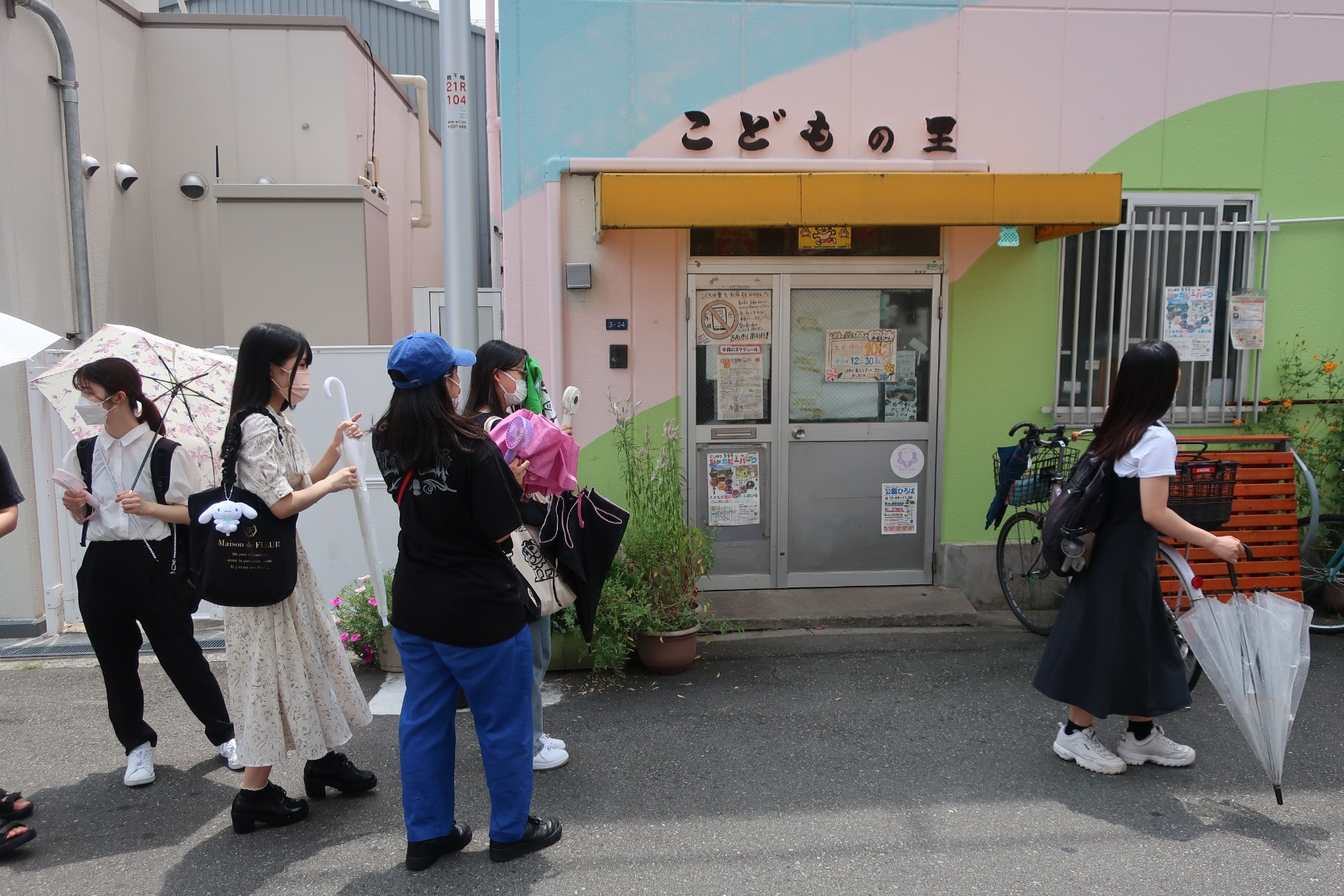
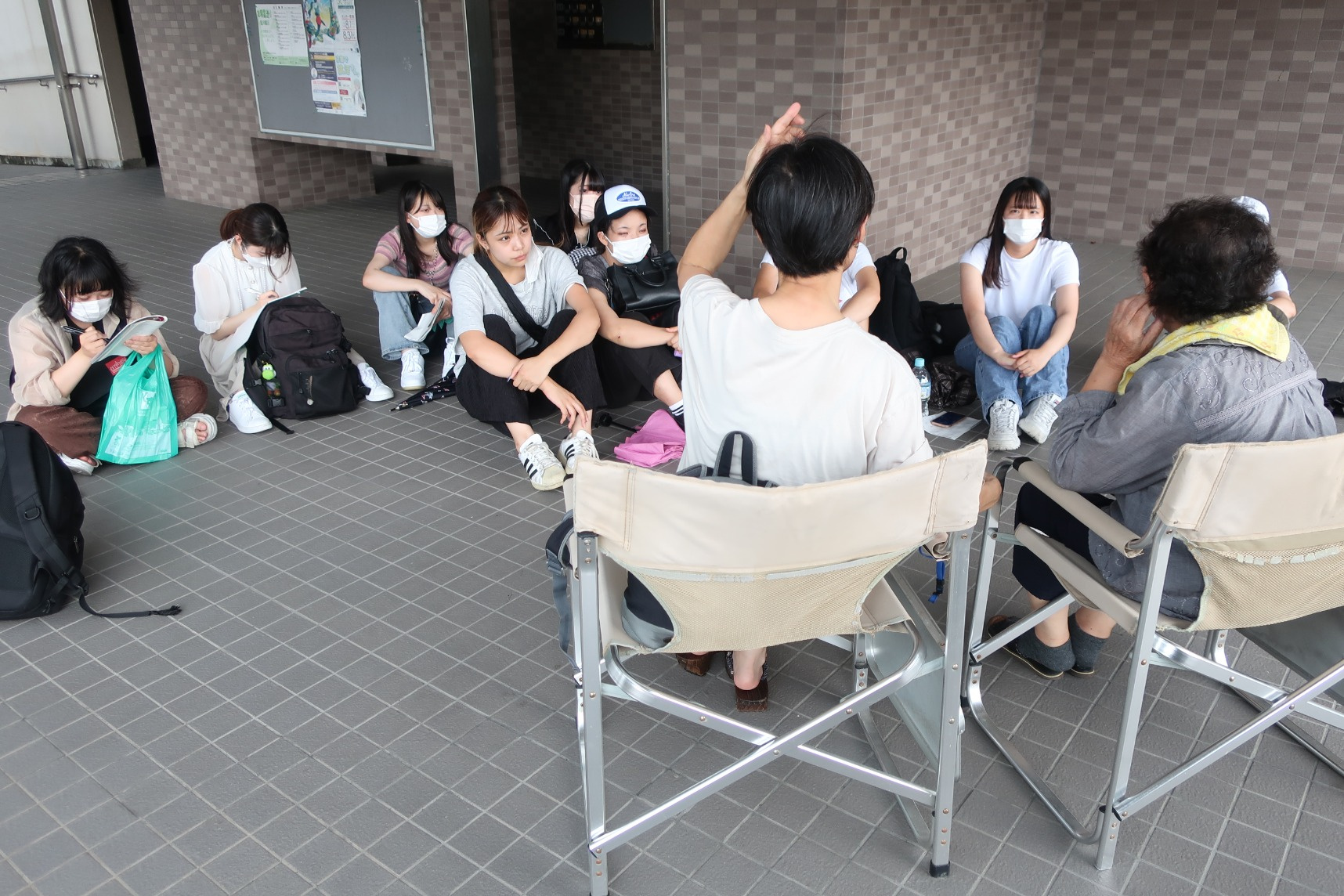
2022年度の国際福祉実習は、貧困・飢餓、戦争・暴力、差別・抑圧などの問題を抱えている現代社会を、豊かで、平和で、平等な多文化共生社会に変えていくための国際福祉の課題について幅広く学ぶことを目標として、新型コロナウイルス感染防止に配慮し、次のプログラムを実施しました。
(1)「海外研修」プログラム
※ フィリピンの社会福祉・歴史・NGOによる支援活動・国際協力等についての講義・ワークショップ、フィリピンのバーチャル・ツアーや現地住民とのオンラインでの交流等
(2)「在日中国人家族との交流」プログラム
※ 遊び、インタビュー、学内ツアーをとおした在日中国人家族との交流等
(3)「釜ヶ崎周辺フィールドワーク」プログラム
※ 釜ヶ崎周辺のまち歩き、釜ヶ崎周辺で店舗を経営する在日外国人によるレクチャー等
(4)「東九条フィールドワーク」プログラム
※ 東九条のまち歩き、東九条在住の在日コリアンとの交流等
上記の実習プログラムの終了後、実習での学びと関連の深い映画の視聴等をとおして、実習での学びを広げ、深めました。とくに、担当教員の南アフリカでの在留経験を活かし、実習での学びと関連付けながら、南アフリカでのアパルトヘイトに絡むさまざまな問題とその解決方法等について深く学びました。
入澤 崇・第19代学長の任期満了(2023年3月31日)にともなう選挙会を11月30日(水)に実施した結果、入澤 崇・文学部教授を再任しましたので、お知らせいたします。
なお、入澤 崇・文学部教授の略歴は下記のとおりです。
記
【龍谷大学学長】
任 期: 2023年4月1日から2025年3月31日まで
氏 名: 入澤 崇 (いりさわ たかし)教授(文学部仏教学科)
生 年 月 日: 1955年10月5日 (67歳)
出身地: 広島県
【専門分野】 仏教文化学
【最終学歴】 1982年3月 龍谷大学大学院文学研究科修士課程修了
1986年3月 龍谷大学大学院文学研究科博士後期課程単位取得満期退学
【学 位】 文学修士(龍谷大学)
【職 歴】
1990年4月 龍谷大学文学部講師
1996年4月 龍谷大学文学部助教授
2000年4月 龍谷大学経営学部助教授
2002年4月 龍谷大学経営学部教授
2010年4月 龍谷大学文学部教授(現在に至る)
2013年4月 龍谷大学龍谷ミュージアム館長
2015年4月 龍谷大学文学部長(~2017年3月)
2017年4月 龍谷大学学長(現在に至る)
【研究業績】
『仏教初伝南方之路文物図録』(共著・文物出版社)、『西域―流沙に響く仏教の調べ―』(共著・自照社出版)、『仏教の来た道』(共著・龍谷ミュージアム)、『ジャータカ物語』(単著・本願寺出版社)、『大谷光瑞の構想と居住空間』(共著・法蔵館)等、佐和隆研博士学術奨励賞受賞
【学会活動】 日本仏教学会、密教図像学会、仏教史学会 等
以上
問い合わせ先:学長室(広報) Tel 075-645-7882
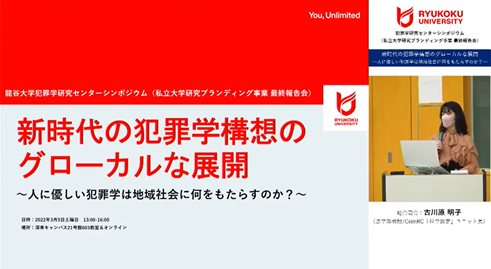
From 13:00 on March 5, 2022, the Criminology Research Center (CrimRC) at Ryukoku University held the “Criminology Research Center Symposium (Private University Research Branding Project, Final Report)” at the Fukakusa Campus while broadcasting the symposium on YouTube The symposium covered achievements and prospects from six years of research activities and was attended by around 110 people in total, including around 40 in person at the event site and around 70 watching the broadcast.
Overview
CrimRC was founded in June 2016 and in November of the same year was selected for the Private University Research Branding Project by the Japanese Ministry of Education, Culture, Sports, Science and Technology. CrimRC has sought to explain criminal phenomena from the standpoint of human, social, and natural sciences, and to formulate rational measures against crime grounded in interpersonal support.
This symposium was divided into two parts: Session 1 was a report of accomplishments titled “Towards Establishing a New Age in Criminology,” and Session 2 was a talk session titled “Glocal Development: What does Criminology Bring to the Community?” The symposium was moderated by Professor Akiko Kogawara (Faculty of Law/CrimRC Forensic Methodologies Unit Director).
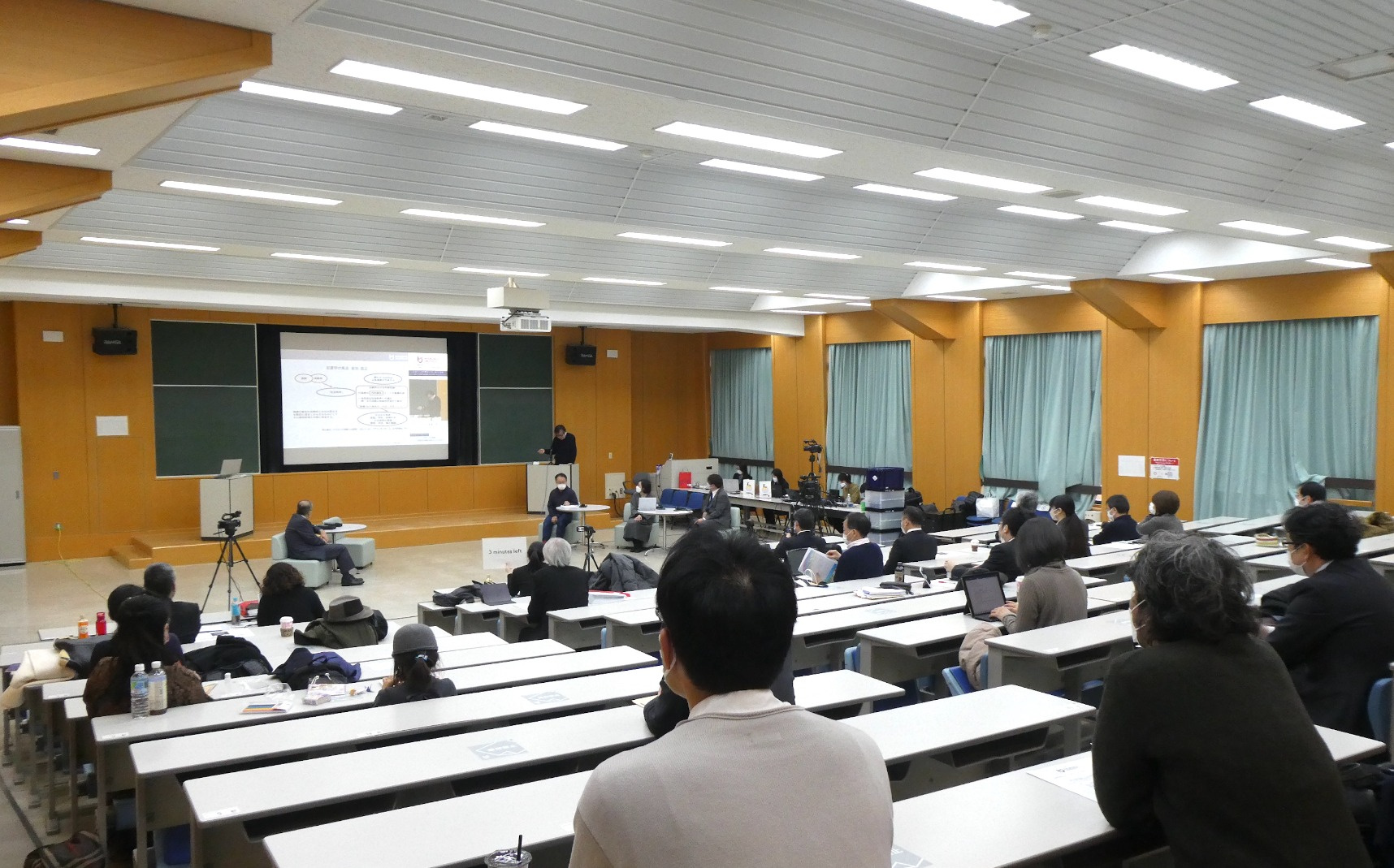
Opening remarks were provided by Professor Masahiro Tsushima (Faculty of Sociology/CrimRC Research Section Director). Professor Tsushima explained the activities of the center to date and stated the aim of this symposium, “Looking back on the recent six-year project period at CrimRC, we would like to adopt a glocal perspective in describing the current situation, achievements, and prospects for the new age in criminology.”
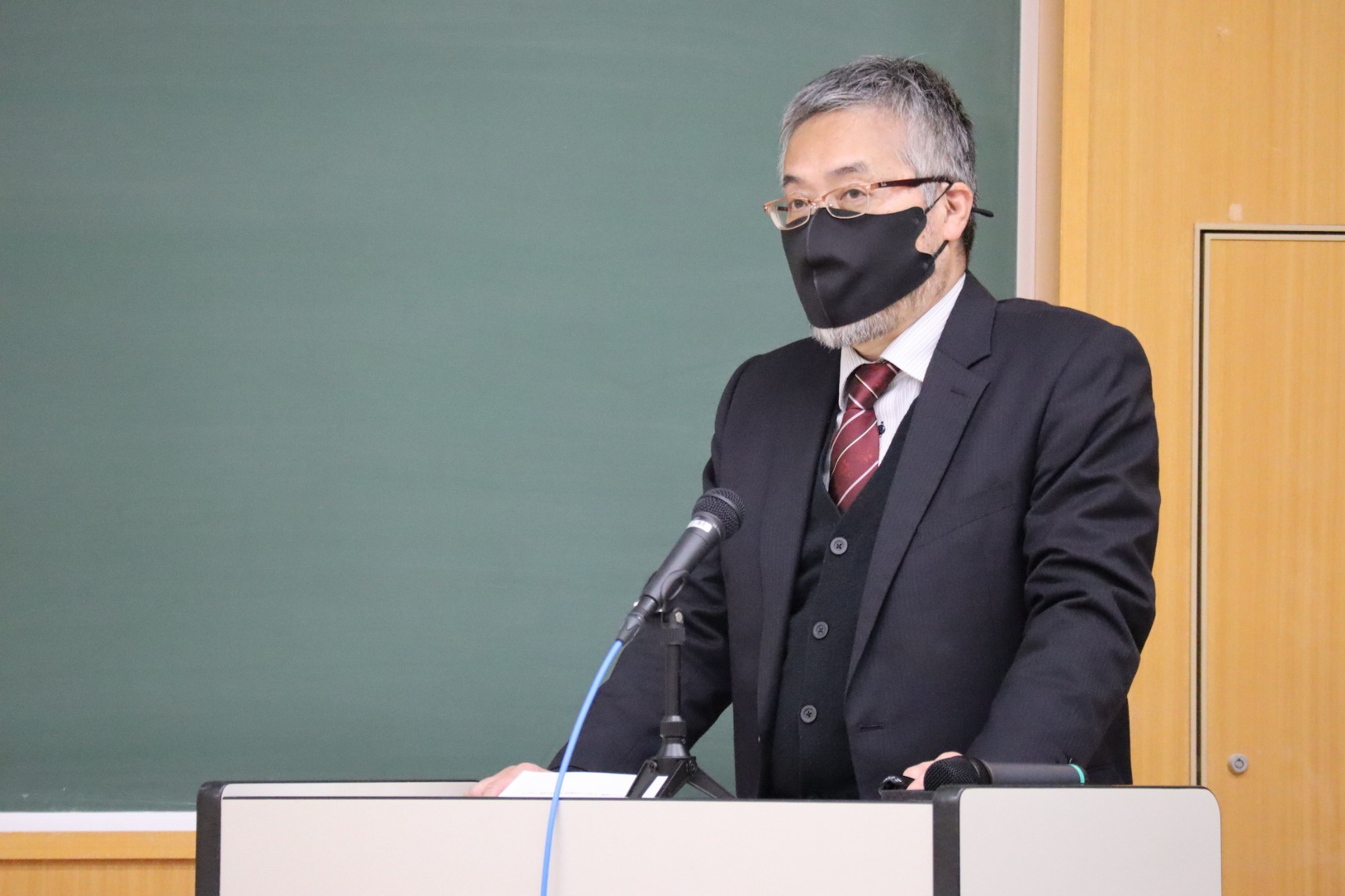
Professor Masahiro Tsushima (Faculty of Sociology/CrimRC Research Section Director)
Session 1: Report of Accomplishments “Towards Establishing a New Age in Criminology”
CrimRC has three sections: an Education Section, a Research Section, and an International Section. The Education Section has implemented research findings in society, the Research Section has combined and systematized a diverse range of “knowledge” about crime, and the International Section has encouraged academic exchange with researchers, practitioners, and research institutions in other countries while spreading Japanese “knowledge.” Session 1 took the form of a final report of accomplishments, with each section giving a general overview of their activities over the past six years.
Education Section General Overview “Seeking to Establish Educational Groups and Youth Development”
Professor Shinichi Ishizuka (Faculty of Law/CrimRC Center Director) started the session by giving a general overview of the Education Section. Professor Ishizuka explained how, due to a dearth of faculties of criminology involved in research, education, and personnel development in Japan, the Education Section aimed to establish a faculty of criminology and graduate school of criminology, and listed the following three goals: (1) to create a criminology curriculum, (2) to evaluate and propose criminal policy, and (3) to foster leaders. Professor Ishizuka noted how information and communications technology (ICT) and other new media had gained prominence in the “With Corona” era, but raised concerns over whether ICT was at odds with criminology due to the empirical nature of criminology being one of its greatest strengths, such as the practical examination of tangible actions and numerical-based examination of criminal phenomena. Professor Ishizuka also stated that ICT allowed for interaction with overseas researchers and students and the increasing adoption of ICT had allowed research and education to be pursued internationally.
The Professor reported on developing a Faculty of Criminology syllabus with the help of young researchers who are expected to become leaders in criminology. For each class in the syllabus, researchers created a 5 or 15-minute video and made them available online. The Professor also reported on the development and dissemination of educational methods. Professor Ishizuka stated that criminology has traditionally been the domain of specialists involved in criminal justice such as practitioners and researchers, but a broader perspective is needed to establish criminology as a “science.” Professor Ishizuka stated that the people who really need criminology are those who commit crime and those who are victims of crime or suffer the effects of crime, i.e., the general population; hence, criminology must be viewed from the perspective of “criminology of the people, by the people, for the people.”
However, Professor Ishizuka noted that a shortage of researchers and educators and a negative image surrounding “crime” have prevented the establishment of faculties of criminology in Japan. He quoted the words of Tsuneo Kondo, the founder of Nihon DARC (drug addiction rehabilitation center), who said “What the world needs, the world creates.” Professor Ishizuka ended the report of accomplishments with, “Let’s take a comprehensive look at criminal phenomena. Let’s work together to deal with the problems. This is the only approach that will produce long-lasting results. This is criminology. Criminology demonstrates there are things we cannot see because we are clouded by prejudice and “common sense” and avoid venturing into the field. The time will come when faculties of criminology are established in Japan. The fundamental need for criminology makes this a certainty.”
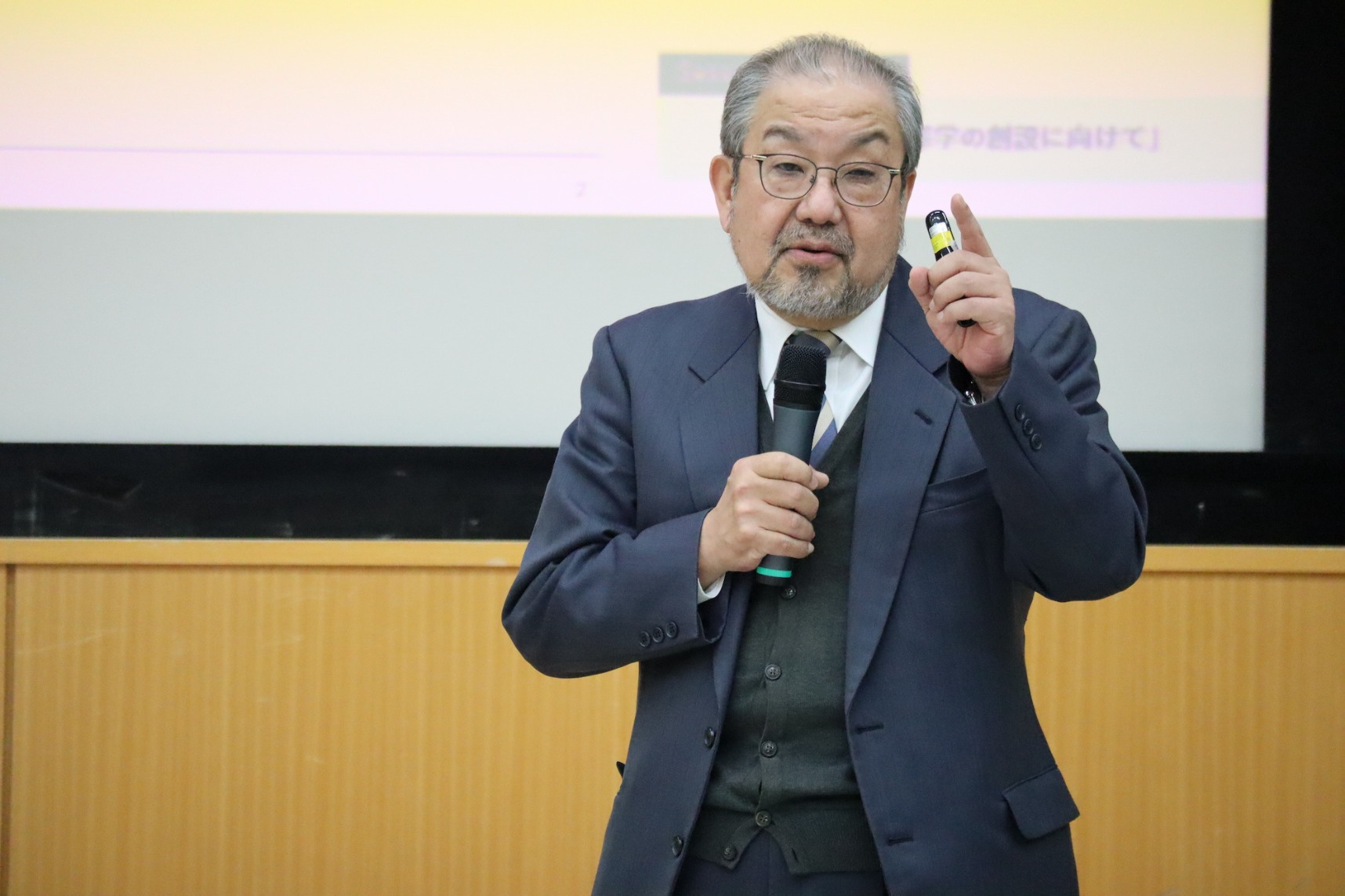
Professor Shinichi Ishizuka (Faculty of Law/CrimRC Center Director)
Following the general summary of each section, President Takashi Irisawa offered his comments. The President stated, “SDGs are currently in the spotlight, but sustainable development goals will never be achieved without altering the perspective of individual people. Given that changing perspective and behavior is a Buddhist teaching, Ryukoku University is effectively promoting “Buddhist SDGs.” At last year’s symposium, it was noted that Ryukoku University already implements SDGs in the form of the university’s Corrections and Rehabilitation Degree Program and the activities of the Criminology Research Center. I believe there is great potential at Ryukoku University. Hearing about the last six years of work in each section, many students must have been involved in these activities and I believe chemical changes have occurred in the minds of those students.” As President Irisawa talked about Indian Buddhism, his specialist field, he also stated, “Buddhist teaching has long been highly conscious of crime. Not just crimes committed by people or behavior that occurs consciously, but crimes that transpire unknowingly. That is, Buddhism is highly conscious of people’s actions. I believe this is Buddhism’s greatest strength. Criminology as a discipline has an interdisciplinary character that is closely connected to Buddhism as well as psychology, sociology, and child education. I have a firm belief that we can spread peace by integrating the core Buddhist teaching of “Engi,” mentioned earlier in the report. In the course of daily life, however, people often lose sight of the fact that they are the product of diverse relationships and support. People become self-centered and behave in ways they never imagined. We create environments that discourage crime; and if someone makes a mistake, create environments where those people can recover from their mistake. I would like to see Ryukoku University as the wellspring for these types of initiatives. Although the Branding Project has ended, I look forward to seeing young people take on this mantle.”
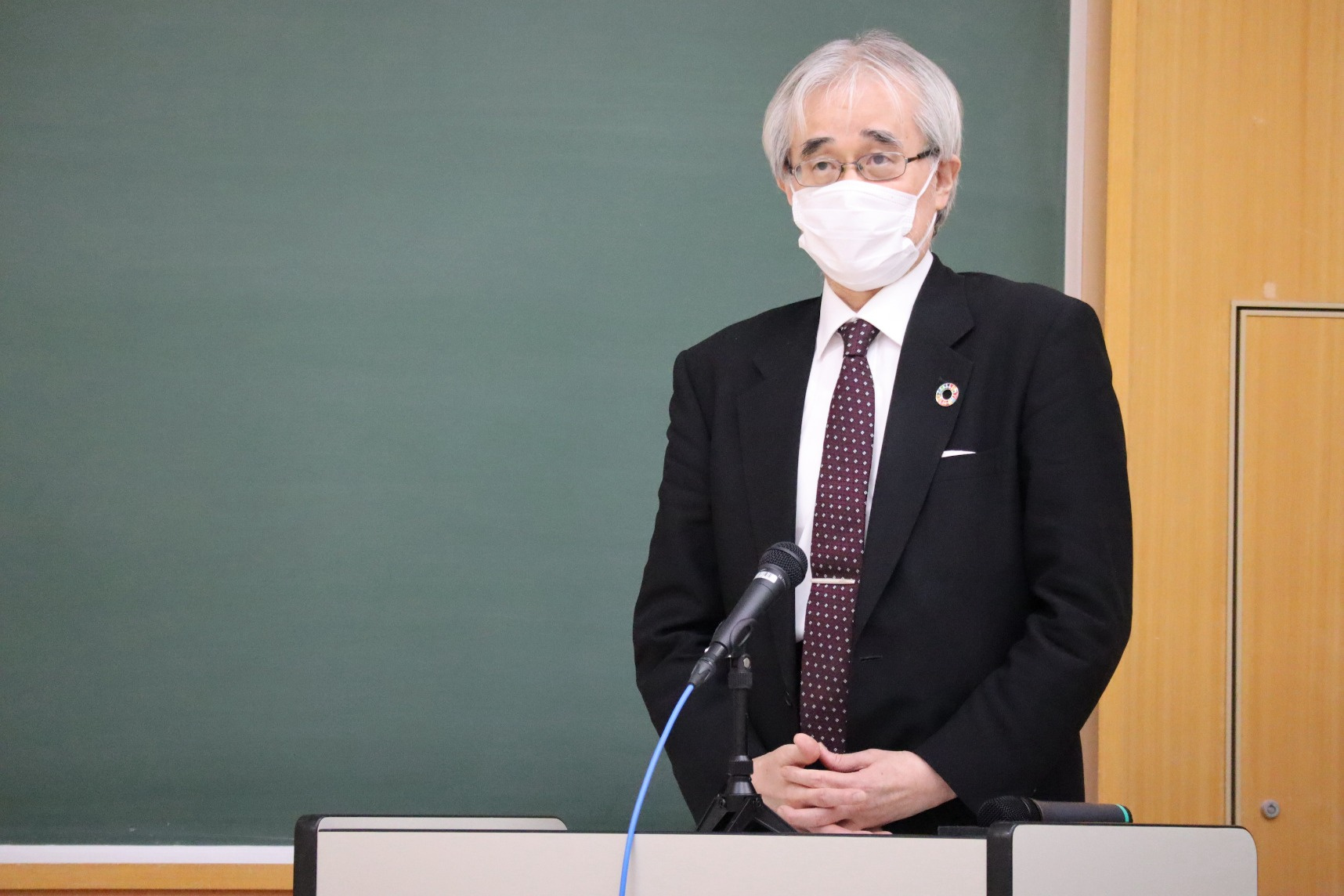
President Takashi Irisawa
Session 2: Talk Session “Glocal Development: What does Criminology Bring to the Community?”
Session 2 featured three talk sessions that examined local issues from a glocal perspective. Researchers from the Center examined modern social issues such as “discrimination and isolation,” “recidivism prevention,” and “university education in the Covid era” from a diverse range of perspectives including legal, social, psychological, and religious studies, providing a true fusion of knowledge in criminology. Part of the session on the prevention of recidivism is presented here.
“Recidivism Prevention and the Local Community; the Ability to Adsorb and Integrate”
Since enactment of the so-called “Act for the Prevention of Recidivism” (2016), prefectures and municipalities have become increasingly interested in crime prevention and recidivism prevention. From the perspective of community development, what are the problems faced by offenders during rehabilitation and desistance, and what are the barriers to the participation of offenders in society? The topic was introduced by Professor Koichi Hamai (Faculty of Law/CrimRC International Section Director, Policy Evaluation Unit Director), then a talk session was held with perspectives offered by Professor Satoru Yoshikawa (Faculty of Letters/CrimRC Dialogical Communication Unit Director), Professor Yoshiyuki Inoue (Faculty of Law/CrimRC Correctional Religious Studies Unit Director), and Associate Professor Hironori Komasa (Faculty of Letters/CrimRC Forensic Psychology Unit Member). The moderator was Professor Ishizuka.
Initially, Professor Hamai stressed that “people can regret their actions alone, but cannot rehabilitate alone.” Explaining the events leading up to enactment of the “Act for the Prevention of Recidivism” (2016), Professor Hamai touched on the overcrowding of prisons due to the security deterioration fallacy and the era of increased punishment (from 1995 to 2005) and the conversion of prisons into nursing homes as large numbers of elderly people with nowhere to go were housed there, and described an about-face in the Japanese government policy that moved to comprehensive measures against recidivism (the importance of “a place to belong” and “opportunity”) (2012). Professor Hamai also provided a point of caution regarding the term “recidivism prevention”, given that the Japanese government discusses recidivism prevention in terms of protecting society rather than rehabilitation of offenders, and in terms of policy regards offenders as risks to be controlled (problems to be dealt with) rather than people who listen and can rehabilitate. He stated it is important that social welfare services and communities involved in rehabilitation see offenders as members of the community and agents of desistance, and that links with family, friends, and social surroundings are essential.
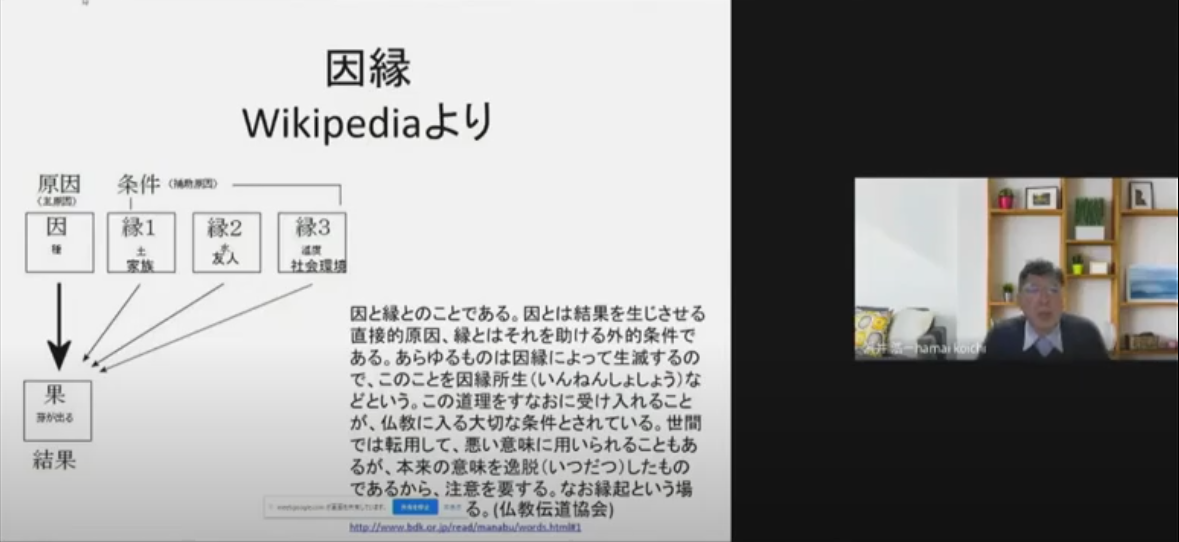
Professor Koichi Hamai (Faculty of Law/CrimRC International Section Director, Policy Evaluation Unit Director)
Professor Inoue, director of the Correctional Religious Studies Unit, who has been conducting foundational research aimed at raising the prominence of prison chaplains, noted that people who commit crimes have a troubled life, and the cause of that trouble is not something inherent to those people, but springs from interpersonal relationships and chance encounters. He also argues that, assuming that everyone might commit crime given an inopportune set of circumstances and failed relationships, committing crime and desistance from crime must be viewed within a broader context than individual relationships or the one-on-one relationship between the offender and prison chaplain. The thesis of the Correctional Religious Studies Unit is “to reexamine religious preaching, and through education and practice teach people about the mutually supportive nature of society and relationships.” The view of humanity that presumes anyone might offend also suggests that anyone can engage in various ways to support desistance. This view of humanity is evident in the spirit of Jōdo Shinshū (Shin Buddhism), the founding spirit of Ryukoku University, and in Shinran’s view of humanity. Shinran did not call people given the label of wrongdoer “they” but “we.” Just as people commit crime due to troubles brought on by a chance set of circumstances, people can desist from crime due to a chance set of circumstances. Professor Inoue concluded by saying that understanding crime from the perspective of “we” may not have the immediate effect of treating the symptoms of a given disease, but will have a slower effect in helping offenders to refrain from crime, similar to the effect of Chinese herbal medicine on the constitution.
After Professor Inoue’s report, Professor Ishizuka noted how traditional criminal justice sees offenders and victims as being separated by a river, when, in fact, the two parties reside on a contiguous body of land. Communities must be flexible and robust enough to prevent rivers created by rainfall in the mountains from dividing the land between us. Professor Ishizuka explained that while the interchangeable nature of victims and perpetrators is becoming a more important focus in discussions surrounding the prevention of recidivism and the local community, many challenges still lay ahead.
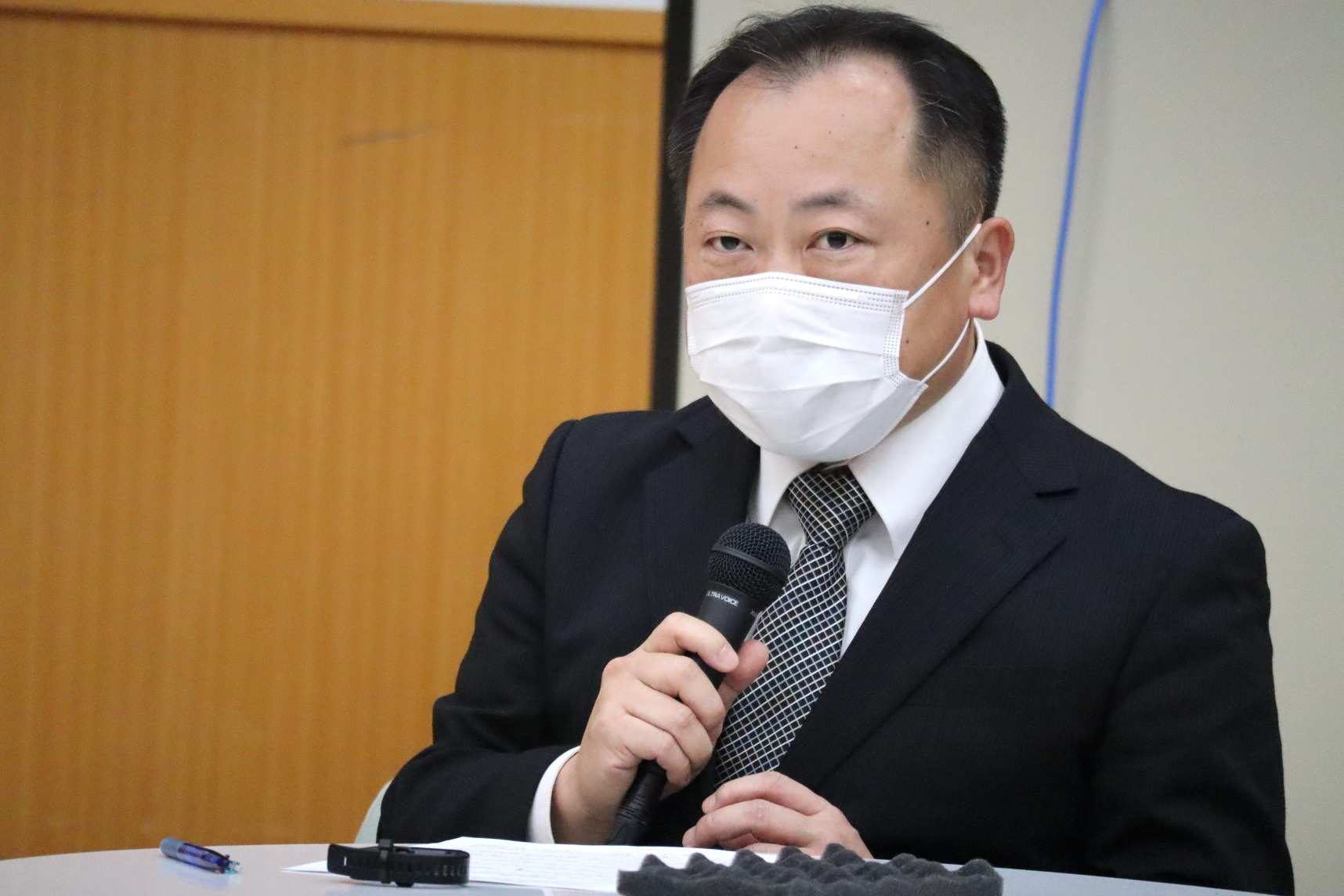
Professor Yoshiyuki Inoue (Faculty of Law)
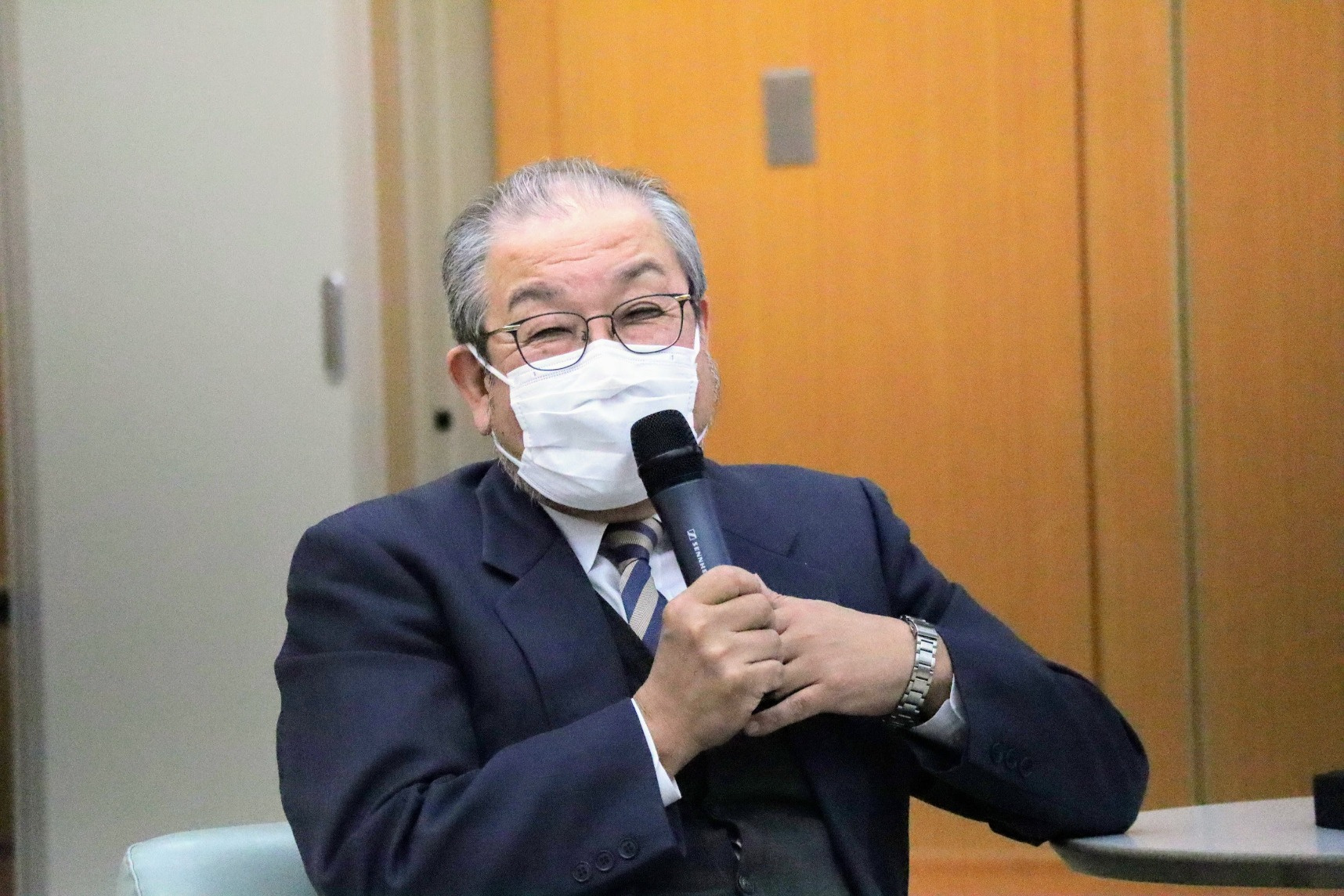
Professor Shinichi Ishizuka (Faculty of Law/CrimRC Center Director)
Associate Professor Komasa of the Forensic Psychology Unit noted how the comments so far reminded him that, “A mountain covered in bamboo groves is not susceptible to landslides because it is protected by the roots of the bamboo.” He also offered a clinical psychology perspective on the session and pointed out that both offenders and their supporters may feel misunderstood by the people around them. He noted how people often say it is important to nurture a desire to understand others, but it may be more important for each person to feel understood by others. He stated that bringing together individuals with this feeling of being understood should nurture a desire to understand others.
We must not just support the offenders, but also avoid isolating those who provide support to offenders. The importance of a protective network of people, like the roots of a bamboo forest, becomes obvious when we consider this topic in the context of the ability of communities to absorb and integrate. Associate Professor Komasa stated this can be cultivated by working to integrate a feeling of being understood into university education.
Professor Yoshikawa, the director of the Dialogical Communication Unit, described an episode involving a certain person released from prison in the USA and asked session participants what side of people they would rather communicate with when meeting someone. He explained that when we interact with people, communication can be a dialog, a monologue, or a conversation. Someone in charge of a group looking after elderly people in Kyoto City once asked Professor Yoshikawa for advice on communicating with the elderly. The advice given by Professor Yoshikawa was, “When you visit someone’s home, try finding something good the person is doing and complimenting them on it.” After about a year of normal interaction, the person reported that communication had improved with almost all their elderly clients. The opening exchange was key to creating dialog and what side of someone you communicated with. Professor Yoshikawa expressed his hope this type of opening exchange could be used with people in the desistance process.
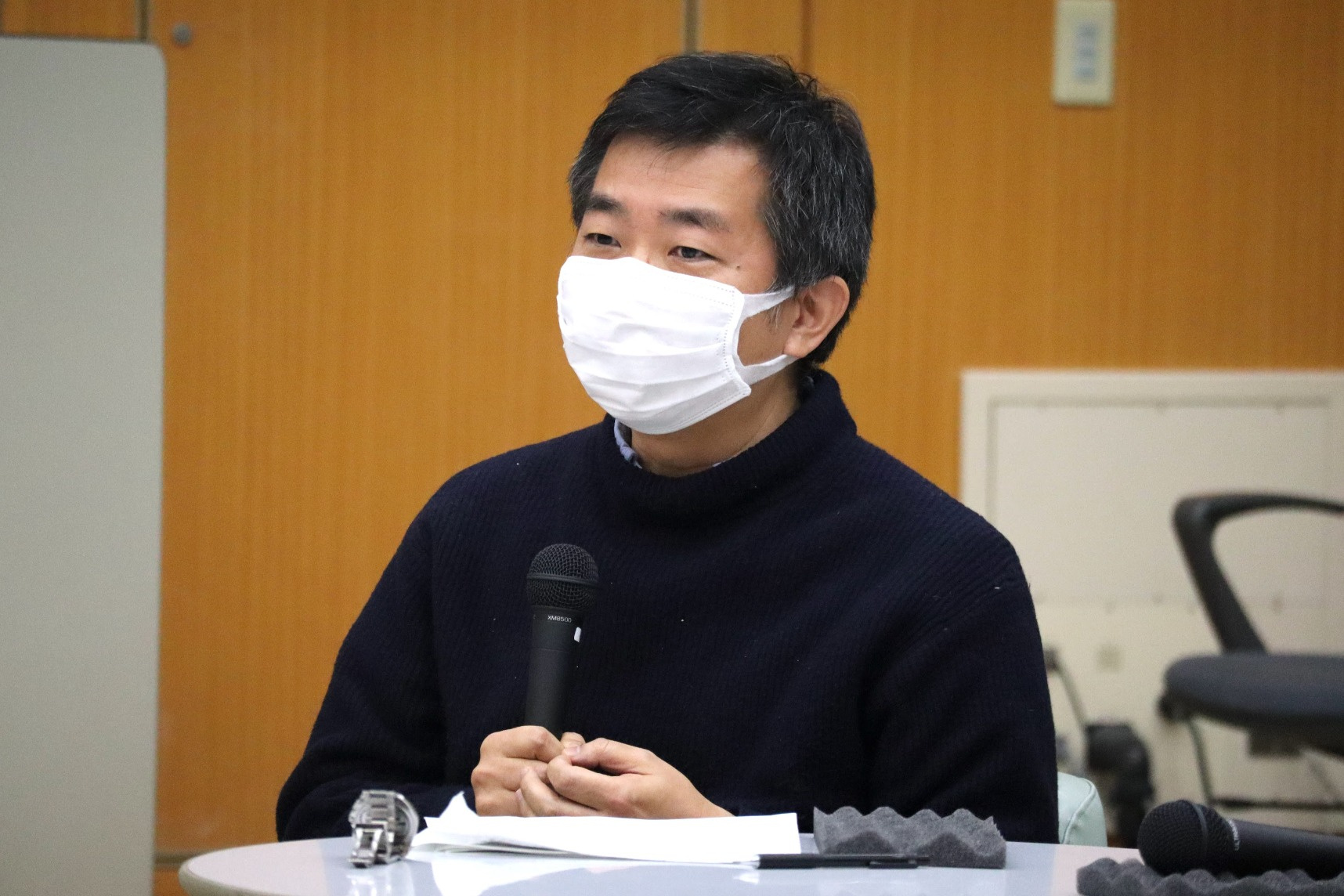
Associate Professor Komasa (Faculty of Letters)
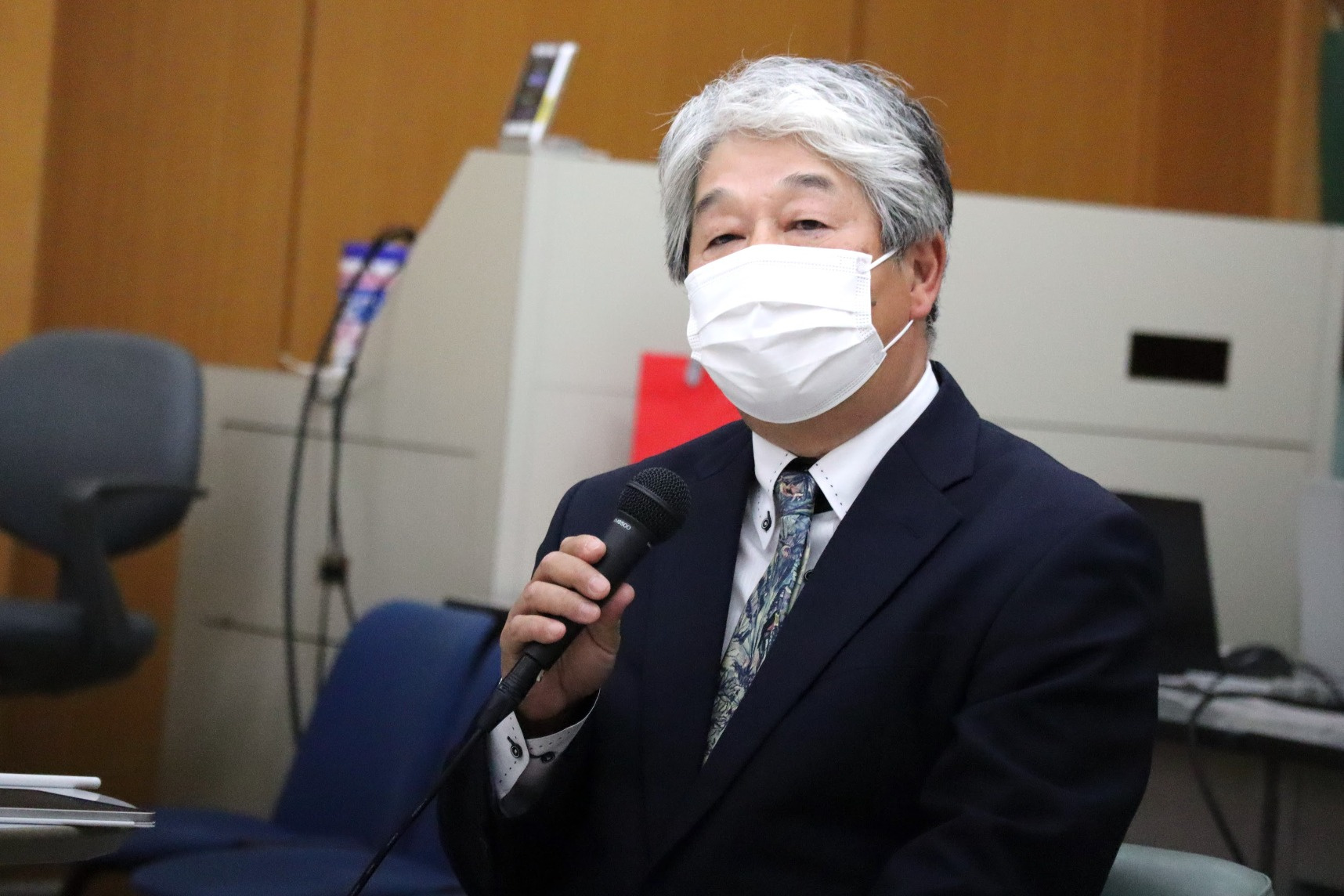
Professor Satoru YOSHIKAWA (Faculty of Letters)
General Overview
After a lively talk session, Professor Ishizuka looked back on the symposium as a whole and added his comments. Professor Ishizuka stated, “Criminology is probably the only discipline that can call doubt on war and other crimes of the State, and call doubt on criminal policy, which can err in the rush to “correct” judgment. Although CrimRC brings researchers together from a wide range of disciplines, today’s symposium leaves me with the impression that everyone at CrimRC shares this willingness to call “correct” judgments into doubt.
CrimRC has aimed to systematize a new criminology that fuses diverse fields of knowledge on crime, to use these findings to scientifically realign sets of policies on various criminal phenomena, and to nurture leaders in criminal policy who can adapt to the demands of the times. The Private University Research Branding Project came to an end in March 2022, but under a new structure, from April 2022, CrimRC continues to take on the challenge of establishing a new age in criminology.
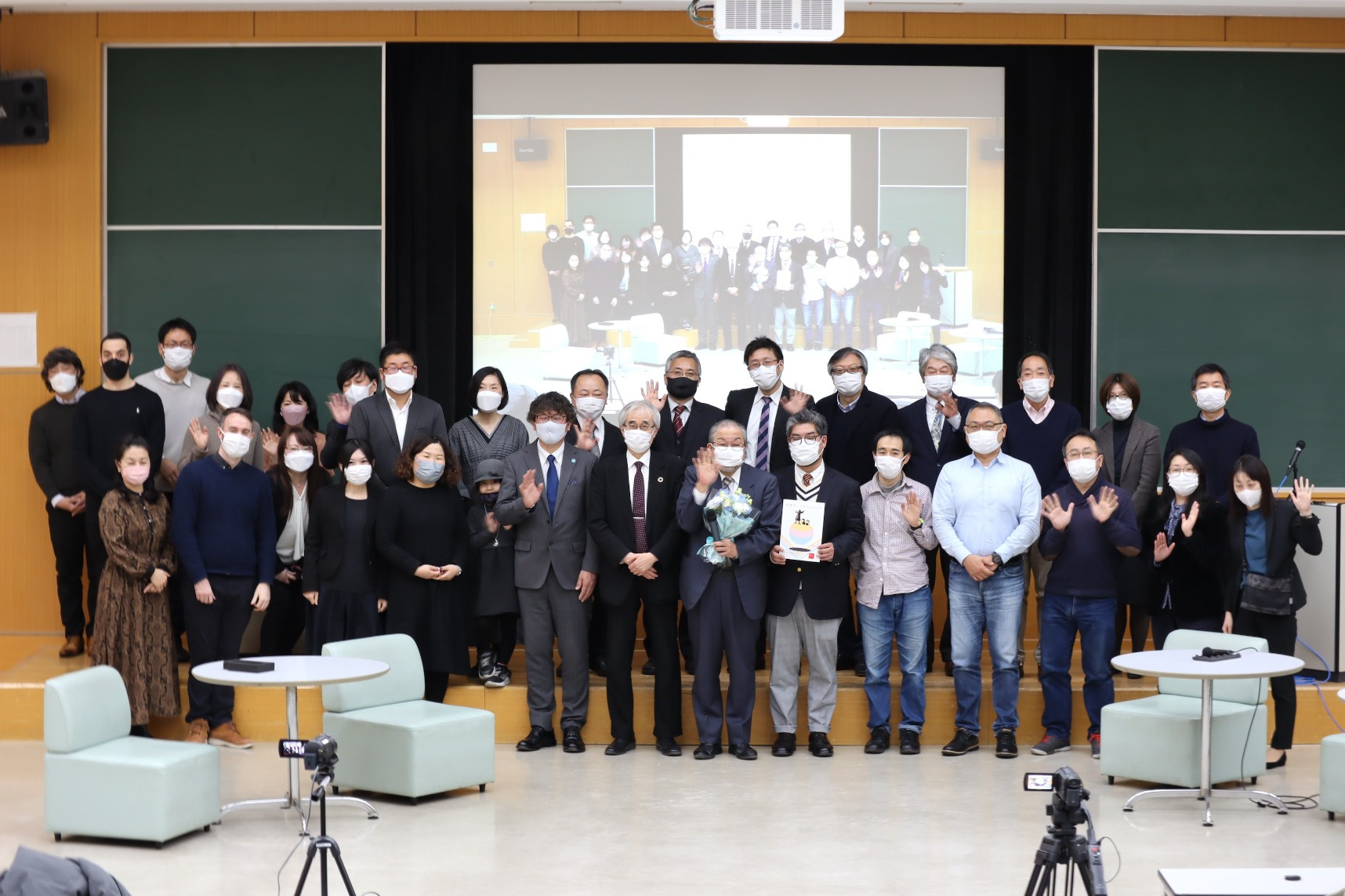
<!-- GET_Template id="body_default" module_id="" -->
作成者有限会社アップルップル
作成日2016/04/26
コメント
サブカラムで使用しているカテゴリーリストを表示します| module_id | モジュールIDを指定します |
|---|
<!-- GET_Template id="category_list" module_id="" -->
作成者有限会社アップルップル
作成日2016/04/26
コメント
カテゴリーエントリーサマリーを表示しています| module_id | モジュールIDを指定します |
|---|
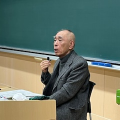
古住公義さん(京都放送労働組合)に講演いただきました【経営学部】
「現代社会と企業」(経営学科)と「ワークルール入門」(商学科)では、ワークルール教育を念頭においています。その一環で、2回の「労働問題・労働条件に関する啓発授業」(10月30日、11月6日)を行い、それを踏まえて、11月27日には、古住公義さん(民放労連京都放送労働組合)に「働く者の砦 京都放送労働組合の活動」のテーマで講演いただきました。 科目担当者(細川)は、厚生労働省の委託事業である「啓発授業」を2017年度から導入しています。それは、過労死・過労自殺の深刻な実態に触れるものであり、働くことのリ...

2024年6月8日(土)「2024年度 校友総会&交流会のご案内」<開催済み>
「2024年度 校友総会&交流会」 ~食堂で学食を楽しみながらお話しませんか~ 開催日 2024年6月8日(土) 上映会 時 間 10:00~ 会 場 深草キャンパス 22号館1階102教室 総会 時 間 11:00~ 会 場 深草キャンパス 22号館1階101教室 交流会 時 間 12:00~ 会 場 深草キャンパス 22号館地下食堂 参加費 1,000円 (当日、受付にて現金でお支払いください) ※小学生:500円、...
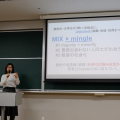
2023年2月10日、深草キャンパスで「地域連携教育フォーラム グローバルな視点でローカルに生きる 若者と企業をつなぐ実践的な学び」が開催されました。対面とオンラインをあわせたハイブリット型で、約50名が参加しました。 日時:2023年2月10日(金)14:00~16:10 会場:龍谷大学深草キャンパス和顔館B107教室 ゲスト: 認定NPO法人グローカル人材開発センター 行元 沙弥代表理事 株式会社ミライノラボ代表取締役CEO/千葉大学 田島 翔太助教 信州大学 林 靖人副学長 龍谷大学政策学部 白石 克孝教授 コーディネーター:龍谷大学政策...
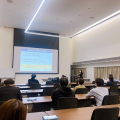
母校で農学を学ぼう、集う卒業生~龍谷大学校友会×農学部 ホームカミングデーアグリカフェ実施~
2022年10月29日(土)、龍谷大学の卒業生が母校に集うホームカミングデーに合わせて、卒業生向け特別講座「アグリカフェ」を実施しました。 同イベントは、農学部と龍谷大学校友会(卒業生組織)がコラボして実現。 当日は、学部や卒業年の壁を越えて、またお子さまも一緒に来ていただき、約40名の卒業生が参加。「マメが世界を変える?!~人の健康と地球環境を支えるマメのパワーに迫る~」をテーマに、資源生物科学科の大門弘幸学部長/教授と食品栄養学科の西澤果穂講師が、それぞれの研究分野から最新の研究成果などをわかりやすく...

【報告】学生企画「笑顔の向こう側~子どもの貧困×ボランティア~」を実施しました
「子どもの貧困って聞いたことはあるけど、何なんだろう?」 「子どもの貧困についてどのような取り組みがあるんだろう?」 近年、「子どもの貧困」について関心が高まっています。子ども食堂や学習支援、居場所づくりに取り組む地域の団体からのボランティア募集も増えています。 龍大生が、現代の日本で起こっている「子どもの貧困」について関心を高め、正しい理解を深めることができるよう、学生スタッフが企画を実施しました。 この企画は3部構成で実施し、2016年12月13日(水)に事前学習会、2016年12月21日(水)~2017年1月11日(水)に...
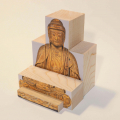
ワークショップ「仏像制作を体験してみよう」②【龍谷ミュージアム】
開催日:2月23日(日) 時 間:14:00~16:00 会 場:龍谷ミュージアム101講義室 講 師:吉水 快聞 氏(彫刻家・仏師) 定 員:先着15名 ※小学校低学年までの児童については、保護者の付き添いが必要です。 参加費:2,000円 ※参加費は当日受け付けます。 ※事前申込み必要/当日の観覧券必要(観覧後の半券不可) 【関連サイト】 ◆ 龍谷ミュージアム ◆ シリーズ展6/特集展示:仏像ひな型の世界 ◆ 龍谷ミュージアム公式Twitter ◆ 開館スケジュール ◆ アクセス
2024年度の入試説明と、英語対策講座を実施します。 ※事前予約制(1申込につき、同伴者1名まで申込可能。定員に達し次第受付終了) 入試要項は全員に配布するほか、資料配布コーナーでは、大学案内や学部パンフレット、過去問題集を設置します。 英語対策講座終了後には個別相談会も実施します。 <スケジュール> 受付開始 10:30〜 ⼊試説明 10:50〜11:30 英語講座 11:30〜12:30 個別相談 13:00まで イベント詳細、参加申込、注意事項などは以下のページをご確認ください。 https://www.ryukoku.ac.jp/admission/event/lecture/

レポート・卒業論文のためのテーマ別ポスター展示について【9/30~11/14】※延長
10月末から11月上旬にかけて開催する、ライティングサポートセンター講習会と連携して、「レポート・卒業論文のためのテーマ別ポスター展示」を開催します。 講習会の以下のテーマについて、ポスター展示を行います。 「卒業論文・卒業研究をスムーズに作成するために~論文の基本、再確認!~」 「レポートの作り方 ~引用の仕方と注・参考文献の書き方~」 「レポート・卒論・卒研に役立つ資料の探し方」 ライティンサポートセンターを利用したことがある方はもちろん、ない方も、どんな雰囲気なのか気兼ねなく触れていただける機会...

夏のオープンキャンパスは3キャンパス同時開催。 大学紹介イベントや入試イベントだけでなく、学部学科紹介イベント、学生企画イベントなど盛りだくさんのイベントをご用意します。 イベント参加にはスマホアプリのダウンロードが必要です。 ※新型コロナウイルス感染拡大状況によって、開催内容の変更やイベントを中止する可能性があります。 <対象学部> 深草キャンパス:経済学部、経営学部、法学部、政策学部、国際学部、短期大学部 大宮キャンパス:心理学部、文学部 瀬田キャンパス:先端理工学部、社会学部、農学部...

テキストが入ります。テキストが入ります。テキストが入ります。テキストが入ります。テキストが入ります。テキストが入ります。テキストが入ります。テキストが入ります。テキストが入ります。テキストが入ります。テキストが入ります。テキストが入ります。テキストが入ります。テキストが入ります。テキストが入ります。テキストが入ります。
■履修<履修登録手続編>重要 履修<履修登録手続編>(通し)「時間割の組み方、登録の仕方、注意事項など」 20分 ※以下の動画は履修<履修登録手続編>(通し)を分けたものです。 1.履修登録の準備 基本事項の確認 「基本事項を確認しよう」 3分半 2.履修登録の流れ 「履修登録の流れ」 1分 3.時間割 必修編 「時間割を組んでみよう 必修科目編」 2分半 4.時間割 教養科目編 「教養科目で残りの科目を決めよう」 4分半 5.予備・事前登録 「科目を決めたら登録しよう 予備・事前登録」 2分半 6.本登録 「本登録しよう...
国際学部 履修<履修登録手続編> ■履修<履修登録手続編>重要 履修<履修登録手続編>(通し)「時間割の組み方、登録の仕方、注意事項など」 20分 ※以下の動画は履修<履修登録手続編>(通し)を分けたものです。 1.履修登録の準備 基本事項の確認「基本事項を確認しよう」 3分半 2.履修登録の流れ「履修登録の流れ」 1分 3.時間割 必修科目編「時間割を組んでみよう 必修科目編」 2分半 4.時間割 教養科...
<!-- GET_Template id="category_entry_summary" module_id="" -->
作成者有限会社アップルップル
作成日2016/04/26
作成者有限会社アップルップル
作成日2016/04/26
コメント
サブカラムで使用してるリンク集のリストを表示します| module_id | モジュールIDを指定します |
|---|
<!-- GET_Template id="link_list" module_id="" -->
作成者有限会社アップルップル
作成日2016/04/26
作成者KDL藤川
作成日2017/04/26
作成者KDL藤川
作成日2017/05/12
作成者KDL藤川
作成日2017/05/12
作成者KDL藤川
作成日2017/04/26
作成者KDL藤川
作成日2017/04/26
作成者KDL藤川
作成日2017/05/12
作成者KDL藤川
作成日2017/05/12
作成者KDL藤川
作成日2017/04/26
作成者KDL沖
作成日2017/05/08
作成者KDL沖
作成日2017/05/08
作成者KDL藤川
作成日2017/05/15
作成者有限会社アップルップル
作成日2016/04/26
作成者KDL藤川
作成日2017/05/01

コメント
フッターで使用されているナビゲーションを表示します見出しはモジュールのカスタムフィールドで設定できます