2026.04.03
PBL Field Trip 2: Keihoku, Kyoto, and Aizumi, Tokushima, 2025【Graduate School of Economics】
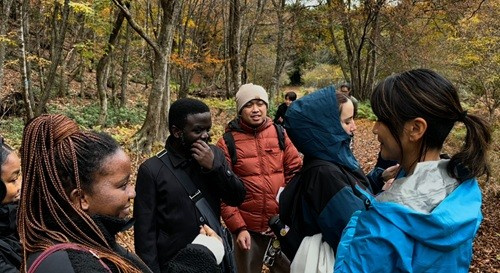
Exploring forest In Keihoku — studying about forest resource management
The Graduate School of Economics places a strong emphasis on PBL (Project-Based Learning). In 2025, we conducted a total of three fieldwork sessions. This article introduces the second and third sessions (for details on the first session→https://www.ryukoku.ac.jp/nc/news/entry-18146.html). The common theme of these two sessions is revitalization of tradistional craft industrial communities through innovation. The key elements were the cultivation and transmission of craftsmanship, the management of local natural resources, and the revitalization of communities. Since these challenges and activities are intertwined, achieving these goals requires diverse stakeholders to coordinate effectively, respect each other’s interests, and accumulate new challenges. The field surveys aim to provide direct exposure to such interwoven local activities.
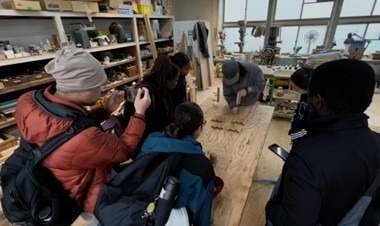
The workshop where traditional woodcrafts are made
The second fieldwork session, conducted on November 22, involved a visit to “Forest of Craft”, a NGO in the Keihoku area of Kyoto City. This NGO engages in “forest formation” through the management of its owned forests, and uses the timber and raw materials such as lacuer grown in the forest to create modern craft products. The graduate students who participated in this session learned practical methods by which traditional communities in Keihoku are adapting to new technologies and modern markets.
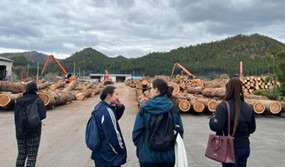
Timber Wholesale Market in Keihoku
The third fieldwork session was a survey conducted on December 12 and 13 in Aizumi Town, Tokushima Prefecture. Tokushima is a region famous as Japan’s largest producer of indigo. While the production of indigo dye using traditional methods has declined, new companies are now producing apparel made from indigo-dyed fabrics and crafts with modern designs. There are also companies developing cosmetics using indigo. During this trip, we experienced the production sites of traditional indigo dye and studied how it is being applied to new industries.
Using the new ideas gained from these two fieldwork sessions, we drafted proposals for companies and local governments, bringing the 2025 PLB course to a close.
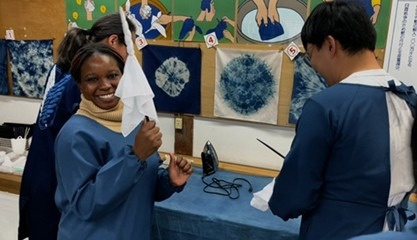
Preparing the fabric before indigo dyeing
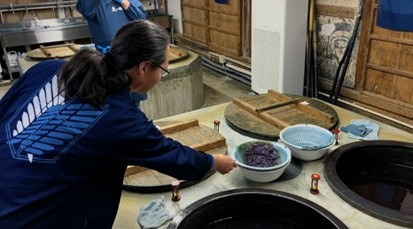
Soak in indigo dye
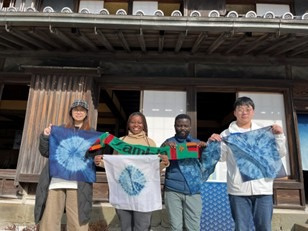
Beautiful indigo-dyed fabric we dyed ourselves
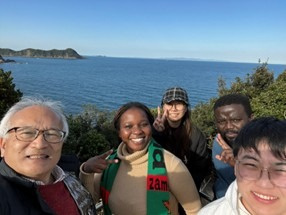
At the cape on the eastern tip of “Shikoku Island”