<!-- GET_Template id="footer_nav" module_id="" -->
id: entry_list
作成者有限会社アップルップル
作成日2016/04/26
コメント
サブカラムで使用しているエントリーリストを表示します見出しは、カテゴリーがあるときはカテゴリー名を、そうでないときはブログ名を表示します
| module_id | モジュールIDを指定します |
|---|
龍谷大学 You, Unlimitedの記事一覧
- 【FD】「国際共修と留学生教育の現在― 留学生教育と国際共修の実践・共有―」
- 2026年度 国際学部 時間割表
- 法学部同窓会 第1回龍谷大学法学部同窓会ゴルフ大会
- 【ご報告】3月12日限定販売 西川ゼミ「もち米パックご飯」、約190個の販売を達成しました【経済学部】
- 【報告】令和6年能登半島地震 第7回復興支援ボランティア活動を実施
- 2026年度 心理学部開講科目 時間割表
- 2026年度 文学部開講科目 時間割表
- 漱石の小説『こころ』を法のものさしで読み解く高校生「文学模擬裁判」交流戦 in Kyoto 開催
- 【本日(3/12)限定】⾼島市マキノ町‧森⻄集落×龍谷大学経済学部 学生が育てた「もち米ご飯」発売!【経済学部】
- 琵琶湖固有の魚食魚「ハス」の個体群減少を確認 ―13年間の釣り調査と環境データ解析が示す生態系変化―【生物多様性科学研究センター】
<!-- GET_Template id="entry_list" module_id="" -->
id: headline_default
作成者有限会社アップルップル
作成日2016/04/26
コメント
デフォルトのヘッドラインを表示しますindexがtopのときは右上に一覧ボタンを表示します
見出し内に挿入されるカスタムフィールドのアイコン対応に対応しています
| module_id | モジュールIDを指定します |
|---|
新着情報
一覧- ニュース 2026年度 国際学部 時間割表NEW
- ニュース 法学部同窓会 第1回龍谷大学法学部同窓会ゴルフ大会NEW
- ニュース 【ご報告】3月12日限定販売 西川ゼミ「もち米パックご飯」、約190個の販売を達成しました【経済学部】NEW
- ニュース 【報告】令和6年能登半島地震 第7回復興支援ボランティア活動を実施NEW
- ニュース 2026年度 心理学部開講科目 時間割表NEW
<!-- GET_Template id="headline_default" module_id="" -->
id: summary_default
作成者有限会社アップルップル
作成日2016/04/26
id: summary_imageMain
作成者有限会社アップルップル
作成日2016/04/26
コメント
サマリーを表示しますサマリー用のデフォルトテンプレートよりもメイン画像が大きく表示されます
| module_id | モジュールIDを指定します |
|---|---|
| message | リード文を指定します |
-
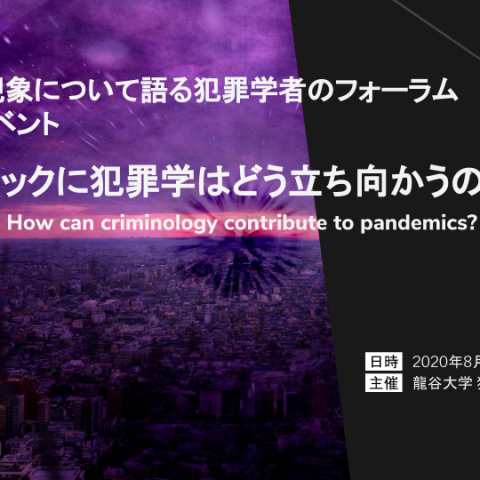
【新型コロナ現象について語る犯罪学者のフォーラム】キックオフイベント実施レポート
龍谷大学犯罪学研究センターは、2020年4月下旬より、新型コロナウイルス...
-

先日に引き続き、9月1日(火)に食品栄養学科1年生の「調理学実習Ⅰ」を...
-
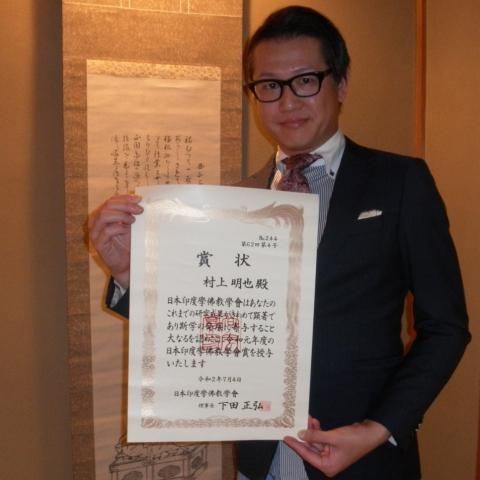
【教員の活躍】日本印度学仏教学会賞受賞について(本学非常勤講師・村上明也先生)【文学部】
このたび本学非常勤講師の村上明也先生が、第62回(令和元年度)日本印...
-
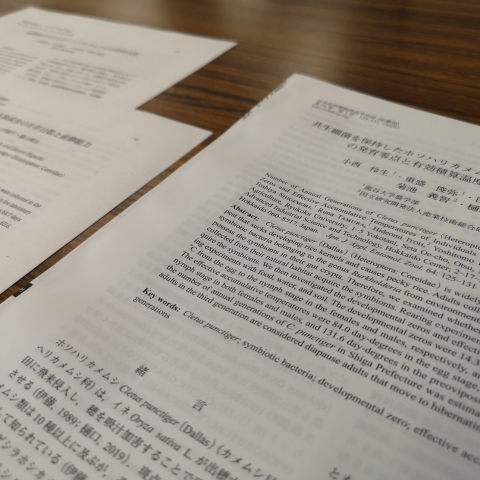
農学部資源生物科学科 応用昆虫学研究室(樋口教授)に所属した学生ら...
-
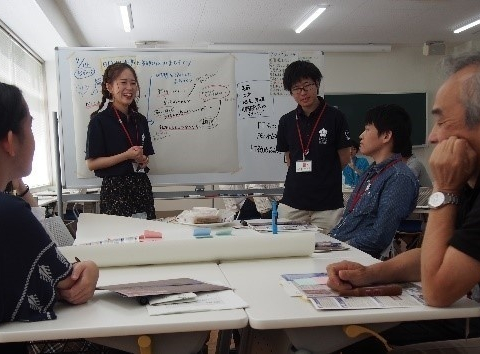
福知山・守山プロジェクトがファシリテーター研修を実施【政策学部】
2020年7月21日(火)、28日(火)に西川実佐子さんを講師に迎え、ファ...
-

【履修登録】コミュニティマネジメント学科の1・2年生対象(注意事項)
コミュニティマネジメント学科の1・2年生対象の皆様 1年次ゼミ(入門実...
<!-- GET_Template id="summary_imageMain" module_id="" message="" -->
id: summary_custom
作成者有限会社アップルップル
作成日2016/04/26
コメント
物件情報用カスタムフィールド画像を表示するためのサマリーですパラメーターがありません。
<!-- GET_Template id="summary_custom" -->
id: entry_list_pickup
作成者有限会社アップルップル
作成日2016/04/26
id: body_default
作成者有限会社アップルップル
作成日2016/04/26
コメント
エントリー本文を表示しますユニット開始前にインクルードの条件に合うファイルがあった場合、カスタムフィールドの表示ができるようになっています
ページャー、日付の表示はモジュールIDを作成して調節します
| module_id | モジュールIDを指定します |
|---|
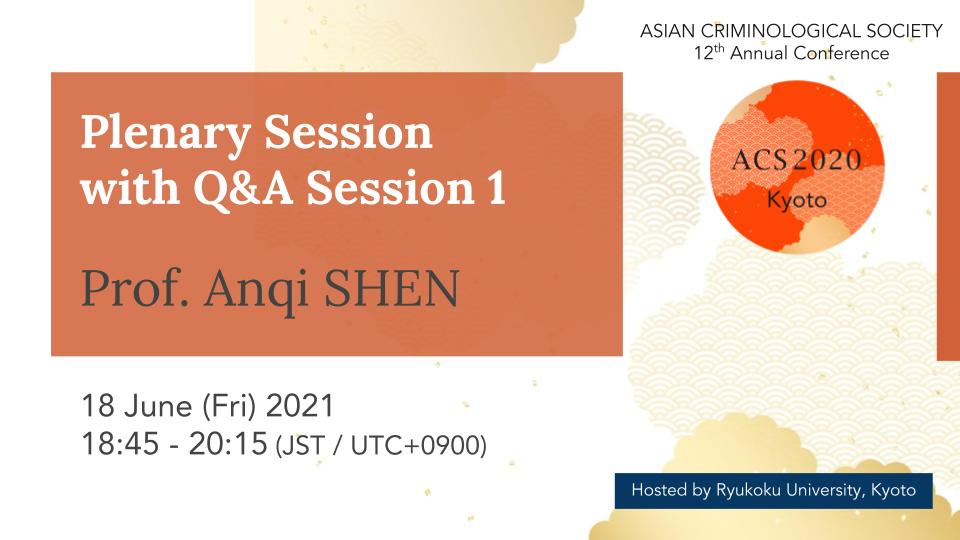
[Report of the ACS2020] Plenary Session with Q&A Session_Prof. Anqi Shen
The Asian Criminological Society 12th Annual Conference (ACS2020), hosted by Ryukoku University, was held online for four days from June 18 to 21, 2021. The purpose of the conference, the second of its kind to be held in Japan after the 2014 Osaka conference, was to promote the growth of criminology in Asia and Oceania, and to promote academic exchange with advanced regions of criminology such as the United States and Europe.
>> ACS2020 Program https://acs2020.org/program.html
The overall theme of the conference is "Crime and Punishment under Asian Cultures: Tradition and Innovation in Criminology". The aim was to promote understanding of the social systems and culture and measures against crime and delinquency in Japan, which is said to be "the country with the least crime in the world".
The following is a summary of the Plenary Session with Q&A Session, which was held live streaming at the conference.
[PL01] Internal Migration, Crime, and Punishment in Contemporary China: Migrant women and their involvement in criminality
- Plenary Speaker: Anqi Shen (Professor of Northumbria Law School, Northumbria University, United Kingdom)
- Chair: Setsuo Miyazawa (Professor Emeritus, Kobe University, Japan; ACS President)
- Date: 18:45-20:15, 18 June, 2021
- Keywords: Chinese domestic migrants, female migrant workers, pyramid scheme crime, neoliberalism, household registration system, tension theory, feminist theory
- Plenary Speaker: Anqi Shen (Professor of Northumbria Law School, Northumbria University, United Kingdom)
- Chair: Setsuo Miyazawa (Professor Emeritus, Kobe University, Japan; ACS President)
- Date: 18:45-20:15, 18 June, 2021
- Keywords: Chinese domestic migrants, female migrant workers, pyramid scheme crime, neoliberalism, household registration system, tension theory, feminist theory

Anqi Shen (Professor of Northumbria Law School, Northumbria University, United Kingdom)
Abstract:
China’s economic reforms – or its ‘turn towards neoliberalism’ – began in the late 1970s, fuelled a trend of urbanization and mass migration within the country, largely from rural regions to more economically developed urban areas. Women are part of the internal migration process among thousands of migrant labourers. With this exodus of ‘peasant workers’ from villages to towns and cities, came new challenges in a rapidly changing society. In metropolises and wider urban settings, rural migrants – men and women – are marginalised, and marginalisation makes individuals vulnerable and prone to lawbreaking. Female migrant workers, in particular, are under enormous pressure in the polarised and gendered social conditions. In migration studies in relation to China, much has been done to explore women’s experiences in the rural-to-urban migration: their opportunities, struggles and hopes in cities where they live as outsiders. In socio-legal and criminological research, past studies focusing on China have looked at the overall causes of migrant criminality, drug problems among migrant youths, victimisation of ‘peasant labourers’, and inadequacy in public policy in response to the criminogenic, structural factors in migrant offending. Nonetheless, little attention has been paid to the subjective experience of migrant offenders, and women’s involvement in lawbreaking is largely neglected. In this mini lecture, I will examine criminality involving female migrants in the context of a neoliberal society. I will use a case study to explore, from a feminist perspective, internal migrant women’s engagement in illegal pyramid selling, which is increasingly prevalent among female lawbreakers in China today. I will briefly introduce the pertinent local socioeconomic setting before detailing the case study to discuss women’s entry into illegal pyramid selling, their motivations, the roles they play in the criminal operation and, of course, their gains and losses as a result of participation in crime. This is hoped to help reveal links between female criminality, neoliberal subjectivities, self-enhancement, greed – neoliberalism’s maladies – social exclusion and gender biases that female rural migrants experience in the new, urban milieus to which they do not belong and have no formal and real membership.
China’s economic reforms – or its ‘turn towards neoliberalism’ – began in the late 1970s, fuelled a trend of urbanization and mass migration within the country, largely from rural regions to more economically developed urban areas. Women are part of the internal migration process among thousands of migrant labourers. With this exodus of ‘peasant workers’ from villages to towns and cities, came new challenges in a rapidly changing society. In metropolises and wider urban settings, rural migrants – men and women – are marginalised, and marginalisation makes individuals vulnerable and prone to lawbreaking. Female migrant workers, in particular, are under enormous pressure in the polarised and gendered social conditions. In migration studies in relation to China, much has been done to explore women’s experiences in the rural-to-urban migration: their opportunities, struggles and hopes in cities where they live as outsiders. In socio-legal and criminological research, past studies focusing on China have looked at the overall causes of migrant criminality, drug problems among migrant youths, victimisation of ‘peasant labourers’, and inadequacy in public policy in response to the criminogenic, structural factors in migrant offending. Nonetheless, little attention has been paid to the subjective experience of migrant offenders, and women’s involvement in lawbreaking is largely neglected. In this mini lecture, I will examine criminality involving female migrants in the context of a neoliberal society. I will use a case study to explore, from a feminist perspective, internal migrant women’s engagement in illegal pyramid selling, which is increasingly prevalent among female lawbreakers in China today. I will briefly introduce the pertinent local socioeconomic setting before detailing the case study to discuss women’s entry into illegal pyramid selling, their motivations, the roles they play in the criminal operation and, of course, their gains and losses as a result of participation in crime. This is hoped to help reveal links between female criminality, neoliberal subjectivities, self-enhancement, greed – neoliberalism’s maladies – social exclusion and gender biases that female rural migrants experience in the new, urban milieus to which they do not belong and have no formal and real membership.
Summary of the Q&A Session
Question 1: The fact that you have interviewed prisoners in China is surprising in itself. Interviewing prisoners is not an easy task even in a country with a low authoritarian character. I would like you to explain how you gained access.
Answer 1: It was indeed a difficult survey and required a great deal of commitment, determination, hard work, and luck. I was a member of the Center for the Rule of Law organized by the local government in the study area, and this study was part of a larger one on the situation of migrant workers, which was funded by the local government. In addition, I had been involved in criminal justice for more than ten years before coming to the UK, and I was also a lawyer, so I had contacts and was trusted. Also, the prison had a women's facility, which was ideal for the research. However, the sample size had to be reduced, and the interviews were always tense because of the possibility that they might be stopped at any moment. Moreover, the prison was located in a remote mountainous area, and it was difficult to drive there at night when there was no lighting.
Question 2: You state that the pyramid scheme crimes of the two female inmates you interviewed were "investment activities". What were they investing in? Who created the organization? Were they punished?
Answer 2: The investment targets could be as diverse as health-related products, real estate, or even an island somewhere, but in reality, there was no investment activity going on, and the only purpose was to collect funds from new members. However, it was a normal company in appearance and internal organization, with a receptionist, marketing department, legal department, etc., and the female inmates were not aware that they were operating in an illegal organization at all. There is no established legal interpretation as to what kind of behavior is punishable, and if they engaged in any kind of managerial activity, they could be punished as organizers. Those at the top of the organization have been punished for fraud as well.
Question 3: The female inmates were not aware that their pyramid scheme activity was a crime, but is it possible that they chose this crime over other criminal activities?
Answer 3: The female inmates are first-time offenders, and their participation in the pyramid scheme was not a choice they made in comparison to other crimes, since they believed they had joined a normal company. They may have been aware that they had crossed some boundaries, but they were not aware that they had chosen to commit criminal acts.
Question 4: The two women have been convicted of recruiting new members into the organization, but how long is the sentence? In Japan, the penalty is imprisonment for not more than 3 years or a fine of not more than 3 million yen, or both, for those who established and operated the organization; imprisonment for not more than 1 year or a fine of not more than 300,000 yen for those who recruited as a business; and a fine of not more than 200,000 yen for those who simply recruited. Have they already been released? If they have been released, have they returned to their hometowns?
Answer 4: Under Chinese law, a person who organizes a pyramid scheme organization that results in serious circumstances, such as confinement or suicide, can be sentenced to a fixed term of five years or more and fined, while a person who merely solicited without such serious results can be sentenced to a fixed term of five years or less and fined. One of the women I interviewed was sentenced to six months, and the other to one year. I believe they have already been released, but I cannot get any information about them after their release. However, according to the interviews, they were very confident in their abilities and wanted to take a chance in the city instead of going back home. One in particular had even become a certified public accountant while working for her organization. The idea that one must succeed on one's own is truly neoliberal.
Question 5: It seems clear that the root of the problem lies in the family registration system. Japan also has a family registration system, but it is not a system that restricts social welfare or economic and social opportunities as in China. Has the Chinese government taken any measures to address this situation?
Answer 5: The Chinese government is aware of the problem, but since it does not have the power to help all migrant workers from rural areas, it only takes measures for those with a certain level of education and economic power. It does not cover the less-educated like these women or those from lower-ranked universities.
Question 6: Their behavior could be explained by strain theory, but if they learned the modus operandi, etc., after joining the organization, then differential association theory could also apply.
Answer 6: I think strain theory is more appropriate because these women were not aware that they were doing anything illegal at all. They thought that they were conducting the business of a legitimate company and had no knowledge of the criminal behavior.
Question 7: The reason for their actions might not be neoliberalism, but rather traditional Chinese culture.
Answer 7: The idea that economic success takes precedence over everything else is a product of post-1970’s reforms, and is not at all based on traditional culture. Today, neoliberal ideas are widely shared by the socially disadvantaged, who generally believe that it is their responsibility to improve their own situation and that they should not burden the government, and that they should accept their own unfavorable situation. It is highly unlikely that such a social structure will change in the near future.
Recorded by Setsuo Miyazawa
[Report of the ACS2020] Keynote Session with Q&A Session_Prof. Dennis S. W. Wong
The Asian Criminological Society 12th Annual Conference (ACS2020), hosted by Ryukoku University, was held online for four days from June 18 to 21, 2021. The purpose of the conference, the second of its kind to be held in Japan after the 2014 Osaka conference, was to promote the growth of criminology in Asia and Oceania, and to promote academic exchange with advanced regions of criminology such as the United States and Europe.
>> ACS2020 Program https://acs2020.org/program.html
The overall theme of the conference is "Crime and Punishment under Asian Cultures: Tradition and Innovation in Criminology". The aim was to promote understanding of the social systems and culture and measures against crime and delinquency in Japan, which is said to be "the country with the least crime in the world".
The following is a summary of the Keynote Session with Q&A Session, which was held live streaming at the conference.
[KY04] Cybercrime Perpetration and Victimization among Adolescents: Prevalence, Risk Factors and Preventive Strategies
- Keynote Speaker: Dennis S. W. Wong (Professor, Department of Social and Behavioural Sciences, City University of Hong Kong, Hong Kong)
- Chair: Kana Sasakura (Professor, Faculty of Law, Konan University, Japan)
- Date: 13:00-14:30, 20 June, 2021
- Keywords: Cybercrime, Routine Activity Theory, RAPID-IT-CRY, Factor Analysis, Correlation between Perpetration and Harm
- Keynote Speaker: Dennis S. W. Wong (Professor, Department of Social and Behavioural Sciences, City University of Hong Kong, Hong Kong)
- Chair: Kana Sasakura (Professor, Faculty of Law, Konan University, Japan)
- Date: 13:00-14:30, 20 June, 2021
- Keywords: Cybercrime, Routine Activity Theory, RAPID-IT-CRY, Factor Analysis, Correlation between Perpetration and Harm


Dennis S. W. Wong (Professor, Department of Social and Behavioural Sciences, City University of Hong Kong, Hong Kong)
Abstract
With the rapid growth of the Internet and social networks, the Information and Communications Technologies (ICT) creates ample opportunities for educational, financial, social, and personal activities. The advancement of ICT in digital age is a double-edged sword which brings both convenience and risk to our daily life. Previous studies on cyber behavior have found that adolescents who spend a great deal of time on the internet are prone to having more negative online experiences. This presentation firstly highlights common types of cybercrimes found in Hong Kong. It then discusses some typical cases of cybercrime victimization among adolescents. Using a sample of 1,533 secondary school students, with the routine activities framework in mind, this presentation discusses the relationships between some risk factors (including a lack of cyber safety awareness, normative belief about aggression, and moral disengagement) and cyber deviant behavior/victimization.
In light of the potential consequences of cybercrime and victimization on youth, the presentation also introduces a newly developed RAPID Identification Tool of Cyber Risk for Youth (RAPID-IT-CRY) which is generated from the same empirical study. Factorial validity of the tool was verified using confirmatory factor analysis. The analyses supported an eight‐item scale with a two‐factor structure. The eight‐item tool RAPID-IT-CRY was found to possess good internal consistency and concurrent validity. It is believed that this tool is particularly useful for frontline practitioners developing intervention programs and the tool also has the potential to advance epistemological methods and clinical research related to cybercrime prevention.
With the rapid growth of the Internet and social networks, the Information and Communications Technologies (ICT) creates ample opportunities for educational, financial, social, and personal activities. The advancement of ICT in digital age is a double-edged sword which brings both convenience and risk to our daily life. Previous studies on cyber behavior have found that adolescents who spend a great deal of time on the internet are prone to having more negative online experiences. This presentation firstly highlights common types of cybercrimes found in Hong Kong. It then discusses some typical cases of cybercrime victimization among adolescents. Using a sample of 1,533 secondary school students, with the routine activities framework in mind, this presentation discusses the relationships between some risk factors (including a lack of cyber safety awareness, normative belief about aggression, and moral disengagement) and cyber deviant behavior/victimization.
In light of the potential consequences of cybercrime and victimization on youth, the presentation also introduces a newly developed RAPID Identification Tool of Cyber Risk for Youth (RAPID-IT-CRY) which is generated from the same empirical study. Factorial validity of the tool was verified using confirmatory factor analysis. The analyses supported an eight‐item scale with a two‐factor structure. The eight‐item tool RAPID-IT-CRY was found to possess good internal consistency and concurrent validity. It is believed that this tool is particularly useful for frontline practitioners developing intervention programs and the tool also has the potential to advance epistemological methods and clinical research related to cybercrime prevention.
Summary of the Q&A Session
Question 1: Does "cybercrime” include hate speech?
Answer 1: Yes, it does. “Cybercrime” includes cyber deviant behavior and cyber perpetration. Sending annoying or obscene messages may relate to hate speech.
Question 2: How old are children when they start to gain access to computers in Hong Kong?
Answer 2: In Hong Kong, children are allowed to use computers in primary school at age of 6. They are encouraged to use computers or iPads to study at home or when handing in homework. During the Covid pandemic, many schools are in lock down so nearly everybody has access to computer or iPad. Government or local organization provided financial support to ensure children’s access to computers. Many professionals are now advising parents to keep computers in the dining room where parents can monitor what children are browsing on the internet. Younger people are vulnerable to information on the internet and cannot avoid cyber victimization. Cyber-perpetrators are very clever and younger people are not aware of all the tricks they use. Parents should discuss with children about all the potential dangers of internet. They should remember and share all the cases around the world and talk with children and inform them.
Question 3: Have traditional crimes been decreasing and cybercrime increasing in Hong Kong?
Answer 3: The overall number of juvenile delinquency has decreased in Hong Kong. Younger people are staying at home and communicate through cyberspace. They seldom go out to the streets, so now major delinquent crimes are cybercrime and drug-taking.
Question 4: In what way is cybercrime different in Asia or Hong Kong?
Answer 4: I have read articles published elsewhere but do not think there is much difference around the world. A lot of young people call themselves “global citizens”. When they play and communicate on the internet, while there are still differences, they also share a similar culture. Cybercrime perpetration and victimizations are similar as well. However, moral disengagement is common in Asians, which leads to more use of the internet and more vulnerability to becoming victims. The Western world has more liberal parental monitoring and higher sense of cyber security. Is there a cultural bias among various countries? I am sure there is. For example, hate crime is not common in Hong Kong, Taiwan, or mainland China, because the overall population is composed mainly of Chinese people. So-called racial discrimination is not very serious in much of China. On the other hand, in the U.S. or Europe, there is more cultural migration and mixing of different races, so cultural bias might be more common. This may be an issue. Oriental culture is more collective and Western is more individualistic. Thus in Asia, interventions or restrictions are more authoritarian. There is a cultural difference. Cybercrime is transnational and transcends culture. However, since there are cultural differences, transnational cooperation between countries is very difficult.
Question 5: Are online grooming and sexting illegal in Hong Kong? They are not illegal in Japan.
Answer 5: Legislations in Hong Kong are outdated. There is no law on specific online related or cyber related legislation in Hong Kong. There is only a traditional set of law or ordinance. Thus, there is a growing voice for legislation on cybercrime. For example, in a case of online grooming, police will you with “illegal use of a computer” since there is no specific legislation. Everything can be grouped as “illegal use of a computer.” If you hire a good lawyer and argue this loophole, you might escape charges.
Recorded by Kana Sasakura
[Report of the ACS2020] Keynote Session with Q&A Session_Prof. Lorraine Mazerolle
The Asian Criminological Society 12th Annual Conference (ACS2020), hosted by Ryukoku University, was held online for four days from June 18 to 21, 2021. The purpose of the conference, the second of its kind to be held in Japan after the 2014 Osaka conference, was to promote the growth of criminology in Asia and Oceania, and to promote academic exchange with advanced regions of criminology such as the United States and Europe.
>> ACS2020 Program https://acs2020.org/program.html
The overall theme of the conference is "Crime and Punishment under Asian Cultures: Tradition and Innovation in Criminology". The aim was to promote understanding of the social systems and culture and measures against crime and delinquency in Japan, which is said to be "the country with the least crime in the world".
The following is a summary of the Keynote Session with Q&A Session, which was held live streaming at the conference.
[KY03] Policing Health Regulations during the COVID-19 Pandemic: The Role of Procedural Justice Encounters in Maintaining the Rule of Law and Protecting the Population
- Keynote Speaker: Lorraine Mazerolle (Professor of Criminology, University of Queensland, Australia)
- Chair: Mitsuaki Ueda (Associate Professor, Institute for Advanced Research and Education, Doshisha University, Japan)
- Date: 9:00-10:30, 20 June, 2021
- Keywords: COVID-19 pandemic, Procedural justice, Police legitimacy, Public confidence
- Keynote Speaker: Lorraine Mazerolle (Professor of Criminology, University of Queensland, Australia)
- Chair: Mitsuaki Ueda (Associate Professor, Institute for Advanced Research and Education, Doshisha University, Japan)
- Date: 9:00-10:30, 20 June, 2021
- Keywords: COVID-19 pandemic, Procedural justice, Police legitimacy, Public confidence


Lorraine Mazerolle (Professor of Criminology, University of Queensland, Australia)
Abstract
The COVID-19 pandemic has clearly escalated the complexities of policing, creating a range of new responsibilities, tasks and strategies for police as well as raising new accountability questions. In this presentation I examine a number of new health regulations that are now commonplace for police to enforce including: restrictions on the number of people in restaurants, limits on visits to aged care and private homes, maintaining physical distancing between people in public space, and mandated wearing of masks. I explore the application of procedural justice policing to these new tasks, public demands, and strategies. I conclude that the pandemic has created unprecedented access for police into the private lives of citizens creating a new set of opportunities for enhancing citizen perceptions of police legitimacy but only under conditions of procedurally fair approaches to citizen engagement.
The COVID-19 pandemic has clearly escalated the complexities of policing, creating a range of new responsibilities, tasks and strategies for police as well as raising new accountability questions. In this presentation I examine a number of new health regulations that are now commonplace for police to enforce including: restrictions on the number of people in restaurants, limits on visits to aged care and private homes, maintaining physical distancing between people in public space, and mandated wearing of masks. I explore the application of procedural justice policing to these new tasks, public demands, and strategies. I conclude that the pandemic has created unprecedented access for police into the private lives of citizens creating a new set of opportunities for enhancing citizen perceptions of police legitimacy but only under conditions of procedurally fair approaches to citizen engagement.
Summary of the Q&A Session
Question 1: Since the spread of the COVID-19 outbreak, has police legitimacy decreased due to issues related to police impartiality, as typified by Black Lives Matter? Also, during this period, did public confidence in the police increase or decrease?
Answer 1: Within Australia, police legitimacy seems to be on the rise. The police in Australia do not take a hard line on public health issues and work very well with the community. For example, instead of cracking down on people who are violating the requirement to wear masks, they hand out masks on the spot, and very few people have actually been fined. Also, although this is only in Australia, the research has shown that public confidence in the police has increased.
Question 2: How does procedural justice increase cooperation by citizens?
Answer 2: Our research has shown that the most important element of policing in terms of procedural justice is giving citizens a voice. Treating citizens with dignity and respect, taking a neutral stance in decision-making, and making sure that the subject understands that he or she is not being targeted for policing are equally fundamental elements, but giving citizens a voice is at the root of it. This is illustrated for example by taking the stance of asking people if there is something wrong with them, rather than being coercive, such as indicating the possibility of a fine to someone who is not wearing a mask for example.
Question 3: Does the degree of public confidence vary across groups?
Answer 3: We cannot answer this question with the data we have, but there is definitely a difference. The results of other studies we have conducted show significant differences by ethnic background.
Question 4: What is the direction of causality among the concepts of procedural justice, police legitimacy, and public confidence?
Answer 4: Although it has been shown that these concepts are interrelated, the mechanism by which they are established is unclear. This is an important research topic that should be addressed through experimental and longitudinal studies that can take into account time series. However, this does not mean that policing should be underestimated. Police can be effective in their practice by treating citizens with dignity and respect, and by building public trust and confidence in themselves.
Recorded by Mitsuaki Ueda
[Report of the ACS2020] Keynote Session with Q&A Session_Prof. Shadd Maruna
The Asian Criminological Society 12th Annual Conference (ACS2020), hosted by Ryukoku University, was held online for four days from June 18 to 21, 2021. The purpose of the conference, the second of its kind to be held in Japan after the 2014 Osaka conference, was to promote the growth of criminology in Asia and Oceania, and to promote academic exchange with advanced regions of criminology such as the United States and Europe.
>> ACS2020 Program https://acs2020.org/program.html
The overall theme of the conference is "Crime and Punishment under Asian Cultures: Tradition and Innovation in Criminology". The aim was to promote understanding of the social systems and culture and measures against crime and delinquency in Japan, which is said to be "the country with the least crime in the world".
The following is a summary of the Keynote Session with Q&A Session, which was held live streaming at the conference.
[KY01] Rehabilitation and Prison Release during the Pandemic: Perspectives from British Prisons
- Keynote Speaker: Shadd Maruna (Professor, School of Social Sciences, Education and Social Work, Queen's University Belfast, UK)
- Chair: Masahiro Tsushima (Professor, Faculty of Sociology, Ryukoku University, Japan)
- Date: 17:00-18:30, 18 June, 2021
- Keywords: prison, COVID-19 pandemic, desistance
- Keynote Speaker: Shadd Maruna (Professor, School of Social Sciences, Education and Social Work, Queen's University Belfast, UK)
- Chair: Masahiro Tsushima (Professor, Faculty of Sociology, Ryukoku University, Japan)
- Date: 17:00-18:30, 18 June, 2021
- Keywords: prison, COVID-19 pandemic, desistance


Shadd Maruna (Professor, School of Social Sciences, Education and Social Work, Queen's University Belfast, UK)
Abstract
The past year has been enormously disruptive for all of society, but nowhere more so than in prisons, where all forms of face-to-face rehabilitative work have essentially ceased for almost the entirety of the pandemic in much of the UK. Drawing on one of the first research projects to be allowed inside British prisons since the lockdown began in March 2020, I will explore early evidence of what the outcomes of this tragic natural experiment have been on the lives of those in prison. This research, co-produced with the User Voice organisation, has sought to involve prisoners and ex-prisoners in every stage of the research process from design to data analysis and dissemination. The goal is to give a voice to one of the most overlooked and neglected populations during the pandemic.
The past year has been enormously disruptive for all of society, but nowhere more so than in prisons, where all forms of face-to-face rehabilitative work have essentially ceased for almost the entirety of the pandemic in much of the UK. Drawing on one of the first research projects to be allowed inside British prisons since the lockdown began in March 2020, I will explore early evidence of what the outcomes of this tragic natural experiment have been on the lives of those in prison. This research, co-produced with the User Voice organisation, has sought to involve prisoners and ex-prisoners in every stage of the research process from design to data analysis and dissemination. The goal is to give a voice to one of the most overlooked and neglected populations during the pandemic.
Summary of the Q&A Session
Question 1: Could you provide details (e.g., purposes, methods, and expected results) of the ongoing prison survey during the COVID-19 pandemic, which was introduced in the keynote speech?
Answer 1: This is a research project funded by the Economic and Social Research Council (ESRC) of the UK as an urgent study during the pandemic. One purpose is to engage ex-prisoners in the planning, administration, and interpretation of a study of ex-prisoner release. Those who are involved in the research will learn the basics of research. The specific surveys include questionnaires, interviews, participant observation, and research journals (deciphering).
Question 2: This question is related to the question and answer above. Do you plan to link the results of the survey to a social movement, specifically to prison reform?
Answer 2: Yes, I do. Before the pandemic, the conditions in prisons were already terrible. Then they worsened with the spread of COVID-19, as prisons were locked down. However, in the process of social recovery after the pandemic, the need for the generation of new value norms will increase in prisons as well, and I believe that there is room to utilize the results of this research.
Question 3: Could you give us an introduction to the situation for ex-prisoners?
Answer 3: First of all, I would like to talk about the situation regarding the occurrence of crime during the pandemic. It is said that the crime rate including robbery is decreasing and domestic violence is increasing. In addition, it is difficult to provide services such as employment, education, and support meetings, which are essential for the social integration of ex-prisoners, due to the lockdown.
Question 4: The rehabilitation model proposed by Prof. Maruna seems to be influenced by labeling theory from the 1960s.
Answer 4: Yes, that has a strong influence. As K. Erickson says, once a stigma is attached to a person in society, it is not easy to remove, which is exactly the point. However, J. Braithwaite focused on the Japanese concept of shame (rather than stigma) and proposed that it could be applied to the desistance of ex-offenders by incorporating it into the rituals of social reintegration (apologizing and inclusion). My idea relies heavily on Braithwaite's theory.
Question 5: There seem to be two approaches to social movements regarding “the distance of ex-prisoners”. One is the so-called "power-over type," in which the person concerned shows hostility to society and changes the situation. The other is to break down the barrier between the person concerned and society by demonstrating new values, such as "recovery”. Which approach would you recommend to us?
Answer 5: The latter. This is the approach that I actually adopt. This is because it is important to break down the barriers between society and ex-prisoners. However, it is not necessarily a choice between the two, and as the history of social movements addressing LGBTQ and racial inequality shows, the former cannot be ruled out, as the people involved sometimes have to overcome anger and criticism (as an essential stage).
Recorded by Masahiro Tsushima
<!-- GET_Template id="body_default" module_id="" -->
id: category_list
作成者有限会社アップルップル
作成日2016/04/26
コメント
サブカラムで使用しているカテゴリーリストを表示します| module_id | モジュールIDを指定します |
|---|
<!-- GET_Template id="category_list" module_id="" -->
id: category_entry_summary
作成者有限会社アップルップル
作成日2016/04/26
コメント
カテゴリーエントリーサマリーを表示しています| module_id | モジュールIDを指定します |
|---|
-

大津市・越直美市長を迎えて『龍谷大学生×大津市長×企業経営者 “夢の交流会”』を開催しました
11月2日(水)、瀬田キャンパスRECホールにて「龍谷大学生×大津市長×企業経営者 “夢の交流会”」を開催しました。 今回の交流会は、本学と大津市人権・男女共同参画課とが連携して開催するもので、本学からは深草・瀬田キャンパスの学生56名の学生が参加し、越直美大津市長と17社の企業経営者との交流を深めました。企業からの参加は、滋賀県中小企業家同友会大津支部およびRECレンタルラボ企業の経営者で、オール大津での取り組みとなりました。 第1部では、学生への越直美市長からの講演に加え、市長と学生とが直接対話するミーティン...
-
2022年9月18日(日)~19日(月・祝)に『コーヒーを通して多角的に国際問題に迫る! SDGsを体感するコーヒー農場・JICA関西見学ツアー』を参加者18名で実施しました。 初日に守山農場(滋賀県守山市)への訪問、2日目にJICA関西(兵庫県神戸市)への訪問という形での実施を予定していましたが、台風の影響により2日目は各自自宅から繋ぐ全面オンライン形式での実施に変更となりました。 18日の守山農場の訪問では、実際にコーヒー農園を見学し、有機栽培について学ぶことをテーマにプログラムを実施しました。コーヒーの木や実を初め...
-

先端理工学部の奥田教授(環境生態工学課程)が地球規模課題対応国際科学技術協力プログラムでの活動をベトナムで開始
科学技術振興機構(JST)とJICAが連携して地球規模の課題解決を目指す大型の国際共同研究プログラム「SATREPS」のうち、「水汚染耐性のある水供給システムの構築(代表:長崎大学 藤岡貴浩教授)」に本学部の奥田哲士教授(環境生態工学課程)も参加しています。 ベトナム(ハノイ)にて本年度より約5年間の予定で本格的な共同研究がはじまりますが、先月3月にハノイで式典が行われ(中央手前やや左が研究代表、中央最後列が奥田教授)、4月23日より現地の分析機器などの立ち上げが行われます。 NUニュース 水供給システム:飲み...
-
(Announcement)How to Spend the Summer Holidays A Request to Prevent the Spread of Infection
To All Students: This summer is different from summers in the past. Once again, there is an increase in Novel Coronavirus infections. Students, the summer vacation is just beginning, but please do not hesitate to take note of this fact. Semester 1 (Spring) classes were held online. I would like to express my sincere appreciation to you for continuing your classes. I imagine you must have suffered from eye fatigue and many other problems. Some of you may have wanted to ge...
-
全国棚田サミットに向けて、龍谷大学の学生と教員が協力し、動画で滋賀県高島市「棚田の今」を発信
【本件のポイント】 第27回全国棚田(千枚田)サミットへの関心を高めるため、本学が協力して滋賀県高島市の棚田地域の今を動画で発信 人とのつながりが生まれる不思議な農村空間「棚田」をテーマに、そこで流れる時間を映像に 【本件の概要】 棚田地域では、平野部と比べお米の収量が少なく労力も大きくかかり、耕作放棄地が増え続けています。しかし、棚田は、お米の生産だけではなく、良好な景観や湛水能力により土砂崩れといった災害発生防止の役割など多面的な機能を有しており、そこで暮らす人々にとってはもちろん、琵琶湖の水...
-

龍谷大学入試アドバイザーが、各地の進学相談会で受験生の個別相談に対応。 キャンパスの雰囲気や大学生活、入試制度、学費、各学部の特色等について分かりやすくご説明します。 主催業者:栄美通信
-

東アジア薬物依存者回復支援者(DARS)養成セミナー【犯罪学研究センター】
東アジア薬物依存者回復支援者(DARS)養成セミナー Experts’ Seminar Drug Addicts Recovery Supports in East Asia 2019 企画趣旨: わたしたちは、この 30 年余りの間、欧米の薬物対策モデルを導入し、民間主導の回復支援スキームを展 開してきました。このような民間団体による回復支援のスキームを、東アジア地域でも展開するため、こ のたび、「東アジア薬物依存者回復支援者(DARS)養成セミナー」を開催することになりました。 ともすれば、内向きになりがちな回復支援活動を国際化するためのキック・オフと位置づけています。 た...
-
シリーズ勉強会「デジタル・フォレンジック鑑定と向き合うために」第2回【犯罪学研究センター主催】
龍谷大学 犯罪学研究センター(CrimRC)は、2022年11月からシリーズ勉強会「デジタル・フォレンジック鑑定と向き合うために」をオンラインで主催します。 【>>お申込みフォーム(Googleフォーム)】 ※申込期限:12/16(金)17:00 シリーズ勉強会「デジタル・フォレンジック鑑定と向き合うために」 第2回 コンピューター犯罪の裁判事例 【企画の趣旨】 今日、スマホやパソコンなど情報技術が私たちの生活に深く浸透し、利便性が飛躍的に良くなったものの、これを用いた犯罪も巧妙かつ多岐にわたるようになり、個人情報の...
-
8:40からの深草学舎顕真館での朝の勤行に引き続き、入澤崇による法話がございます。Youtubeおよびインスタグラムで配信します。 https://youtube.com/live/gJtK4Ip_zJU
-

龍谷大学入試アドバイザーが、各地の進学相談会で受験生の個別相談に対応。 キャンパスの雰囲気や大学生活、入試制度、学費、各学部の特色等について分かりやすくご説明します。
-

テキストが入ります。テキストが入ります。テキストが入ります。テキストが入ります。テキストが入ります。テキストが入ります。テキストが入ります。テキストが入ります。テキストが入ります。テキストが入ります。テキストが入ります。テキストが入ります。テキストが入ります。テキストが入ります。テキストが入ります。テキストが入ります。
-
国際学部 履修<履修登録手続編> ■履修<履修登録手続編>重要 履修<履修登録手続編>(通し)「時間割の組み方、登録の仕方、注意事項など」 20分 ※以下の動画は履修<履修登録手続編>(通し)を分けたものです。 1.履修登録の準備 基本事項の確認「基本事項を確認しよう」 3分半 2.履修登録の流れ「履修登録の流れ」 1分 3.時間割 必修科目編「時間割を組んでみよう 必修科目編」 2分半 4.時間割 教養科...
-
■履修<履修登録手続編>重要 履修<履修登録手続編>(通し)「時間割の組み方、登録の仕方、注意事項など」 20分 ※以下の動画は履修<履修登録手続編>(通し)を分けたものです。 1.履修登録の準備 基本事項の確認 「基本事項を確認しよう」 3分半 2.履修登録の流れ 「履修登録の流れ」 1分 3.時間割 必修編 「時間割を組んでみよう 必修科目編」 2分半 4.時間割 教養科目編 「教養科目で残りの科目を決めよう」 4分半 5.予備・事前登録 「科目を決めたら登録しよう 予備・事前登録」 2分半 6.本登録 「本登録しよう...
<!-- GET_Template id="category_entry_summary" module_id="" -->
id: banner
作成者有限会社アップルップル
作成日2016/04/26

id: link_list
作成者有限会社アップルップル
作成日2016/04/26
コメント
サブカラムで使用してるリンク集のリストを表示します見出し内に挿入されるカスタムフィールドのアイコン対応に対応しています
| module_id | モジュールIDを指定します |
|---|
<!-- GET_Template id="link_list" module_id="" -->
id: tagfilter
作成者有限会社アップルップル
作成日2016/04/26
id: news_list
作成者KDL藤川
作成日2017/04/26
id: news_list_see_more
作成者KDL藤川
作成日2017/05/12
id: news_latest_list
作成者KDL藤川
作成日2017/05/12
id: news_detail
作成者KDL藤川
作成日2017/04/26
id: event_list
作成者KDL藤川
作成日2017/04/26
id: event_list_see_more
作成者KDL藤川
作成日2017/05/12
id: event_latest_list
作成者KDL藤川
作成日2017/05/12
id: event_detail
作成者KDL藤川
作成日2017/04/26
id: news_chart
作成者KDL沖
作成日2017/05/08
id: event_chart
作成者KDL沖
作成日2017/05/08
id: attention_list
作成者KDL藤川
作成日2017/05/15
id: news_items
作成者有限会社アップルップル
作成日2016/04/26
id: tag_list
作成者KDL藤川
作成日2017/05/01
コメント
フッターで使用されているナビゲーションを表示します見出しはモジュールのカスタムフィールドで設定できます