テンプレート変数表

id: entry_list

作成者有限会社アップルップル

作成日2016/04/26

コメント

サブカラムで使用しているエントリーリストを表示します
見出しは、カテゴリーがあるときはカテゴリー名を、そうでないときはブログ名を表示します
module_id モジュールIDを指定します
<!-- GET_Template id="entry_list" module_id="" -->

id: headline_default

作成者有限会社アップルップル

作成日2016/04/26

コメント

デフォルトのヘッドラインを表示します
indexがtopのときは右上に一覧ボタンを表示します
見出し内に挿入されるカスタムフィールドのアイコン対応に対応しています
<!-- GET_Template id="headline_default" module_id="" -->

id: summary_default

作成者有限会社アップルップル

作成日2016/04/26

コメント

デフォルトのエントリーサマリーを表示します
indexがtopのときは右上に一覧ボタンを表示します
見出し内に挿入されるカスタムフィールドのアイコン対応に対応しています
module_id モジュールIDを指定します

製品情報

<!-- GET_Template id="summary_default" module_id="" -->

id: summary_imageMain

作成者有限会社アップルップル

作成日2016/04/26

コメント

サマリーを表示します
サマリー用のデフォルトテンプレートよりもメイン画像が大きく表示されます
module_id モジュールIDを指定します
message リード文を指定します

<!-- GET_Template id="summary_imageMain" module_id="" message="" -->

id: summary_custom

作成者有限会社アップルップル

作成日2016/04/26

id: entry_list_pickup

作成者有限会社アップルップル

作成日2016/04/26

コメント

サブカラムで使用しているピックアップリストを表示します
見出し内に挿入されるカスタムフィールドのアイコン対応に対応しています
module_id モジュールIDを指定します
<!-- GET_Template id="entry_list_pickup" module_id="" -->

id: body_default

作成者有限会社アップルップル

作成日2016/04/26

コメント

エントリー本文を表示します
ユニット開始前にインクルードの条件に合うファイルがあった場合、カスタムフィールドの表示ができるようになっています
ページャー、日付の表示はモジュールIDを作成して調節します
module_id モジュールIDを指定します

The Asian Criminological Society 12th Annual Conference (ACS2020), hosted by Ryukoku University, was held online for four days from June 18 to 21, 2021. The purpose of the conference, the second of its kind to be held in Japan after the 2014 Osaka conference, was to promote the growth of criminology in Asia and Oceania, and to promote academic exchange with advanced regions of criminology such as the United States and Europe.
>> ACS2020 Program https://acs2020.org/program.html
The overall theme of the conference is "Crime and Punishment under Asian Cultures: Tradition and Innovation in Criminology". The aim was to promote understanding of the social systems and culture and measures against crime and delinquency in Japan, which is said to be "the country with the least crime in the world".

The following is a summary of the Closing Plenary Session, which was held live streaming at the conference.

[CL] The paradox of criminology in a ‘safe’ country: The case of Japan – How has Japan maintained a low crime rate?

- Plenary Speaker: Koichi HAMAI (Professor of Criminology, Ryukoku University, Japan)
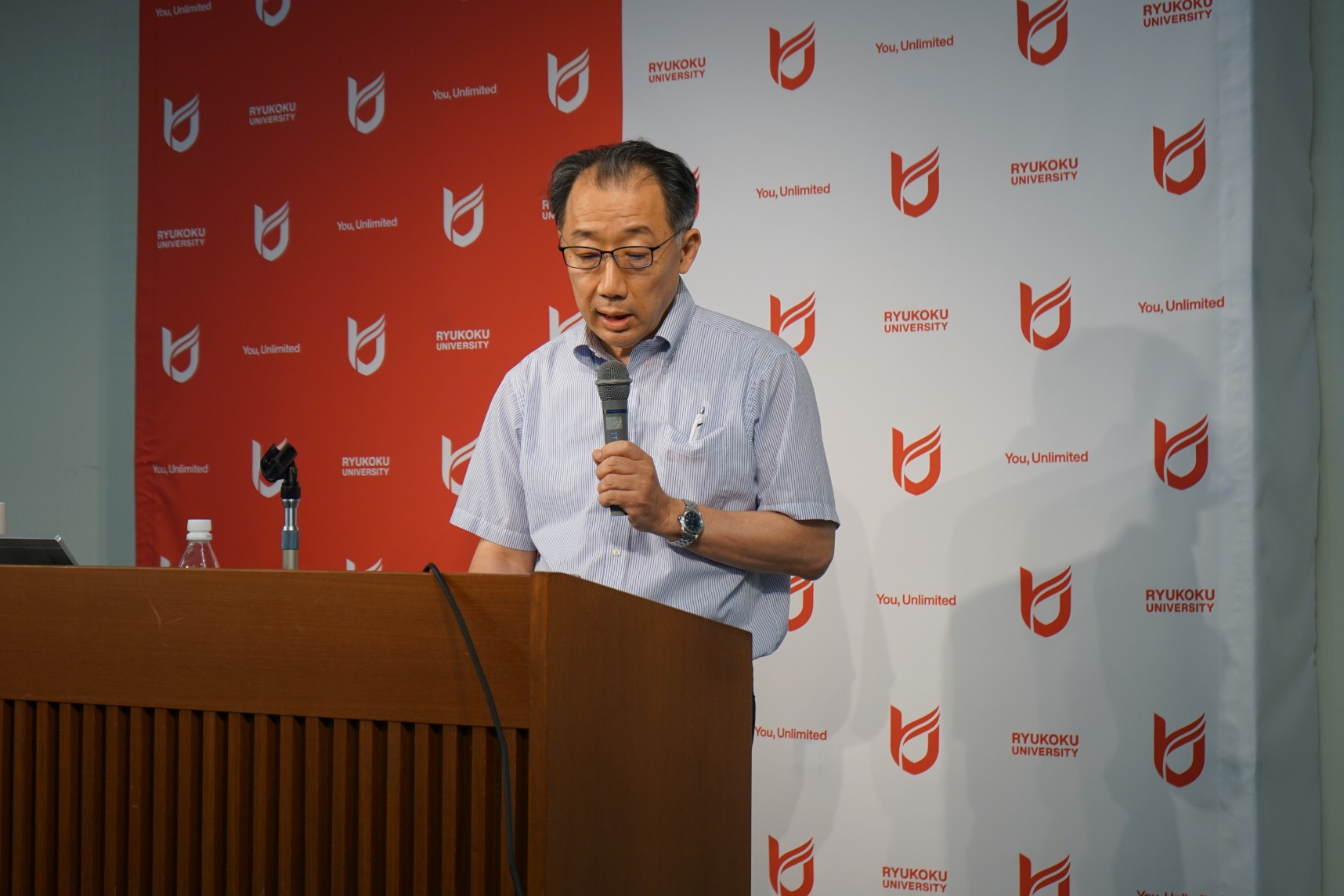
- Chair: Akiko KOGAWARA (Professor, Faculty of Law, Ryukoku University, Japan)
- Date: 11:00-12:00, 21 June, 2021
- Keywords: Penal Populism, Elderly crime, Juvenile Delinquency, Ritualism, Pandemic, Public Health


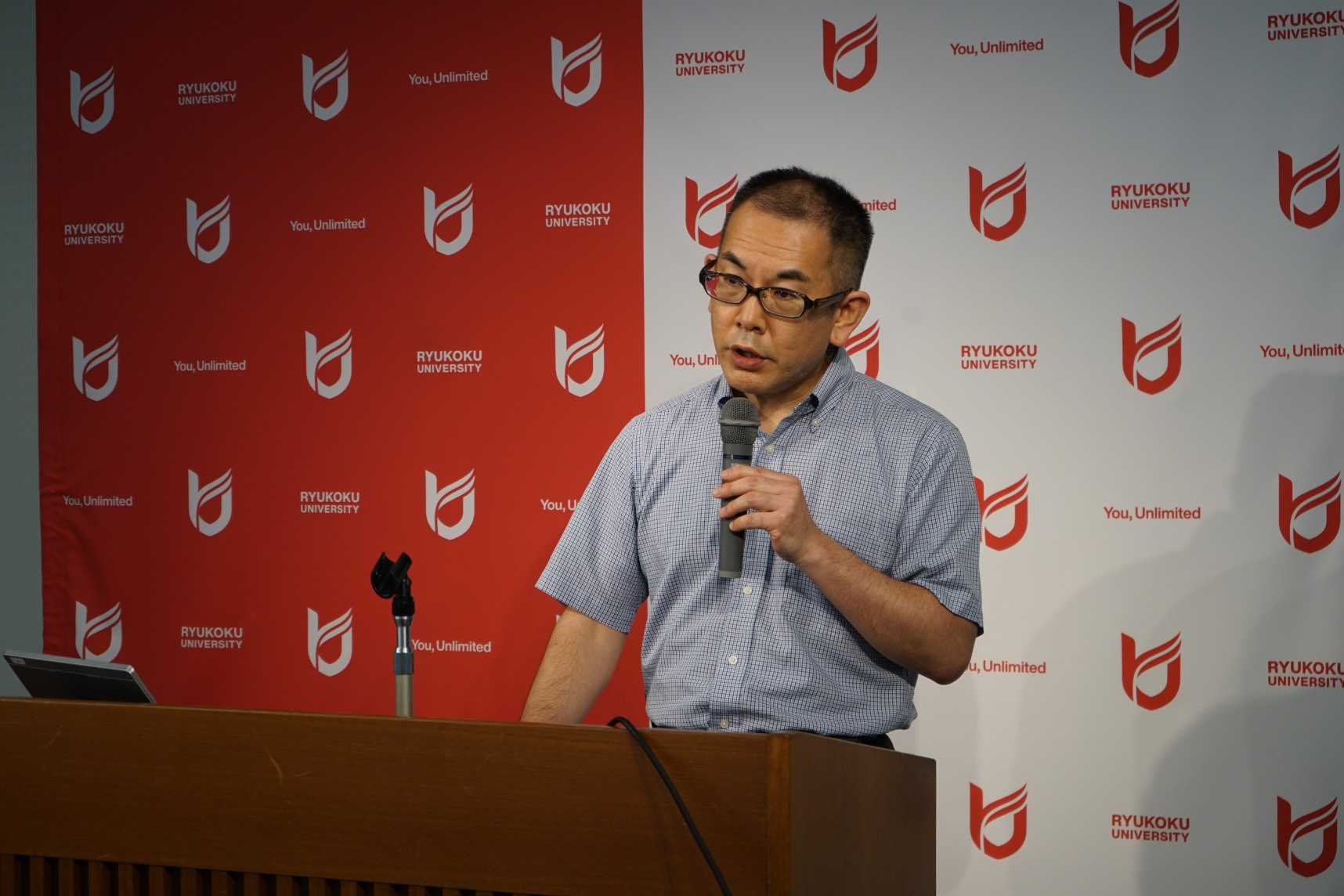
Koichi HAMAI (Professor of Criminology, Ryukoku University, Japan)

Koichi HAMAI (Professor of Criminology, Ryukoku University, Japan)


Abstract
Japan enjoyed its post-war reputation as one of the most crime-free countries. The number of homicides reported in Japan has constantly decreased since 1955, to an all-time low of 895 in 2016 (950 in 2019). According to the 2019 UN Global Study on Homicide, the Japanese homicide rate in 2017 was around 0.2 per 100,000 population – which was lower than in nearly any other advanced democracy. Japan has effectively controlled illegal drug markets. The lifetime experience rate of illegal drugs is also very low in Japan, with 1.2% reporting cannabis use.
Several explanations have been postulated for why Japan has maintained a very low crime rate. These include, for example, that Japan is a relatively homogeneous society that has few immigrants, or that it has a good criminal justice system. At the 14th UN Congress on Crime Prevention and Criminal Justice, one of the Japanese delegates claimed that the Japanese people “have developed trust and confidence that their laws are formulated through a legitimate process and are applied in a fair manner, thereby fostering a culture of lawfulness rooted in society”. Is this claim valid and the reason for the low crime rate? A social psychologist, Toshio Yamagishi, claims that social order in Japan is maintained by mutual monitoring and threat of exclusion, rather than enforcement of universal rules of conduct (laws).
John Braithwaite once claimed that Japan’s success in maintaining a low crime rate could be explained by the commitment of the Japanese criminal justice system, and Japanese society in general, to notions of reintegration and reparation. But, has Japanese society really been re-integrative, and has the criminal justice been lenient toward offenders? While the number of crimes has been decreasing, the prison population contains many elderly and handicapped people who have been detained for minor offenses. In 2019, more than 13% of new inmates were above 65 years of age and have no pension to fall back on. According to a recent study by the Ministry of Justice, it was found that 14% of inmates over 60 are suffering from forms of dementia such as Alzheimer’s disease. Moreover, some elderly inmates have tried to return to prison by committing another crime just because they knew that there was no place for them outside the wall. Then, in the last two decades, more than a thousand of them have died in prisons. In Japanese society, people are very intolerant of the behaviors which disturb social and moral order or cause trouble. Therefore, people are afraid of disturbing conformity.
Considering these aspects, I will explore the social mechanisms of the low crime rate in Japan and the future of criminology in the shrinking Japanese criminal justice market.

Presentation Summary:

[Decrease in Crime Recognition and Increase in Crimes by the Elderly]
Japan is said to be one of the safest countries among the developed countries. The number of homicide arrests per 100,000 population is much lower than in other countries, and is decreasing every year. The number of deaths due to violent crime is also decreasing. On the other hand, crimes committed by the elderly are on the rise. Even though the total number of inmates is decreasing, the number of elderly people being held in penal institutions for minor crimes such as shoplifting is increasing. It may be said that inmates in Japan are becoming welfare facilities. Many elderly inmates suffer from dementia, and the number of elderlies who die in prison is increasing. There are also inmates who reoffend and re-enter prison because they have no place in society. Prisons have become a safety net for the elderly.

[So-called "Peer Pressure"]
Japanese society is punitive towards those who disrupt order and cause trouble. Therefore, people are extremely afraid of causing trouble to others. In Japan, when someone helps you or takes care of you, many people say "I am sorry" instead of "Thank You". This is the same reason why people are hesitant to apply for welfare. It may be said that social order is maintained by mutual surveillance within a group, or fear of exclusion from a group. In a society of mutual surveillance, the fear of exclusion and isolation can discourage crime. However, once a person has become isolated from society, or has crossed the line into crime, he or she will be viewed harshly. As the number of isolated elderly people is increasing, the strict scrutiny of each other is leading them to commit crimes. For such elderly people, prison may be the only place where they do not have to bother others and do not have to worry about being subjected to new stigmas.

[Juvenile Delinquency in Japan]
Recently, the economic situation for juveniles in Japan has been worsening. The number of juveniles living in poverty has been increasing. However, the number of juvenile delinquents is decreasing, a paradoxical phenomenon. This phenomenon can be explained by Robert Merton's theory of anomie. In societies characterized by "innovation" such as the U.S., the predominant value choice and behavioral pattern is that it is okay to have some problems with how the goal is achieved. Japan, on the other hand, is a society where "ritualism" prevails, where alignment and synchronization are more important than devaluing goals. Furthermore, there is even a tendency among young people these days toward "retreatism," which is the abandonment of achieving goals and conforming to rules in the first place. So we are beginning to see juveniles who are not even motivated to delinquency. An international survey on youth attitudes conducted by the Cabinet Office also shows that Japanese youths do not have high hopes for their future. Without big dreams, there will be no tension due to dissatisfaction, which can lead to crime.

[Pandemics and Criminology]
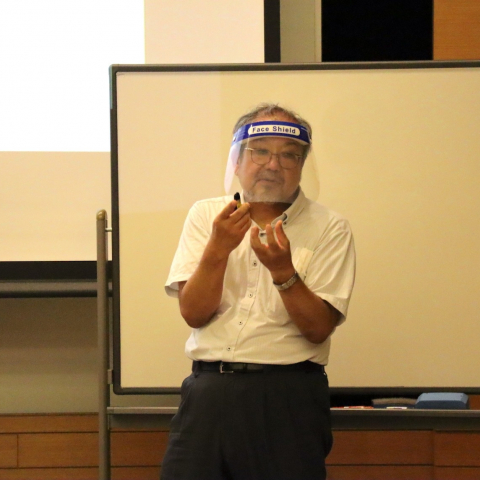
This year's Asian Criminological Society 12th Annual Conference was held in the midst of a pandemic, the global outbreak of COVID-19. As a member of the academic division, I asked the invited speakers to mention the pandemic.

Prof. David Garland (Sociology of Law, New York University, U.S.) argued that criminology should learn from the role that public health (experts) have played in this pandemic. He also argued that it is important to take a public criminology perspective on how to communicate expert knowledge to citizens and policymakers.
In a pandemic, a person is infected with a virus, which is then transmitted by the infected person to other people. An important mission for public health is to communicate real threats to people scientifically. In other words, the key message is to accurately convey that the target to be fought (evil) is the virus, not the person carrying it.

The same goes for criminology. Penal Populism argues that it is the individual criminals who are the real threats to us so that isolating (incapacitating), intimidating, and monitoring them will be the answers to solve the problem.
The mission of criminology, like that of public health, is to inform the public, based on scientific knowledge, about the mechanisms that make people commit a crime and the mechanisms that help people recover from crime. As with infectious diseases, any person can be infected with the virus of crime. And anyone can recover from that infection. It is important to convey this fact properly to the public.


Prof. Shadd Maruna (School of Social Sciences, Education and Social Work, Queen's University, UK) showed how to recover from the infection of crime. Prof. Lorraine Mazerolle (School of Criminology, University of Queensland, Australia) pointed out that reliable criminal justice is the key to solving the problem. Like Prof. Garland, Prof. John Pratt (Institute of Criminology, Victoria University of Wellington, New Zealand) pointed out that criminology needs to learn from public health successes and strive to communicate the right knowledge to the public, which will reduce punitive populism and pave the way for the future of criminology. He pointed out that criminology needs to learn from public health success stories and try to communicate the right knowledge to the public.

Japanese society is basically very punitive towards people who cross a certain line and cause trouble or cause trouble to others. And it is a society where mutual surveillance functions to prevent people from crossing certain lines. Even in the midst of a pandemic, the Japanese government has not taken strong measures such as lockdowns like European countries have. And trust in the government is not high. However, we have been able to maintain a relatively low infection rate, probably because of the functioning of these characteristics of our society.

[Paradigm of Criminal Policy]
Let me tell you about the case in Japan. At the request of a local government, I took on the role of an advisor for rehabilitation. I advised them, based on empirical data, that it is important to support reintegration into the community to prevent recidivism. I explained, based on evidence, that offenders are not enemies who should be excluded from society, but are born into society and return to it, just like us. Criminal policy in Japan should shift from a punitive paradigm to a reintegration paradigm. Such efforts are beginning to be made at the municipal level, and the "Nara City Regulation on Rehabilitation Support," in which I was involved, is one example.


[Conclusion Message]
In Buddhism, there is the concept of 縁(En), which is the everything that supports us. Without 縁, we would not be able to live on our own. If criminology can convince people that those who have committed crimes are also human beings just like us, and that they can be recovered by regaining their 縁, Japan may be able to change from a society of mutual surveillance to a society of mutual trust. This may be the path for which criminology in Japan should aim.


After the plenary lecture that summarized the conference, there was a discussion on why elderly people commit crimes in Japan and why they tend to be isolated. The answer lies in the isolation of the elderly. Elderly people who live alone cannot live without the help of those around them. However, many elderly people stay indoors and isolate themselves because they feel that they should not bother others for help.


The Asian Criminological Society 12th Annual Conference (ACS2020), hosted by Ryukoku University, was held online for four days from June 18 to 21, 2021. The purpose of the conference, the second of its kind to be held in Japan after the 2014 Osaka conference, was to promote the growth of criminology in Asia and Oceania, and to promote academic exchange with advanced regions of criminology such as the United States and Europe.
>> ACS2020 Program https://acs2020.org/program.html
The overall theme of the conference is "Crime and Punishment under Asian Cultures: Tradition and Innovation in Criminology". The aim was to promote understanding of the social systems and culture and measures against crime and delinquency in Japan, which is said to be "the country with the least crime in the world".

The following is a summary of the Plenary Session with Q&A Session, which was held live streaming at the conference.

[PL06] Spiritual and Positive Criminology - contemporary applications of established knowledge

- Plenary Speaker: Natti Ronel (Professor, Faculty of Social Sciences, Bar-Ilan University, Israel)
- Chair: Hiroshi Tsutomi (Professor, the school of International Relations, University of Shizuoka, Japan)
- Date: 16:30-18:00, 20 June, 2021
- Keywords: Positive Criminology, Spiritual Criminology, Spirituality


Natti Ronel (Professor, Faculty of Social Sciences, Bar-Ilan University, Israel)

Natti Ronel (Professor, Faculty of Social Sciences, Bar-Ilan University, Israel)

Abstract
What embodies the distilled essence of criminality? Positive criminology typically indicates any form of criminality to inevitably involve a process of separation and disintegration, being revealed in three related levels: Interpersonal, intrapersonal, and spiritual. Consequently, positive criminology continuously emphasizes successful integration as a leading means for crime desistance and offender rehabilitation. Spiritual criminology adds on it conscious attempt to bring together a universal essence of spiritual integrative knowledge which was intensively developed in Asian various cultures (e.g., vital religions). While diverse cultures might traditionally maintain different outlooks on spirituality, they all share a commonality that exists at their root of spirituality, which is also adopted by spiritual criminology. Accordingly, any form of criminality typically entails a marked degree of self-centeredness of those involved. Self-centeredness relates to an individual’s over-occupation with their needs, risks, desires, and expectations. It indicates the individual's personal level of ignorance, the degree of self-identification with one’s ego, or the individual's distance from God. At times, it might be projected into a certain group of belonging, to become group self-centeredness. Self-centeredness refers to a fundamental separation on the spiritual level, usually expressed also and influenced by the individual's intrapersonal and interpersonal levels of separation. Crime desistance and offender rehabilitation can be soundly achieved by a growing decrease of self-centeredness, in addition to employing integrating means. This might be exemplified by the Covid-19 pandemic and the worldwide official response of the authorities, which unfortunately increased social distance and personal fears. Consequently, it increased self-centeredness, which resulted in an increase of related phenomena such as substance abuse and addiction, domestic violence, and suicide. Both positive and spiritual criminology call for reversing this process by any attempt to increase faith and hope and to allow social opportunities for growing integration. Such means are estimated to have positive public health outcomes.

Summary of the Q&A Session

Question 1: What is the relationship between spiritual criminology and positive criminology?
Answer 1: Spiritual criminology goes beyond the usual distinctions of positive and negative, good and evil.
Question 2: Can your report today be applied to secular situations?
Answer 2: Today, I talked about spirituality, not about religion. Both secular and religious people do good and share similar experiences.

Question 3: If being a volunteer is so important, what is the significance of being an expert?
Answer 3: When you are an expert, you are firstly a volunteer who unconditionally wants to help others, beyond which you have the added value of being an expert.

Question 4: I would like to learn more about spiritual criminology and its relationship to religion. I am interested in religion as a political issue. What forms of religion and spirituality are beneficial to society? Who decides this and how? If there are inmates in prison who follow an antisocial religion, should they be allowed to practice their beliefs?
Answer 4: Religion is the act of praying and performing rituals, while spirituality is what is in the mind of the person performing the act. The separation is a shift from self-centeredness to other-centeredness and God-centeredness. Religious groups and gangs are self-centered if they are separated from society. It is difficult to determine what is self-centered and what is not. Rather, we can only say that we hope to grow out of that self-centeredness.

Question 5: I have been doing research on ”Aum Shinrikyo". I have met many prison chaplains, but none of them belong to Aum Shinrikyo. To define a religion as good or bad is to give the government the authority to define which religions are good or bad. I think there is a common interest in this point.
Answer 5: Any power has the potential for abuse. Crime is an abuse of power, and prisons are places where power is abused. Massacres have been committed in the name of religion. This is why spiritual criminology tries to provide ideas that go beyond the distinction between good and evil and focus on the battle against self-centeredness.

Question 6: The concept of self-centeredness is central to the argument, but why is suicide, in which the self is killed, a manifestation of self-centeredness?
Answer 6: Self-centeredness refers to a situation in which one is occupied with oneself. Suicide or self-injury is a kind of proof that one can control one's life. Suicide means to end the pain, which is a sign of self-centeredness.

Question 7: Could you provide us with more information about your clinical practice?
Answer 7: I have published a book on psychotherapy called "Twelve Tools," which is similar to the Twelve Steps. I treat a wide variety of people, from rich to poor. Some are drug addicts, some are sex addicts, some are violent, some are sexually violent. Some of my patients are Orthodox Jews. They are very religious, but many of them are sex addicts. Sex is legal, so they are not sex offenders, but there is no spirituality in this case. In the initial interview, I ask about their belief systems and religion. This is a good starting point. Sexually addicted people are constantly thinking about sex and are caught up in it. This treatment is difficult but possible.
Question 8: In recent years measures of the Ministry of Justice and the Ministry of Health have led to reversals. Addiction has become the focus of treatment and correction. What can be done to overcome this?

Answer 8: The government has nothing inherently to do with Alcoholics Anonymous (AA) or Narcotics Anonymous (NA). I teach a 12-step program at university and send my students to AA and NA programs as part of their education. In Israel, the government has provided facilities to help NA, and NA has been established in various cities. I would like to see more cooperation from the groups.

Question 9: In Japan, the elderly are isolated from society and many of them are in prison for committing crimes. How can we solve this problem?
Answer 9: If we build halfway houses, we will end up building another prison. Instead, it is important to rent a house locally and create a community, which is cheaper for the government. AA, NA, etc. can also be used in such communities to bridge the gap between society and those on the periphery of society.

Question 10: I want to know about the philosophy behind your spiritual criminology.
Answer 10: My source is the 12 steps, and I have traveled in search of spirituality within me. I've been to Japan, I've done Zen, I've been to India. The root of their commonality is something greater than the self.

Recorded by Hiroshi Tsutomi


The Asian Criminological Society 12th Annual Conference (ACS2020), hosted by Ryukoku University, was held online for four days from June 18 to 21, 2021. The purpose of the conference, the second of its kind to be held in Japan after the 2014 Osaka conference, was to promote the growth of criminology in Asia and Oceania, and to promote academic exchange with advanced regions of criminology such as the United States and Europe.
>> ACS2020 Program https://acs2020.org/program.html
The overall theme of the conference is "Crime and Punishment under Asian Cultures: Tradition and Innovation in Criminology". The aim was to promote understanding of the social systems and culture and measures against crime and delinquency in Japan, which is said to be "the country with the least crime in the world".

The following is a summary of the Plenary Session with Q&A Session, which was held live streaming at the conference.

[PL05] The Application of Positive Psychology Intervention to Female Inmates’ Rehabilitation Program
- Plenary Speaker: Doris C. Chu (Professor, Department of Criminology, National Chung Cheng University, Taiwan)
- Chair: Mari Hirayama (Professor, Faculty of Law, Hakuoh University, Japan)
- Date: 14:45-16:15, 20 June, 2021
- Keywords: positive psychology; intervention; resilience; substance abuse treatment; hope; empowerment


Doris C. Chu (Professor, Department of Criminology, National Chung Cheng University, Taiwan)

Doris C. Chu (Professor, Department of Criminology, National Chung Cheng University, Taiwan)

Abstract
Negative emotions, stress, and the lack of positive stress-coping skills have been found to be related to illicit drug use and relapse. Empirical studies reveal that the elements in positive psychology interventions—e.g., recalling three good things per day, and developing self-strength and self-efficacy—can enhance one’s mental health and resiliency. In recent years, clinicians and researchers have started to incorporate positive psychology principles into treatment programs to help rehabilitate ex-offenders and ex-drug users.
The application of positive psychology and related concepts (e.g., mindfulness, Yoga, and good-life model) to substance abuse treatment and offender rehabilitation is still in its initial stages. Systematic studies with longitudinal data are not sufficient. Most of the existing studies have been conducted in Western countries, and empirical studies in Asian countries are rare.
In this presentation, I will share with you an empirical study that examined the outcomes of a strength-based positive psychology intervention for female inmates with drug offenses in Taiwan. A quasi-experimental intervention design was adopted in this empirical study. Participants in the experimental (intervention) group consisted of a sample of 61 female inmates in a women prison in Taiwan. The comparison group consisted of a sample of 60 female inmates with matched characteristics (age, length of imprisonment, history of prior criminal records) in the same prison. Female inmates assigned to the experimental group participated in a 6-session intervention. The six-sessions included optimism (three good things a day) and being hopeful; visualizing best self (identifying and applying signature strengths); being kind to others and showing gratitude; building goals; relaxation (Seligman et al., 2005; Lewis, 2007; Papazoglou & Andersen, 2014; Huynh et al., 2015), emotion regulation, resilience, and empowerment. Pre-and post-intervention surveys were conducted to examine the effects of the intervention. It was found that inmates who completed the six sessions intervention had significantly higher scores in the dimensions of personal growth, empowerment, and mindful attention awareness, compared to the female inmates in the control group.
This study, of benefit to criminal justice agencies and practitioners, offers empirical evidence about the effects of positive psychology interventions on promoting the wellbeing of incarcerated women. Findings of the research can suggest courses and strategies that might be included in treatment programs for women during incarceration.

Summary of the Q&A Session

Question 1: Your report focuses on female prisoners charged with drug-related crimes, which are so-called "victimless crimes." What kind of effects can we expect from this Strength-Based Psychology intervention for crimes with victims, not drug-related crimes? What is the relationship between making amends to the victim and correctional education that is conscious of the victim's perspective?
Answer 1: While it is true that the female prisoners in my report are "drug offenders" in both the experimental and control groups, some of them have committed other crimes in addition to drug offenses. Some of them committed other crimes as a means of obtaining illegal drugs. For those who committed fraud or violent crimes, it is true that empathy for the victims is important. However, I believe that the main aspects of Strength-Based Psychology interventions can be applied to these crimes as well.

Question 2: The importance of Strength-Based Psychology interventions in penal institutions is as you reported. On the other hand, are there any plans to apply this approach to follow-up studies after prisoners are released from prison? How about investigating the impact on the rate of reimprisoned inmates?
Answer 2: Of course, it would be nice to be able to study the effects of the Strength-Based Psychology interventions even after the prisoners are released. However, there are some barriers to this kind of study. For example, access to information on ex-prisoners after their release is quite limited. There is a strong need for confidentiality of information on ex-prisoners. It should also be pointed out that the prisoners are serving long sentences. (It takes a long time for them to return to society.)
As a further area of application of this study, the effects on male prisoners should also be considered. However, we recognize that the degree of engagement in the program is higher for women than for boys, and that the effects are also higher.
We also believe that this approach has a role to play in the training of police officers and prison guards.

Question 3: Could it be that the Strength-Based Psychology interventions could also be expected to change prison culture - especially a culture that has been far too male-oriented?
Answer 3: That's right. The implementation of such programs in penal institutions may create a more relaxed atmosphere within the penal institutions themselves. In Taiwan's female prisons, it can be said that more effective correctional education programs are being implemented in the classroom, and more women are becoming correctional officers.

Question 4: Please explain a little more about the changes in prison culture in Taiwan. In particular, have you begun to see the perspective of "open prisons"? For example, is there an external ombudsman organization like the Penal Institution Visiting Committee in Japan, or is there a movement of outreach from penal institutions to the local community?
Answer 4: Recent legal reforms have led to the establishment of oversight committees organized by those outside penal institutions. Based on the complaints and suggestions of prisoners, the committee makes recommendations for the improvement of penal institutions.

Question 5: In Taiwan, what kinds of initiatives, both government-led and by private organizations, are available to help prisoners reintegrate into society after their release?
Answer 5: Especially in recent years, the government has begun to realize the importance of social networks after release from prison. There is also an emphasis on efforts to support the bonds between prisoners and their families. I hope to see more and more interventions based on these ideas in the future.

Recorded by Mari Hirayama


The Asian Criminological Society 12th Annual Conference (ACS2020), hosted by Ryukoku University, was held online for four days from June 18 to 21, 2021. The purpose of the conference, the second of its kind to be held in Japan after the 2014 Osaka conference, was to promote the growth of criminology in Asia and Oceania, and to promote academic exchange with advanced regions of criminology such as the United States and Europe.
>> ACS2020 Program https://acs2020.org/program.html
The overall theme of the conference is "Crime and Punishment under Asian Cultures: Tradition and Innovation in Criminology". The aim was to promote understanding of the social systems and culture and measures against crime and delinquency in Japan, which is said to be "the country with the least crime in the world".

The following is a summary of the Plenary Session with Q&A Session, which was held live streaming at the conference.

[PL04] Prison Ministry in Contemporary Japan
- Plenary Speaker: Adam Lyons (Assistant Professor of Faculty of Business and Commerce, Keio University, Japan)
- Chair: Shin-ichi ISHIZUKA (Professor, Faculty of Law, Ryukoku University, Japan)
- Date:  10:45-12:15, 20 June, 2021
- Keywords: prison, chaplain, dilemma, karma, volunteers, church, buddhism, death row, condemned criminal, fieldwork, karmic connection


Adam Lyons (Assistant Professor of Faculty of Business and Commerce, Keio University, Japan)

Adam Lyons (Assistant Professor of Faculty of Business and Commerce, Keio University, Japan)

Abstract
Despite being one of the most avowedly secular nations in the world, Japan may have more prison chaplains per inmate than any other country. The majority of these chaplains are Buddhist priests. In this talk, I will introduce the Japanese form of chaplaincy based on the Buddhist concept of doctrinal admonition (rather than Euro-American notions of spiritual care).
My upcoming monograph Karma and Punishment: Prison Chaplaincy in Japan is based on archival research, fieldwork inside prisons, and interviews with chaplains. In this talk, I will share the major findings of my book, revealing another dimension of Buddhist modernism that developed as Japan’s religious organizations carved out a niche as defenders of society by fighting crime. Between 1868 and 2020, generations of clergy have been appointed to bring religious instruction to bear on a range of offenders, from illegal Christian heretics to Marxist political dissidents, war criminals, and death row inmates. The case of the prison chaplaincy shows that despite constitutional commitments to freedom of religion and separation of religion from state, statism remains an enduring feature of mainstream Japanese religious life in the contemporary era.

Summary of the Q&A Session

Question 1: Do you think that prison chaplains should play a more active and significant role in the campaign to abolish the death penalty in Japan? If so, what do they need to do in order to play a meaningful role?
Answer 1: It is true that prison chaplains can help in the effort to abolish the death penalty in Japan. However, it is very difficult for them to play a meaningful role in the campaign to abolish the death penalty. If a chaplain makes political statements, he or she may be banned by the authorities from contacting inmates. Most chaplains refrain from making political statements in order to remain involved with the inmates. In this sense, the prison chaplains face a big dilemma.

Question 2: In watching the movie "Deadman Walking," I noted that Sister Prejean was very active in speaking about and acting on the issue of the death penalty. Why are Japanese counselors so reluctant to speak or act in a legal or political manner?
Answer 2: The Japanese Constitution stipulates a strict separation of religion and state. Therefore, if a chaplain is involved in activities to abolish the death penalty, the prison will claim that he or she is violating this constitutional principle. If chaplains get involved in political activities, they will be abandoning inmates who are really seeking moral relief. Keiko Horikawa's "Kyokaishi" (Kodansha, 2014) is based on an interview with real-life chaplains to  death row inmates. Fuso Watanabe depicts how stressful a job it is to be a chaplain to death row inmates. Every chaplain to death row inmates must feel a great burden.

Question 3: There seems to be a gap between the official manuals of each religious sect and the actual activities of the chaplains in prisons. I would like to know if you know of any efforts to bridge this gap.
Answer 3: I am not aware of any organized effort to create a new manual that comprehensively reflects what is actually being done in the field. Each chaplain works in his or her own way. Education for the improvement of indoctrination is usually said to be teaching for good guidance. For example, "If you do bad things, bad things will come back to you as retribution. Because you have sinned, you are in prison as payback for your evil karma. Bad karma can be eliminated by conversion. This is the traditional and typical story of karma. However, Miyoko Fukai, the prison chaplain introduced in the report, said, "I often work with people with intellectual disabilities. In order to teach those who do not have the ability to learn easily, the educational penalty system model does not work well. The chaplains are trying to solve structural problems within the walls by being kind to those who have spilled over from the social safety net.

Question 4: Do inmates have to disclose their religious beliefs to the public when they are incarcerated in a penal institution?
Answer 4: Visits to the chaplain are not compulsory, but are conducted when requested by an inmate. There are many reasons why inmates want to meet with them, including the wish to receiving counseling, and because the chaplain’s activities overlap with other workshops. Before World War II, it was mandatory for prisoners to receive religious teachings. All the chaplains were monks of the Hongwanji school of the Jodo Shinshu sect in the East and West, and they were civil servants. Buddhism in Japan is diverse and there are many different sects, but the largest traditional Buddhist sect is Jodo Shinshu. Many Westerners have an image of Japanese Buddhism as Zen Buddhism. The most politically and culturally influential Buddhist sect in modern Japan has been Jodo Shinshu, especially from around 1900 to 1945, when the Honpa Hongwanji and Otani sects of Jodo Shinshu dominated the prison ministry.

Question 5: Please explain "karmic connection".
Answer 5: The concept of "karma" is well known in the West. The title of my upcoming book is "Karma and Punishment". This title reminds me of Dostoevsky's "Crime and Punishment". Although "crime" and "karma" seem similar, I use the concept of "karma" in the book to explain how chaplains develop and institutionalize these two conflicting missions. In official documents and the like, chaplains use a "karmic" discourse. However, in private conversations, they often use the expression "karmic connection" rather than talking of "good (or bad) karma" or "cause and effect". This can be seen as a resistance to top-down, narrowly defined, one-sided impositions. In the West, Christian chaplains often use the discourse of "spiritual care," which is not officially used in Japan, even though something similar was sometimes mentioned in the interviews. I believe that Japanese chaplains have their own concept of "Mental Healthcare."
With this in mind, I did not use Western concepts in the title of my book, but used the Japanese word "karma," which comes from Japanese Buddhism.

Question 6: It seems to me that Christian chaplains deny the theology of "karma".
Answer 6: There is no movement to deny the "karma" story in Japanese prisons today. In Japan, with the exception of a few pioneers from the Meiji period to the early Showa period, Christian chaplains generally did not appear until after the war. Christian chaplains do not base their teachings on the idea of karma, but they do use the metaphor of "karmic connection". Since that is a common expression used in daily conversation rather than a religious one, Christian chaplains use it as one of their everyday terms.

Question 7: Will theology continue to be practiced as part of rehabilitation in Japan?
Answer 7: Indeed, Japan, like the West, is becoming a non-religious society. However, the Chaplain program continues to exist as part of the prison system, and the 2017 edition of the ”Chaplain Manual” (edited by the Chaplain Manual Editorial Committee) describes "karma," "purification," and "correction" in the same way as the previous edition, which is somewhat anachronistic. However, the discourse of "Mental healthcare" is becoming more popular in Japan, and if chaplains start using this discourse, the theology will probably change. Prisons in Japan are aging. The real prisons are full of people who have fallen through the social safety net and have nowhere else to go. It does not make much sense to talk to them with a focus on the doctrine of "karma.” In fact, that is what the teachings say.

Question 8: Are chaplains active during the COVID-19 pandemic?
Answer 8: I talked to the Japan Federation of Chaplains, and was told that everything has stopped. There is no face-to-face visitation, although correspondence is still going on. The penitentiary seems to be limiting the number of visits because many elderly inmates are at high risk of infection.

[Reference]
https://www.waterstones.com/book/karma-and-punishment/adam-j-lyons/9780674260153
https://www.amazon.co.uk/Karma-Punishment-Chaplaincy-Harvard-Monographs/dp/0674260155
https://www.amazon.co.jp/-/en/Adam-J-Lyons/dp/0674260155/ref=sr_1_1?dchild=1&keywords=Karma+and+Punishment%3A+Prison+Chaplaincy+in+Japan&qid=1624157388&sr=8-1

Recorded by Shin-ichi ISHIZUKA


The Asian Criminological Society 12th Annual Conference (ACS2020), hosted by Ryukoku University, was held online for four days from June 18 to 21, 2021. The purpose of the conference, the second of its kind to be held in Japan after the 2014 Osaka conference, was to promote the growth of criminology in Asia and Oceania, and to promote academic exchange with advanced regions of criminology such as the United States and Europe.
>> ACS2020 Program https://acs2020.org/program.html
The overall theme of the conference is "Crime and Punishment under Asian Cultures: Tradition and Innovation in Criminology". The aim was to promote understanding of the social systems and culture and measures against crime and delinquency in Japan, which is said to be "the country with the least crime in the world".

The following is a summary of the Plenary Session with Q&A Session, which was held live streaming at the conference.

[PL03] Pandemic as an Antidote to Populism: Punishment Immobilization and Covid-19
- Plenary Speaker: John Pratt (Professor of Criminology, Institute of Criminology, Victoria University of Wellington, New Zealand)
- Chair: Koichi HAMAI (Professor of Criminology,  Ryukoku University, Japan)
- Date: 14:45-16:15, 19 June, 2021
- Keywords: penal populism, populist politicians, experts (criminologists), movement restrictions, scientific findings, pandemics, post-pandemics, novel coronavirus (COVID-19), criminal policy, social solidarity


John Pratt (Professor of Criminology、 Institute of Criminology、 Victoria University of Wellington、 New Zealand)

John Pratt (Professor of Criminology、 Institute of Criminology、 Victoria University of Wellington、 New Zealand)

Abstract
The contemporary rise of populism across much of Western society – especially the Anglo-American countries that are the main focus of this paper– has threatened many of the protections and freedoms provided by the post-1945 commitment to a democratic political order: guarantees of human rights, adherence to the rule of law, and a media free to criticize governments and hold them to account. Its penal programme that not only fostered more severe punishments but has also extended the scope of criminal law so that it can be used to immobilize those thought at risk of committing particular crimes – through control and restriction of their movement in public space to indefinitely imprisoning them at the end of a finite prison term – before any new crime is committed.
Given the way in which these measures point to important shifts away from democratic norms, it might be thought that governmental reactions to the Covid-19 pandemic pose a further threat to democracy and its criminal justice processes. Additional forms of immobilization have been introduced to combat the spread of the virus: control on freedom of movement in public space or stay at home orders equivalent to house arrest – controls now on entire nations rather than just those at risk of committing particular crimes, with police (and sometimes the military) given powers of enforcement.
However, it will be argued that the pandemic also provides very different possibilities of governance to this kind of populist authoritarianism. Indeed, the virus acts as an antidote to populism. The latter is premised around nationalistic visions of a glorious future, that only ‘strong man’ leadership, with demagoguery blustering its way past science, reason and expertise, can provide. For this to happen, however, ‘enemies of the people’ must be brought under control through extra-judicial action beyond the boundaries of the rule of law as necessary. Covid-19 is one such enemy, but it laughs in the face of these demagogues. It shows them to be nothing more than incompetent, if usually malevolent, charlatans. Instead, it can only be eliminated by science and expert knowledge, acting in conjunction with a strong but accountable central government, amidst forms of immobilization to which the general public have largely acquiesced, strengthening rather than weakening social cohesion in the process - and eating into the conditions necessary for populism to thrive. This then provides opportunities for a different and more restricted penal framework in the post-pandemic era.

Summary of the Q&A Session

Question 1: Some people in Japan and elsewhere are addicted to conspiracy theories such as QAnon. What do you think about conspiracy theories? What are some ways to counter them?
Answer 1: I think that conspiracy theories and their growing influence on social networking services are issues that we should be concerned about, but I believe that only a limited number of people fall for such things. I don't think we need to worry too much about it. I think the only way to fight it is to communicate the facts properly.

Question 2: Is there a possibility that populism will rise again after the pandemic?
Answer 2: Although this remains a concern, but both Trump and Bolsonaro have failed to take action against COVID-19 and are gradually losing support. As in Japan, until the pandemic, no one knew the names of the public health experts. But now, everyone knows who they are. I think people are starting to value the opinions of experts more than the government, because they are telling the truth and trying to fight the crisis correctly. In New Zealand, there is also a growing trust that the government will listen to the experts and act accordingly. As a result, support for far-right parties has declined significantly.

Question 3: In Japan, the feud between the government (Prime Minister) and the experts has become a major problem. They do not seem to trust each other. Particularly in the case of the Olympic Games (TOKYO 2020), the government seems to be ignoring the opinions of experts, and is pushing ahead with the event, which makes many people feel uneasy. I think this is where the populists can make inroads.
Answer 3: It may seem a little too pessimistic, but this could be a possibility. However, looking at public opinion polls in developed countries in Europe and the U.S., we see that while the public is cautious about lifting lockdowns, the government is more insistent about lifting them, which is the exact opposite of what we would expect during a populist era. This suggests that the public is more sober-minded, and is placing more weight on the opinions of experts than the government. In that light, we can be a little more optimistic.

Question 4: I am sure you have heard Professor Garland's lecture, the content of which has much in common with Professor Pratt's lecture. Professor Garland said that pandemics help experts gain social status and public trust, so that the public is properly educated and a good form of populism is created. What did you think about his lecture?
Answer 4: His talks are always thought-provoking. It was interesting to hear him speak today about the potential for expert science-based opinion to guide public opinion in the right direction. With the pandemic crisis, public health experts suddenly came to the public's attention and won the public's trust by presenting unshakable common knowledge based on science. However, public health has a long history of contributing to society through its scientific findings. In contrast, criminology has a short history. It may not be so easy to win the trust of the public in the same way as the public health experts. If we compare the level of trust in doctors and police officers, the difference seems obvious. However, the situation is not impossible. Professor Garland also said that it is important to know what kind of story you are telling the public. We will need the help of journalists to educate the public. However, several criminologists have tried to do so, but without much success. As Professor Maruna mentioned in his lecture yesterday, we need a social movement approach. In New Zealand, the government has heeded campaigns by young people, albeit on a limited basis. When I published "Penal Populism," I was invited to speak to various journalists and politicians, and since they too were influenced by populism, I did not feel that my talk had that much of an effect on them. However, we may have been able to influence the thinking of young people to a certain extent. If anything, my other book, "Contrasts in Punishment (2013)" may have been more influential. I think it was meaningful that the country where government officials go to learn (by inspection) has changed from the US to Scandinavia.

Question 5: The pandemic has a clear target: the virus. It is possible to distinguish between the virus and the people who carry it and spread it. In criminology, the target is the person who commits the crime, and I think the problem is that it is difficult to separate the person from the cause of the crime. What are your thoughts on this?
Answer 5: Exactly. Viruses are a real risk and all people are exposed to them, but crime is not. I think people are also easier for populists to demonize than viruses.

Question 6: Penal Populism tends to support the death penalty, but do you think that this pandemic will have any impact on the movement to abolish the death penalty?
Answer 6: I think that the issue of the death penalty is more of a moral issue. In that sense, I think it should be seen as a different issue from Penal Populism. So I haven't really thought about the impact of the pandemic on the movement to abolish the death penalty.

Question 7: What do you think led to the abolition of the death penalty in New Zealand?
Answer 7: The death penalty was abolished in New Zealand in the 1960s, the same time as in the UK, but the number of executions had been decreasing even before that, and the last execution was in 1957. Rather than a major campaign, the abolition of the death penalty seems to have occurred as part of an overall trend. In Scandinavian countries, the death penalty was abolished after World War I. In societies with a high degree of homogeneity and a small social distance between people, the death penalty is probably not necessary in the first place. In New Zealand, far-right parties sometimes argue for the reinstatement of the death penalty, but they are not very influential.
Comment 7: The conditions in Scandinavia and other countries that have just been pointed out, such as a high degree of homogeneity and a decreasing crime rate, may apply to Japan, but in reality, the Japanese government is trying to keep the death penalty alive. On a different note, experts in the field of public health are in agreement. In contrast, the opinions of criminal justice experts on criminal policy are varied, and this may be another reason why the opinions of criminologists are not reflected in policy. In Japan, there are some lawyers who are in favor of the death penalty.

Question 8: Regarding the point about pandemics being an antidote to populism, while this may be true for Australia and New Zealand, it is not true for Asian countries, in my opinion. In Japan, of course, but also in the Philippines, there has been an increase in the number of killings by government officials outside the criminal justice process during the pandemic. Where do you think this difference comes from?
Answer 8: That's a difficult question. Of course, I think the detoxification effect varies from country to country. I think New Zealand is the most successful example. The Prime Minister took charge as a leader of 5 million people and appealed for social solidarity. This has been successful in reducing the spread of the disease. In order to function as an antidote, it is necessary to deepen social solidarity. As a matter of fact, it is a bit of a surprise to me that the infection has recently spread in Japan, a country that tends to maintain social distance from the rest of the world. As for the Philippines, since the tyrannical president has been in office since before the pandemic, I think the killings outside the judicial process are increasing as an extension of his attempt to play the strong man. So the impact of a pandemic will of course depend on the societal situation. In any case, I think that social solidarity is the key, and the issue is whether the government can lead people to it.

Recorded by Koichi Hamai


<!-- GET_Template id="body_default" module_id="" -->

id: category_list

作成者有限会社アップルップル

作成日2016/04/26

コメント

サブカラムで使用しているカテゴリーリストを表示します
<!-- GET_Template id="category_list" module_id="" -->

id: category_entry_summary

作成者有限会社アップルップル

作成日2016/04/26

コメント

カテゴリーエントリーサマリーを表示しています
module_id モジュールIDを指定します
  • 【社会福祉学科】国際福祉と平和についての理解「戦争体験者の記録映像を用いた平和教育のワークショップ」を実施しました

    「いのち」を考えるための実践的教育プログラムの一環で、7月5日にNPO法人ブリッジ・フォー・ピース代表理事の神直子さんをお迎えして、「戦争体験者の記録映像を用いた平和教育のワークショップ」を実施しました。 神さんのレクチャーと戦争犠牲者と元日本兵の方々の記録映像をとおして、かつて日本軍とフィリピンの人々との間でどのようなことが起こったのかを学びました。 平和な社会をどのように構築し、どのように守っていくのかという大きな課題に直面している今、過去の戦争の歴史を踏まえ、現在起こっている戦争にどう向...

  • 12/9(木)2021年度龍谷大学FDフォーラム「データサイエンス・AI教育の展開」開催

    Society5.0の実現に向けて、データサイエンスに関する知識・技能が社会人として必要とされるようになり、社会的に大学に対して、文理を問わないデータサイエンス教育への要請が高まっています。 2019年度に開催したFDフォーラムにおいては、先行してデータサイエンス教育に取り組まれた武蔵野大学様、兵庫県立大学様に事例をご紹介いただきました。 今回、関西学院大学様の事例を加え、あらためてデータサイエンス教育に関するFDを開催し、上記2大学様の進展や、今後、大学としてデータサイエンス教育をどのように展開するべきなのか、...

  • 犯罪学研究センター(CrimRC)おすすめシネマNo.8「時計仕掛けのオレンジ」

    「犯罪学」(英:Criminology)とは、犯罪にかかわる事項を科学的に解明し、犯罪対策に資することを目的とする学問です。龍谷大学 犯罪学研究センター(CrimRC)では、学生のみなさんが「犯罪学」にふれる第一歩として、ぜひ鑑賞して欲しい作品を紹介します。 不朽の名作から社会問題を考えてみませんか? 紹介作品: 『時計仕掛けのオレンジ』 1971,アメリカ 監督:スタンリー・キューブリック 犯罪学シネマ史上最もスリルに満ちた作品。 かつて全米で衝撃を与えた犯罪学映画をあなたも味わってみませんか? ◆あらすじ: 舞台は近未来...

  • 2019年度龍谷大学給付奨学金(アカデミック・スカラシップ奨学生・大学院学内進学奨励給付奨学生・大学院研究奨励給付奨学生・地域人材育成学費援助奨学生)合同授与式を開催いたしました。

    法学部・法学研究科では、7月8日(月)に深草学舎顕真館において、2019年度龍谷大学給付奨学金(アカデミック・スカラシップ奨学生・大学院学内進学奨励給付奨学生・大学院研究奨励給付奨学生・地域人材育成学費援助奨学生)合同授与式を開催いたしました。 落合雄彦学部長、丹羽徹研究科長からお祝いの言葉が贈られた後、各奨学金の代表者に賞状の授与を行いました。 アカデミック・スカラシップ(在学採用型)奨学金は、自己応募形式の奨学金であり、応募者の中でも特に優秀な成績を修めた学生に対して給付される奨学金です。今年度...

  • これからの時期に欠かせないイチゴの栽培に関する最新の研究・技術とは 品種開発や安定生産のための病害対策技術について講演

    ハイブリッド(対面+Web)開催、11月5日(火)まで申込受付中<受講料無料> &nbsp; 【本件のポイント】 龍谷大学RECが主催する、今年度農学系のテーマとして第1回目となる「REC BIZ-NET研究会※1 」 農学部教員と学外の研究機関の講師が登壇し、イチゴの栽培、品種開発等に関する研究について講演 講演終了後には、対面参加者と講演者による名刺交換・情報交換を実施 &nbsp; 【本件の概要】 クリスマスにイチゴが食べられるのは、イチゴを休眠させない促成栽培技術が開発されたからとも言われています。専門家でも意外と知ら...

  • 入試直前英語対策講座(天王寺会場)

    2024年度の入試説明と、英語対策講座を実施します。 ※事前予約制(1申込につき、同伴者1名まで申込可能。定員に達し次第受付終了) 入試要項は全員に配布するほか、資料配布コーナーでは、大学案内や学部パンフレット、過去問題集を設置します。 英語対策講座終了後には個別相談会も実施します。 <スケジュール> 受付開始 16:30〜 ⼊試説明 17:00〜17:30 英語対策講座 17:30〜18:30 個別相談 19:00まで イベント詳細、参加申込、注意事項などは以下のページをご確認ください。 https://www.ryukoku.ac.jp/admission/event/lecture/​

  • 入試直前対策講座(草津会場)

    <主な開催内容> ■入試説明 2019年度入試のポイントを紹介します。自分にあった入試方式を確認しましょう。 ■龍谷必勝講座 人気予備校講師による英語対策講座。解説では出題傾向をふまえ、解答テクニックや受験勉強のコツを伝授します。 ■個別相談 出願方法・併願方法など、入試に関する相談を入試担当者が個別に相談に応じます。 詳細は以下をご確認ください。 https://www.ryukoku.ac.jp/admission/event/lecture/

  • 進学相談会(大阪)

    龍谷大学入試アドバイザーが、各地の進学相談会で受験生の個別相談に対応。 キャンパスの雰囲気や大学生活、入試制度、学費、各学部の特色等について分かりやすくご説明します。

  • 夏のオープンキャンパス

    夏のオープンキャンパスは3キャンパス同時開催。 大学紹介イベントや入試イベントだけでなく、学部学科紹介イベント、学生企画イベントなど盛りだくさんのイベントをご用意します。 イベント参加にはスマホアプリのダウンロードが必要です。 ※新型コロナウイルス感染拡大状況によって、開催内容の変更やイベントを中止するの可能性があります。 深草キャンパス:経済学部、経営学部、法学部、政策学部、国際学部、短期大学部 大宮キャンパス:文学部 瀬田キャンパス:先端理工学部、社会学部、農学部 https://www.ryukoku.ac.jp/admissi...

  • 図書館×龍谷ミュージアム連携展示 「京都 真如堂とゆかりの人々」開催のご案内

    4月18日(土)~6月14日(日)の期間中、龍谷ミュージアムに於いて、春季特別展「京都 真如堂の名宝」が開催されます。真如堂に伝わる仏像や仏画、経典、近世絵画に、真如堂創建当時の都の平安仏を加えた約100件が紹介されます。 図書館では、「京都 真如堂の名宝」展の連携として、「京都 真如堂とゆかりの人々」展を4月17日(金)~6月12日(金)の間、深草・大宮・瀬田の各館と黎明館で開催いたします。真如堂には、開山の原点ともいえる本尊を霊木から彫ったとされる慈覚大師円仁をはじめ、その分野に於いて大きな足跡を残した人...

  • テスト

    テキストが入ります。テキストが入ります。テキストが入ります。テキストが入ります。テキストが入ります。テキストが入ります。テキストが入ります。テキストが入ります。テキストが入ります。テキストが入ります。テキストが入ります。テキストが入ります。テキストが入ります。テキストが入ります。テキストが入ります。テキストが入ります。

  • 国際学部 履修<履修登録手続編>

    ■履修<履修登録手続編>重要 履修<履修登録手続編>(通し)「時間割の組み方、登録の仕方、注意事項など」 20分 ※以下の動画は履修<履修登録手続編>(通し)を分けたものです。 1.履修登録の準備 基本事項の確認 「基本事項を確認しよう」 3分半 2.履修登録の流れ 「履修登録の流れ」 1分 3.時間割 必修編 「時間割を組んでみよう 必修科目編」 2分半 4.時間割 教養科目編 「教養科目で残りの科目を決めよう」 4分半 5.予備・事前登録 「科目を決めたら登録しよう 予備・事前登録」 2分半 6.本登録 「本登録しよう...

  • 国際学部 履修<履修登録手続編>

    国際学部 履修<履修登録手続編> ■履修<履修登録手続編>重要 &nbsp; &nbsp; &nbsp; &nbsp; &nbsp; &nbsp; &nbsp; &nbsp; &nbsp; &nbsp; 履修<履修登録手続編>(通し)「時間割の組み方、登録の仕方、注意事項など」 20分 ※以下の動画は履修<履修登録手続編>(通し)を分けたものです。 1.履修登録の準備 基本事項の確認「基本事項を確認しよう」 3分半 2.履修登録の流れ「履修登録の流れ」 1分 3.時間割 必修科目編「時間割を組んでみよう 必修科目編」 2分半 4.時間割 教養科...

<!-- GET_Template id="category_entry_summary" module_id="" -->

id: tagfilter

作成者有限会社アップルップル

作成日2016/04/26

コメント

タグフィルターを表示します
module_id モジュールIDを指定します
<!-- GET_Template id="tagfilter" module_id="" -->

id: news_list

作成者KDL藤川

作成日2017/04/26

コメント

ニュース一覧を表示します
module_id モジュールIDを指定します
<!-- GET_Template id="news_list
" module_id="" -->

id: news_list_see_more

作成者KDL藤川

作成日2017/05/12

コメント

ニュース一覧(20件ごと)を表示します
module_id モジュールIDを指定します
<!-- GET_Template id="news_list_see_more
" module_id="" -->

id: news_latest_list

作成者KDL藤川

作成日2017/05/12

コメント

ニュース一覧(最新4件)を表示します
module_id モジュールIDを指定します
<!-- GET_Template id="news_latest_list
" module_id="" -->

id: news_detail

作成者KDL藤川

作成日2017/04/26

コメント

ニュース詳細を表示します
module_id モジュールIDを指定します
<!-- GET_Template id="news_detail
" module_id="" -->

id: event_list

作成者KDL藤川

作成日2017/04/26

コメント

イベント一覧を表示します
module_id モジュールIDを指定します
<!-- GET_Template id="event_list
" module_id="" -->

id: event_list_see_more

作成者KDL藤川

作成日2017/05/12

コメント

イベント一覧(20件ごと)を表示します
module_id モジュールIDを指定します
<!-- GET_Template id="event_list_see_more
" module_id="" -->

id: event_latest_list

作成者KDL藤川

作成日2017/05/12

コメント

イベント一覧(最新8件)を表示します
module_id モジュールIDを指定します
<!-- GET_Template id="event_latest_list
" module_id="" -->

id: event_detail

作成者KDL藤川

作成日2017/04/26

コメント

イベント詳細を表示します
module_id モジュールIDを指定します
<!-- GET_Template id="event_detail
" module_id="" -->

id: news_chart

作成者KDL沖

作成日2017/05/08

コメント

多言語用ニュース一覧を表示します
module_id モジュールIDを指定します
<!-- GET_Template id="news_chart
" module_id="" -->

id: event_chart

作成者KDL沖

作成日2017/05/08

コメント

多言語用イベント一覧を表示します
module_id モジュールIDを指定します
<!-- GET_Template id="event_chart
" module_id="" -->

id: attention_list

作成者KDL藤川

作成日2017/05/15

コメント

重要なお知らせ一覧を表示します
module_id モジュールIDを指定します
<!-- GET_Template id="attention_list
" module_id="" -->

id: news_items

作成者有限会社アップルップル

作成日2016/04/26

コメント

エントリー本文を表示します
ユニット開始前にインクルードの条件に合うファイルがあった場合、カスタムフィールドの表示ができるようになっています
ページャー、日付の表示はモジュールIDを作成して調節します
module_id モジュールIDを指定します
<!-- GET_Template id="news_items
" module_id="" -->

id: tag_list

作成者KDL藤川

作成日2017/05/01

コメント

タグ一覧を表示します
module_id モジュールIDを指定します
  • キーワードで絞る
<!-- GET_Template id="tag_list" module_id="" -->