Need Help?

新着情報

新着情報の一覧

製品情報

ここにメッセージを入れることができます。

大学での授業を受ける前に、当面しなければならないことについて、順を追って紹介していきます。
なお、これから紹介する資料はインターネットを多用し、履修登録はPC環境を推奨しています。自宅にインターネット環境がない場合など、深草学舎、大宮学舎、瀬田学舎で、自習用にPCを利用できるセルフラーニング室の利用ができます(利用にあたっては感染症予防の徹底や、動画を視聴するためのイヤホンを持参いただくなどマナー遵守をお願いします)。
⿓⾕⼤学の様々な情報システム・サービスを利用するためには、まず最初に次の資料をよく読み、期⽇までに必要な対応を行ってください。
→情報システムの利用について
※パスワード変更、情報リテラシー講習会動画の視聴、情報リテラシー理解度調査の回答を期日までに行わなかった場合、各種システムの利用ができなくなるとご案内していますが、今般の状況に鑑み、期日後も当面の間利用停止することはありませんのでご安心ください。事情により期日までに完了できない場合も落ち着いて対応してください。

1.短期大学部の履修登録のルールについて資料にて説明します。

(1)両学科共通

 履修要項WEBサイト


ファイルを開く

ファイルを開く

 
 2022年度に龍谷大学指定校推薦編入を検討している学生は、各学部における推薦条件となる科目の単位修得が必要な場合があります。詳しくは資料に各学部の推薦条件や推薦枠を掲載していますので、確認して履修登録をおこなってください。
 なお、履修登録は「事前登録」と「本登録」の2段階に分かれますが、「事前登録」が必要な科目もありますので、各学科の履修登録資料もあわせて確認してください。


ファイルを開く


(2)社会福祉学科


ファイルを開く

ファイルを開く

ファイルを開く

ファイルを開く


(3)こども教育学科


ファイルを開く

ファイルを開く

  
自分の時間割表を作成してみましょう。


2.履修登録や大学からのお知らせをはじめ、様々な情報サービスを利用する窓口となる「ポータルサイト」について動画で紹介します。

 ・ポータルサイトの利用方法


3.授業に関する情報や課題提出を行ったりできる授業支援システム「manaba course」について動画で紹介します。

 ・manaba courseの利用方法


4.履修登録の手続き方法について紹介します。

 ・履修登録の手続き方法


5.予備・事前登録をする。【4月2日(木)9:00 ~ 8日(水)17:00】
それでは、ポータルサイトを活用して、実際に予備・事前登録をしていきましょう。
自分で作成した時間割表と各学部の履修登録説明資料等を参照できるようにしておいてください。

 ・龍谷大学ポータルサイト rusis


※深草学舎、大宮学舎、瀬田学舎で、自習用にPCを利用できるセルフラーニング室の利用ができます(利用にあたっては感染症予防マナー遵守をお願いします)。

 ・学内でのパソコンの利用について

※システムメンテナンスのため、20時~翌9時までは登録処理ができませんので、ご注意ください。


6.本登録をする。 【4月9日(木)13:00 ~ 13日(月)16:00】
いよいよ、本登録です。ポータルサイトを活用して、登録をしましょう。
自分で作成した時間割表と各学部の履修登録説明資料等を参照できるようにしておいてください。
必ず、受講登録確認表をプリントアウトし、間違いなく登録ができているか確認しましょう。なお、期間中は、何度でも修正できます。

 ・龍谷大学ポータルサイト rusis
 
※システムメンテナンスのため、20時~翌9時までは登録処理ができませんので、ご注意ください。


7.manaba courseで登録した科目の事前課題があるか確認しましょう。
  【本登録完了後の翌日を目途】
ポータルサイトからmanaba courseに移り、manaba courseで自分が登録した科目のコースを確認しましょう。

 ・龍谷大学ポータルサイト rusis

8.教科書販売について
授業で必要になる教科書はシラバスに記載されています。
深草学舎では龍谷大学生活協同組合にて4月6日(月)から販売します。インターネット販売もしていますので、ご利用ください。

 ・龍谷大学生活協同組合新入生応援サイト「教科書・学習」


9.ログインにお困りの方へ
龍谷大学ポータルサイト rusis 等、ログインにお困りの方は以下をご参照ください。


ファイルを開く


<お問い合わせ先>
短期大学部教務課
電話番号:075-645-7897
E-mail :tandai@ad.ryukoku.ac.jp


(2020年4月14日更新)
新型コロナウイルスの感染拡大を受け、対面形式ではなくオンラインによるプログラム運営を計画していましたが、本プログラムの要である「フィールドワーク」「現地での調査活動」の実施目途が立たないため、プログラムの日程を後期開催(延期)とすることといたしました。新型コロナウイルスの終息状況に鑑み、前倒しでスタートする場合もあるため、本プログラム参加希望者は、必ず事前エントリーをお願いします。
なお、本プログラムへの参加エントリーをいただいた方には、LINEグループに参加いただける招待を送ります。
LINEグループでは、講師陣による「社会起業家」や「ベンチャー」などに関する特別アドバイスやヒントを定期的にお届けするほか、本プログラムの延期開催情報などを届けていく予定です。
ぜひご参加ください!

★注意★
本プログラムは、5/9(土)を第1回目の講義(対面式授業)で予定しておりますが、新型コロナウイルスによる今後の情勢によっては、対面授業ではなく、オンライン授業での実施となる可能性(後期開催(延期)に変更 4/15追記)があることを、あらかじめご了承ください。
★注意★

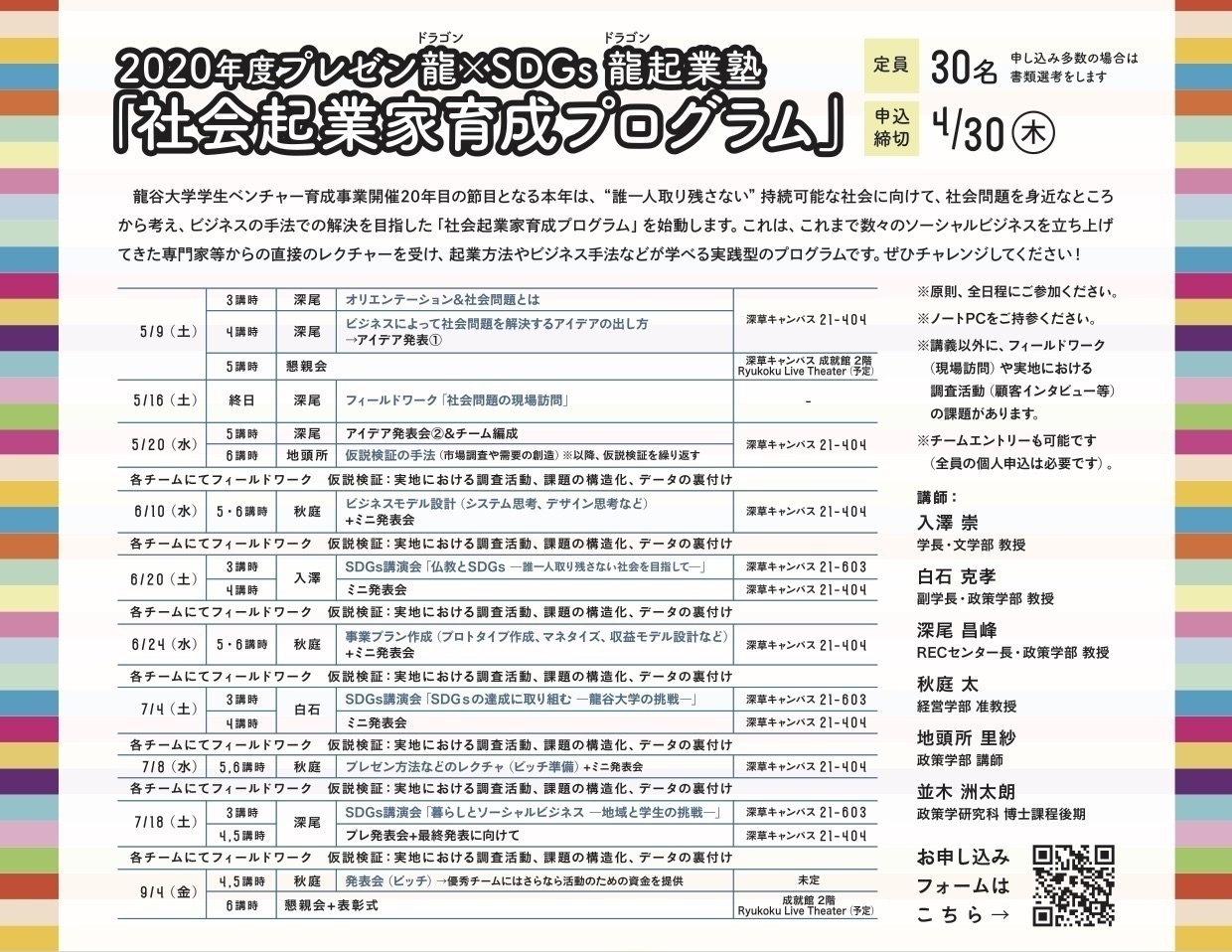
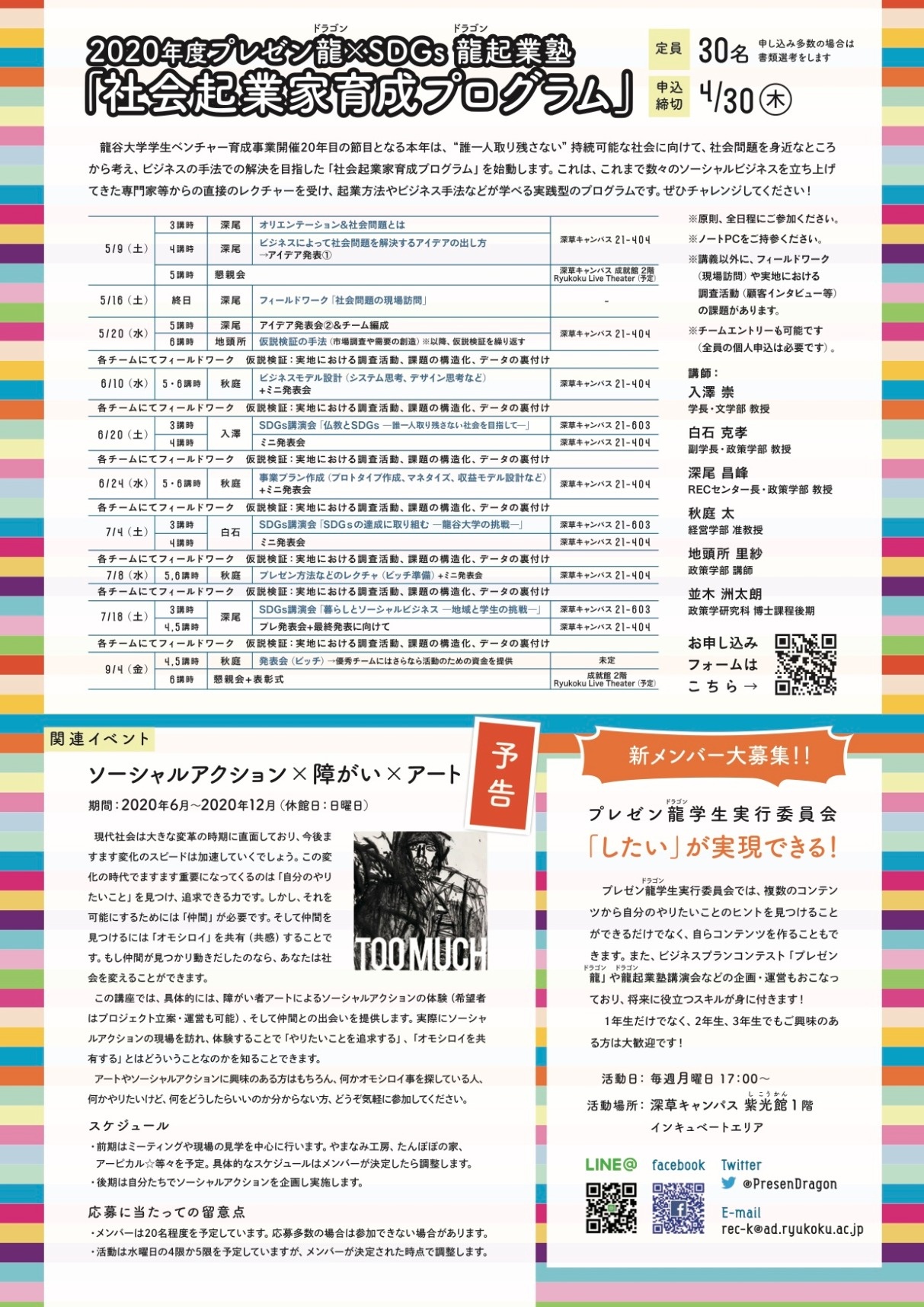
2020年度プレゼン龍×SDGs 龍起業塾「社会起業家育成プログラム」はじめます。
龍谷大学学生ベンチャー育成事業実施20年目の節目となる本年は、“誰一人取り残さない”持続可能な社会に向けて、社会問題を身近なところから考え、ビジネスの手法での解決を目指した「社会起業家育成プログラム」を始動します。これは、これまで数々のソーシャルビジネスを立ち上げてきた専門家等からの直接のレクチャーを受け、起業方法やビジネス手法などが学べる実践型のプログラムです。ぜひチャレンジしてください!
※原則、全日程にご参加ください。
※ノートPCをご持参ください。
※講義以外に、フィールドワーク(現場訪問)、実地における調査活動(顧客インタビュー等)の課題があります。
※チームエントリーも可能です(全員の個人申込は必要です)。

申込先:https://event.rec.seta.ryukoku.ac.jp/venture2020_01/
日程:2020年5月9日(土)から9月4(金)(全10日間)→後期開催(延期)に変更(4/15追記)
場所:龍谷大学 深草キャンパス 21号館404教室ほか→未定(4/15追記)
講師:
 入澤 崇(学長・文学部 教授)
 白石 克孝(副学長・政策学部 教授)
 深尾 昌峰(RECセンター長・政策学部 教授)
 秋庭 太(経営学部 准教授)
 地頭所 里紗(政策学部 講師)
 並木 洲太朗(政策学研究科博士課程後期)
内容:
 5/9(土)13:15-14:45 オリエンテーション&社会問題とは
 5/9(土)15:00-16:30 ビジネスによって社会問題を解決するアイデアの出し方→アイデア発表①
 5/9(土)17:00-18:30 懇親会
 5/16(土)9:00-18:00 フィールドワーク「社会問題の現場訪問」
 5/20(水)16:45-18:15 アイデア発表②&チーム編成
 5/20(水)18:25-19:55 仮説検証の手法(市場調査や需要の創造)
 6/10(水)16:45-19:55 ビジネスモデル設計(システム思考、デザイン思考など)+ミニ発表会
 6/20(土)13:30-15:00 SDGs講演会「仏教とSDGs-誰一人取り残さない社会を目指して-」
 6/20(土)15:30-16:30 ミニ発表会
 6/24(水)16:45-19:55 事業プラン作成(プロトタイプ作成、マネタイズ、収益モデル設計など)+ミニ発表会
 7/4(土)13:30-15:00 SDGs講演会「SDGsの達成に取り組む-龍谷大学の挑戦-」
 7/4(土)15:30-16:30 ミニ発表会
 7/8(水)16:45-19:55 プレゼン方法などのレクチャ(ピッチ準備)+ミニ発表会
 7/18(土)13:30-15:00 SDGs講演会「暮らしとソーシャルビジネス-地域と学生の挑戦-」
 7/18(土)15:30-18:30 プレ発表会+最終発表に向けて
 9/4(金)15:00-18:00 発表会(ピッチ)→優秀チームにはさらなら活動のための資金を提供
 9/4(金)18:30-20:00 懇親会+表彰式

<お問い合わせ先>
龍谷大学 龍谷エクステンションセンター(REC)
電話 075-645-2098
E-Mail rec-k@ad.ryukoku.ac.jp 担当 水野

申込先:https://event.rec.seta.ryukoku.ac.jp/venture2020_01/

★注意★
本プログラムは、5/9(土)を第1回目の講義(対面式授業)で予定しておりますが、新型コロナウイルスによる今後の情勢によっては、対面授業ではなく、オンライン授業での実施となる可能性(後期開催(延期)に変更 4/15追記)があることを、あらかじめご了承ください。
★注意★

【社会起業家とは】
社会起業家(しゃかいきぎょうか)は、社会変革(英: Social change)の担い手(チェンジメーカー)として、社会の課題を、事業により解決する人のことを言う。社会問題を認識し、社会変革を起こすために、ベンチャー企業を創造、組織化、経営するために、起業という手法を採るものを指す。またそのように起業された事業体を社会的企業という。
出典: フリー百科事典『ウィキペディア(Wikipedia)』

【ソーシャルビジネスとは】
ビジネスを手段として、貧困や差別問題、地方活性、子育て・高齢者・障がい者の支援、環境保護などさまざまな社会問題の解決しようとする取り組みのこと。
なお、経済産業省のソーシャルビジネス研究会報告書(2008年4月)では以下のように定義されている。
出典:ソーシャルビジネス研究会報告書
--
ソーシャルビジネスは、社会的課題を解決するために、ビジネスの手法を用いて取り組むものであり、そのためには新しいビジネス手法を考案し、適用していくことが必要である。このため、本研究会では、以下の①~③の要件を満たす主体を、ソーシャルビジネスとして捉える。なお、組織形態としては、株式会社、NPO 法人、中間法人など、多様なスタイルが想定される。
①社会性:現在解決が求められる社会的課題に取り組むことを事業活動のミッションとすること。
※解決すべき社会的課題の内容により、活動範囲に地域性が生じる場合もあるが、地域性の有無はソーシャルビジネスの基準には含めない。
②事業性:①のミッションをビジネスの形に表し、継続的に事業活動を進めていくこと。
③革新性:新しい社会的商品・サービスや、それを提供するための仕組みを開発したり、活用したりすること。また、その活動が社会に広がることを通して、新しい社会的価値を創出すること。
--
申込先:https://event.rec.seta.ryukoku.ac.jp/venture2020_01/


本日(4月3日)、13時から15時まで深草学舎和顔館地下1F・B105教室で「文学部履修相談会」を開催します。本日開催の相談会に、以下の学科・専攻の教員も出席して相談に応じます。
学科・専攻の学びに関して疑問に感じる点等がありましたら、お越しください。
 
  ・真宗学科 ・仏教学科 ・哲学科哲学専攻  
  ・歴史学科東洋史学専攻 ・歴史学科文化遺産学専攻  ・日本語日本文学科
  ・英語英米文学科

※来学にあたっては、新型コロナウィルス感染拡大防止の観点から、マスクの着用をお願いします。マスクが無い場合は、ハンカチやタオルで口を押えるなど、咳エチケット・飛沫飛散防止にご協力ください。


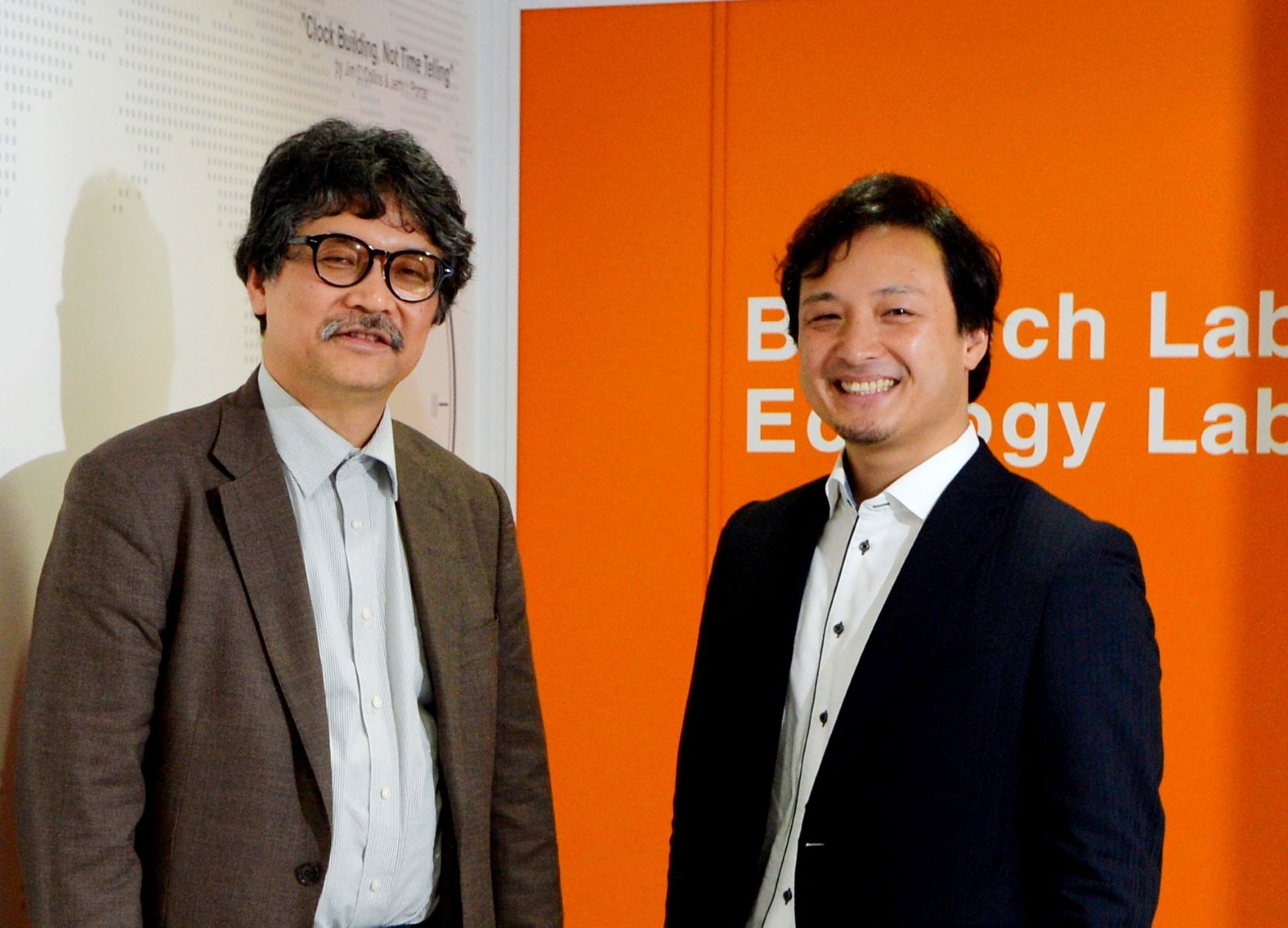
1.「先端(エッジ)を目指せ」をテーマに木村睦教授が対談


4月の先端理工学部開設を前に、理工学部木村睦教授と、ユーグレナなど多数のベンチャー企業の立ち上げにも携わってきた農学博士でもある株式会社リバネス代表取締役 グループCEOの丸幸弘氏が対談しました。

対談のポイントは「先端(エッジ)」。
研究に限らず、新しく何かを見つけたり得たりするためには何が大切なのかを感じていただける、そんな示唆のある対談となりました。

以下のURLより該当の記事をご覧いただけます。是非、ご覧ください。

https://newspicks.com/news/4749550/


2.コップ1杯の水から山中裕樹准教授が生態系を読み解く


理工学部 山中裕樹准教授に「環境DNA」について語っていただきました。

海や川で汲み上げた水から、そこにどんな生物がいるかを調べる技術「環境DNA分析」の研究が進み、生態調査への利用が広がっています。
そんな「環境DNA分析」の第一人者であり、2018年に設立された「環境DNA学会」立ち上げ人の一人でもある山中准教授が、語った内容とは・・・。

以下のURLより該当の記事をご覧いただけます。是非、ご覧ください。

https://newspicks.com/news/4683978/


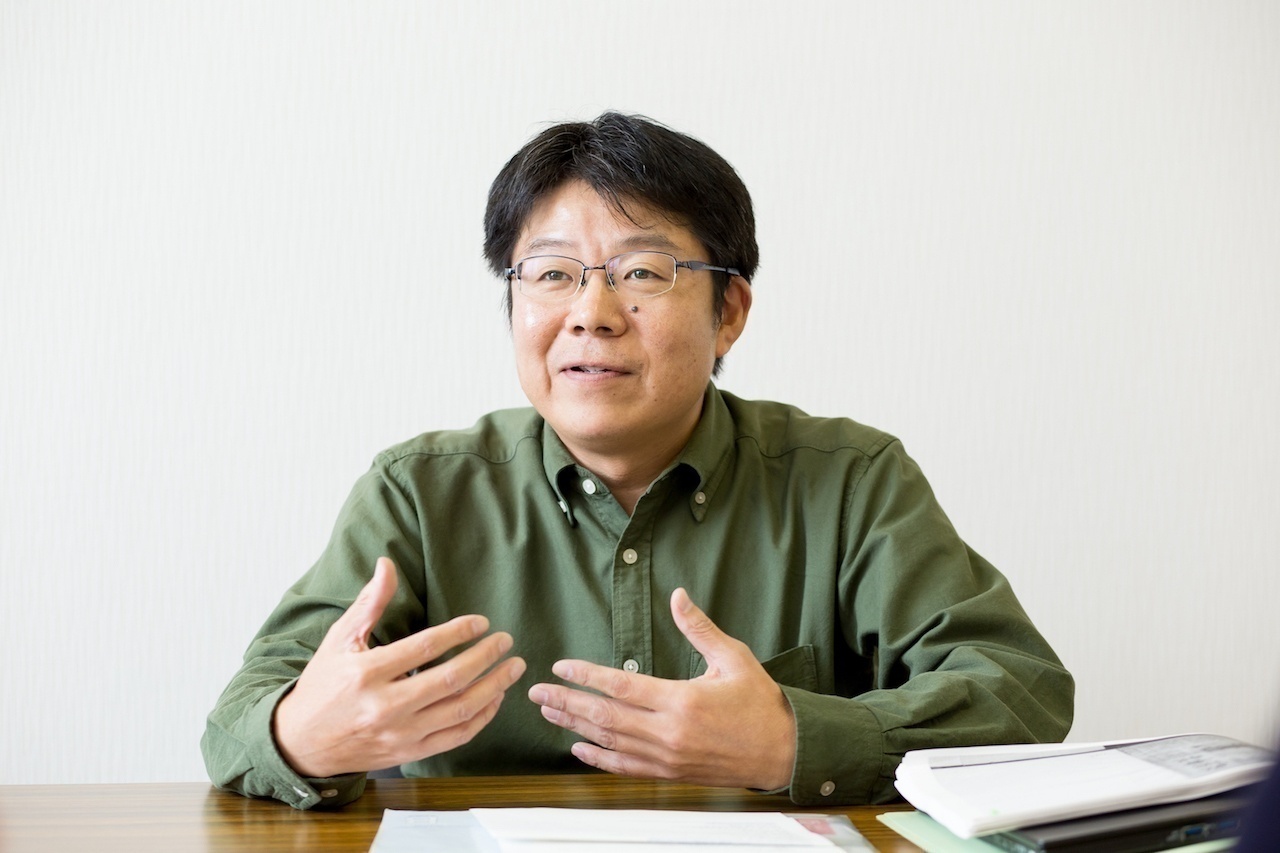
Prof. Makoto NAKANE

Prof. Makoto NAKANE


Prof. Makoto NAKANE
Professor, Department of Childhood Care and Education, Ryukoku University Junior College; Director, Child Care and Delinquency Unit, Criminology Research Center
[Profile]:
Research into social welfare studies. Research into child and family welfare and education, community welfare, and the author of articles that discuss childcare based on the history of welfare education in Taisho Era Japan.

Considering Childcare in terms of Delinquency Prevention
For the last 10 years, my research has been dedicated to childcare. Although social welfare studies often covers child and family welfare as social care, it currently seldom covers childcare. Instead of looking at conditions in nursery schools, kindergartens, and day nurseries within certified centers for early childhood education and care, I focus on what kinds of families and communities children spend time in after they leave organized care, and study childcare from the viewpoint of community welfare.
The provision of more day nurseries to look after the children of working mothers has recently become a pressing issue that is not simply related to the number of day nurseries. Unlike parents, day nurseries must address differences in child growth and development associated with varied family circumstances. However, this topic is missing from our discussion, which I see as a problem.
Let us assume differences and inadequacies in how parents raise children and address their child’s education affect development, prevent children from building relationships based on mutual trust, and turn children to delinquency. In such cases, the family and social environment around the child present an obstacle unsurmountable by the efforts of the child. Although the Criminology Research Center and Ryukoku Corrections and Rehabilitation Center place substantial value on rehabilitation and support for social reintegration, I believe that prevention before the onset of delinquency or crime is also an important issue. As a first step in researching crime and delinquency prevention, my studies focus on early childhood and through historical inquiry intend to determine what kind of childcare we need.

Childcare Workers of the Past who Observed the Family through their Children
I am currently studying historical materials of the Japan Educational Mutual Aid of Welfare Foundation, which established 9 day nurseries in Osaka City from 1913 onwards. Similar to the present day, in Taisho Era Japan many children were sent to a day nursery while both parents worked to provide for the family. The Japan Educational Mutual Aid of Welfare Foundation not only looked after children but also provided parents with information on child-rearing, such as instructing parents not to pay children for errands but instead save the money for their education. Specifically, a family meeting was held at each day nursery once every two months to address a wide range of family concerns including child-rearing and health, and also encourage correction and improvement of poor habits in the family. In other words, childcare workers used to observe the family as a whole through their children and provide lifestyle guidance.
In Kobe, a day nursery for soldiers’ children was established (1904) for mothers forced to work after their husbands were called to fight in the Russo-Japanese War, and after the war ended these childcare businesses continued. The prevailing view at the time was that fatherless households would lead to childhood delinquency since child-rearing tends to go neglected due to time constraints, and day nurseries and child care centers were also needed in terms of delinquency prevention. When there was inadequate instruction in the home due to working parents or other circumstances, supplemental childcare was provided through day nurseries. As such, I am studying the function and role of childcare businesses in delinquency prevention by carefully comparing and contrasting the circumstances of education in the present day and past eras.

Insights from Economics: Early Childhood Education is Important
Economics has revealed the importance of education in early childhood. James Heckman, an American economist who won the Nobel Prize in Economics, argued that education in early childhood is important for improving the quality of life and economic circumstances of children raised in disadvantaged families. His research mainly used experimental results from the Perry Preschool Project conducted in 1960s America. Specifically, children aged 3 to 4 were randomly selected from economically disadvantaged families and followed until 40 years-of-age. Observations showed a higher level of education and better results on academic achievement tests among children who received pre-school education compared to those who received none, and also a lower rate of dependency on welfare and arrest among children who received pre-school education.
Therefore, pre-school education improves non-cognitive skills such as motivation, fortitude, and concertedness, which are signs of social and emotional capacity, and this effect continues into adulthood. This finding showed that childcare and childcare workers not only play a role in child development but also have a positive effect both economically and socially. Based on this research, I also hope to investigate the state of social intervention during early childhood and how to institute such social intervention.

a

龍谷大学 You, Unlimitedの記事一覧

お電話でのお問い合せはこちら

電話番号: