
Need Help?

新着情報

新着情報の一覧

製品情報

ここにメッセージを入れることができます。

龍谷大学 犯罪学研究センター(CrimRC)は、下記のウェビナーを、来る8月23日(月)に共催します。
【>>お申込みページ】
※お申し込み期限:8月23日(月)18:00まで


シリーズ第8回
「大麻取締法という人権侵害をいつまで続けるのか?」

日時:2021年8月23日(月)18:00-20:00
形式:Zoom/定員:約200名
報告者:高樹 沙耶 さん

【報告概要】
大麻取締法という人権侵害をいつまで続けるのか︖
女優業の傍ら環境活動に取り組む様になり、日本における持続可能なライフスタイルとはどんなものなのか?
いろいろ調べていくうちに大麻草というワードに出会った。石油産業が日本に入ってくる前には私たちの生活に欠かせない生活必需品であった大麻について、昭和38年生まれの私は大麻は危険な麻薬という認識を刷り込まれてきていた。
若い頃も夜の繁華街で見聞きすることはあっても当時は身を滅ぼす危険なものと近づくことは避けていた。30代後半に大麻の真実を知り愕然とした、戦争に負けるということの屈辱を日本人は未だに背負って行かなければならないものなのか?
合法化活動に関わり、大麻の共同所持として逮捕され、しかも見せしめの道具という国家からのハラスメント受けた私としてはこの事を語り続ける権利がある。私自身、 大麻が更年期に差し掛かる体の不具合にとても効果があると実感し 、多くの人に知ってほしいという思いは今も変わらない。
私たちの健康や健やかな暮らしをするためには環境問題にも目を向けなければいけない、そうした面においても大麻草は一役買ってくれることは間違いがない。私の経験からどれほど大麻が私たちの生活クオリティーを上げてくれるのか? 大麻取締法で逮捕された方達の人権と国家の損益について、この辺りを中心にお話しさせていただきます。 

【報告者プロフィール】
高樹 沙耶 さん
キャンピングロッジ虹の豆虹を運営中・元女優
1963 年静岡県生まれ。石垣島のキャンピングロッジ虹の豆オーナー。1983年に主演映画『沙耶のいる透視図』で女優デビュー。近年の代表作に『相棒』等がある。2002年にハワイで行われたフリーダイビングW杯で水深53mの日本新記録を達成。2016年5月、参議院議員選挙に医療大麻の法改正を公約に新党改革より東京都選挙区で出馬するも、落選。 同年10月、大麻取締法違反の疑いで有罪となる著書に『マイ・ブルー・ヘブン』(毎日新聞社)『ホーリープラント聖なる暮らし』(明窓出版)ほか。

主催:龍谷大学 ATA-net研究センター
共催:龍谷大学 犯罪学研究センター(CrimRC)

※Zoomの視聴情報は、「Peatix」お申込み後に届くメール(自動送信)に表示されます。Zoom視聴情報を、他に拡散しないようお願いいたします。
また、申し込み名とZoomの名前を合わせていただくようにお願いいたします。


7月29日(木)付けで、文部科学省から、本学でのワクチン接種を開始できる時期は、8月16日(月)以降になるとの連絡があった旨をお知らせしました。

今般、文部科学省から、龍谷大学におけるワクチン接種(大学拠点接種)は、8月23日(月)の週に接種を開始できるよう調整中である旨の連絡が再度ありました。

今後、厚生労働省から、ワクチン供給等にかかる連絡が順次入る予定です。
ワクチン接種開始日が確定次第、予約方法など詳細を大学ウェブサイトおよびポータルサイトにてお知らせいたします。

大学ウェブサイトおよびポータルサイトの情報を、適宜ご確認くださいますようよろしくお願いします。


2021(令和3)年8月6日
龍谷大学     
龍谷大学短期大学部


7月27日と8月3日、文学研究科の進学ガイダンスをオンラインにて開催いたしました。

8月3日に開催しました動画を、公開いたします。


▽龍谷大学大学院 文学研究科 大学院進学ガイダンス(2021年8月3日開催)


文学研究科長 國下 多美樹 教授


進学ガイダンスでは、國下研究科長の挨拶の後、研究科の概要・入試情報などの説明を行い、その後に、現役の学生による修士課程での大学院生活の紹介を行いました。


文学研究科修士課程臨床心理学専攻2年 水口ゆかりさん


7月27日開催のガイダンスでは、文学研究科修士課程臨床心理学専攻2年の水口ゆかりさんに、学生生活を紹介してもらいました。

▽水口さんの大学院での生活について


8月3日開催のガイダンスでは、文学研究科博士後期課程仏教学専攻2年の萩野翔太さんに、学生生活を紹介してもらいました。

▽萩野さんの大学院での生活について


文学研究科博士後期課程仏教学専攻2年 萩野翔太さん


大学院入学後のイメージを掴んでいただけましたか。 

動画をご覧いただいた方は、恐れ入りますが、以下のアンケートにご協力ください。

▽アンケート


文学研究科の案内誌と入試情報は、こちらからご覧いただけます。

▽文学研究科の案内誌

▽入試情報


The Asian Criminological Society 12th Annual Conference (ACS2020), hosted by Ryukoku University, was held online for four days from June 18 to 21, 2021. The purpose of the conference, the second of its kind to be held in Japan after the 2014 Osaka conference, was to promote the growth of criminology in Asia and Oceania, and to promote academic exchange with advanced regions of criminology such as the United States and Europe.
>> ACS2020 Program https://acs2020.org/program.html
The overall theme of the conference is "Crime and Punishment under Asian Cultures: Tradition and Innovation in Criminology". The aim was to promote understanding of the social systems and culture and measures against crime and delinquency in Japan, which is said to be "the country with the least crime in the world".

The following is a summary of the Closing Plenary Session, which was held live streaming at the conference.

[CL] The paradox of criminology in a ‘safe’ country: The case of Japan – How has Japan maintained a low crime rate?

- Plenary Speaker: Koichi HAMAI (Professor of Criminology, Ryukoku University, Japan)
- Chair: Akiko KOGAWARA (Professor, Faculty of Law, Ryukoku University, Japan)
- Date: 11:00-12:00, 21 June, 2021
- Keywords: Penal Populism, Elderly crime, Juvenile Delinquency, Ritualism, Pandemic, Public Health


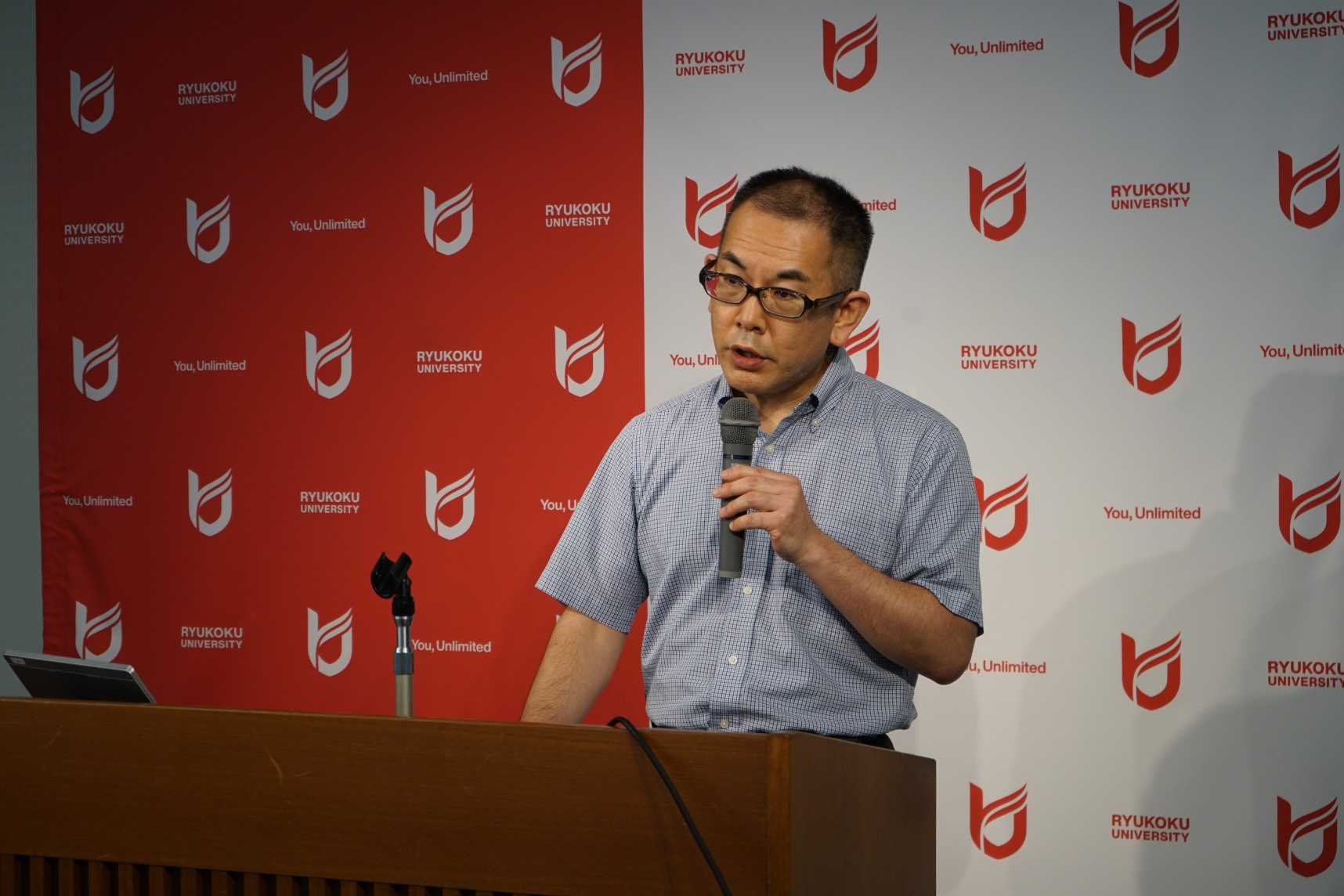
Koichi HAMAI (Professor of Criminology, Ryukoku University, Japan)

Koichi HAMAI (Professor of Criminology, Ryukoku University, Japan)


Abstract
Japan enjoyed its post-war reputation as one of the most crime-free countries. The number of homicides reported in Japan has constantly decreased since 1955, to an all-time low of 895 in 2016 (950 in 2019). According to the 2019 UN Global Study on Homicide, the Japanese homicide rate in 2017 was around 0.2 per 100,000 population – which was lower than in nearly any other advanced democracy. Japan has effectively controlled illegal drug markets. The lifetime experience rate of illegal drugs is also very low in Japan, with 1.2% reporting cannabis use.
Several explanations have been postulated for why Japan has maintained a very low crime rate. These include, for example, that Japan is a relatively homogeneous society that has few immigrants, or that it has a good criminal justice system. At the 14th UN Congress on Crime Prevention and Criminal Justice, one of the Japanese delegates claimed that the Japanese people “have developed trust and confidence that their laws are formulated through a legitimate process and are applied in a fair manner, thereby fostering a culture of lawfulness rooted in society”. Is this claim valid and the reason for the low crime rate? A social psychologist, Toshio Yamagishi, claims that social order in Japan is maintained by mutual monitoring and threat of exclusion, rather than enforcement of universal rules of conduct (laws).
John Braithwaite once claimed that Japan’s success in maintaining a low crime rate could be explained by the commitment of the Japanese criminal justice system, and Japanese society in general, to notions of reintegration and reparation. But, has Japanese society really been re-integrative, and has the criminal justice been lenient toward offenders? While the number of crimes has been decreasing, the prison population contains many elderly and handicapped people who have been detained for minor offenses. In 2019, more than 13% of new inmates were above 65 years of age and have no pension to fall back on. According to a recent study by the Ministry of Justice, it was found that 14% of inmates over 60 are suffering from forms of dementia such as Alzheimer’s disease. Moreover, some elderly inmates have tried to return to prison by committing another crime just because they knew that there was no place for them outside the wall. Then, in the last two decades, more than a thousand of them have died in prisons. In Japanese society, people are very intolerant of the behaviors which disturb social and moral order or cause trouble. Therefore, people are afraid of disturbing conformity.
Considering these aspects, I will explore the social mechanisms of the low crime rate in Japan and the future of criminology in the shrinking Japanese criminal justice market.

Presentation Summary:

[Decrease in Crime Recognition and Increase in Crimes by the Elderly]
Japan is said to be one of the safest countries among the developed countries. The number of homicide arrests per 100,000 population is much lower than in other countries, and is decreasing every year. The number of deaths due to violent crime is also decreasing. On the other hand, crimes committed by the elderly are on the rise. Even though the total number of inmates is decreasing, the number of elderly people being held in penal institutions for minor crimes such as shoplifting is increasing. It may be said that inmates in Japan are becoming welfare facilities. Many elderly inmates suffer from dementia, and the number of elderlies who die in prison is increasing. There are also inmates who reoffend and re-enter prison because they have no place in society. Prisons have become a safety net for the elderly.

[So-called "Peer Pressure"]
Japanese society is punitive towards those who disrupt order and cause trouble. Therefore, people are extremely afraid of causing trouble to others. In Japan, when someone helps you or takes care of you, many people say "I am sorry" instead of "Thank You". This is the same reason why people are hesitant to apply for welfare. It may be said that social order is maintained by mutual surveillance within a group, or fear of exclusion from a group. In a society of mutual surveillance, the fear of exclusion and isolation can discourage crime. However, once a person has become isolated from society, or has crossed the line into crime, he or she will be viewed harshly. As the number of isolated elderly people is increasing, the strict scrutiny of each other is leading them to commit crimes. For such elderly people, prison may be the only place where they do not have to bother others and do not have to worry about being subjected to new stigmas.

[Juvenile Delinquency in Japan]
Recently, the economic situation for juveniles in Japan has been worsening. The number of juveniles living in poverty has been increasing. However, the number of juvenile delinquents is decreasing, a paradoxical phenomenon. This phenomenon can be explained by Robert Merton's theory of anomie. In societies characterized by "innovation" such as the U.S., the predominant value choice and behavioral pattern is that it is okay to have some problems with how the goal is achieved. Japan, on the other hand, is a society where "ritualism" prevails, where alignment and synchronization are more important than devaluing goals. Furthermore, there is even a tendency among young people these days toward "retreatism," which is the abandonment of achieving goals and conforming to rules in the first place. So we are beginning to see juveniles who are not even motivated to delinquency. An international survey on youth attitudes conducted by the Cabinet Office also shows that Japanese youths do not have high hopes for their future. Without big dreams, there will be no tension due to dissatisfaction, which can lead to crime.

[Pandemics and Criminology]
This year's Asian Criminological Society 12th Annual Conference was held in the midst of a pandemic, the global outbreak of COVID-19. As a member of the academic division, I asked the invited speakers to mention the pandemic.

Prof. David Garland (Sociology of Law, New York University, U.S.) argued that criminology should learn from the role that public health (experts) have played in this pandemic. He also argued that it is important to take a public criminology perspective on how to communicate expert knowledge to citizens and policymakers.
In a pandemic, a person is infected with a virus, which is then transmitted by the infected person to other people. An important mission for public health is to communicate real threats to people scientifically. In other words, the key message is to accurately convey that the target to be fought (evil) is the virus, not the person carrying it.

The same goes for criminology. Penal Populism argues that it is the individual criminals who are the real threats to us so that isolating (incapacitating), intimidating, and monitoring them will be the answers to solve the problem.
The mission of criminology, like that of public health, is to inform the public, based on scientific knowledge, about the mechanisms that make people commit a crime and the mechanisms that help people recover from crime. As with infectious diseases, any person can be infected with the virus of crime. And anyone can recover from that infection. It is important to convey this fact properly to the public.


Prof. Shadd Maruna (School of Social Sciences, Education and Social Work, Queen's University, UK) showed how to recover from the infection of crime. Prof. Lorraine Mazerolle (School of Criminology, University of Queensland, Australia) pointed out that reliable criminal justice is the key to solving the problem. Like Prof. Garland, Prof. John Pratt (Institute of Criminology, Victoria University of Wellington, New Zealand) pointed out that criminology needs to learn from public health successes and strive to communicate the right knowledge to the public, which will reduce punitive populism and pave the way for the future of criminology. He pointed out that criminology needs to learn from public health success stories and try to communicate the right knowledge to the public.

Japanese society is basically very punitive towards people who cross a certain line and cause trouble or cause trouble to others. And it is a society where mutual surveillance functions to prevent people from crossing certain lines. Even in the midst of a pandemic, the Japanese government has not taken strong measures such as lockdowns like European countries have. And trust in the government is not high. However, we have been able to maintain a relatively low infection rate, probably because of the functioning of these characteristics of our society.

[Paradigm of Criminal Policy]
Let me tell you about the case in Japan. At the request of a local government, I took on the role of an advisor for rehabilitation. I advised them, based on empirical data, that it is important to support reintegration into the community to prevent recidivism. I explained, based on evidence, that offenders are not enemies who should be excluded from society, but are born into society and return to it, just like us. Criminal policy in Japan should shift from a punitive paradigm to a reintegration paradigm. Such efforts are beginning to be made at the municipal level, and the "Nara City Regulation on Rehabilitation Support," in which I was involved, is one example.


[Conclusion Message]
In Buddhism, there is the concept of 縁(En), which is the everything that supports us. Without 縁, we would not be able to live on our own. If criminology can convince people that those who have committed crimes are also human beings just like us, and that they can be recovered by regaining their 縁, Japan may be able to change from a society of mutual surveillance to a society of mutual trust. This may be the path for which criminology in Japan should aim.


After the plenary lecture that summarized the conference, there was a discussion on why elderly people commit crimes in Japan and why they tend to be isolated. The answer lies in the isolation of the elderly. Elderly people who live alone cannot live without the help of those around them. However, many elderly people stay indoors and isolate themselves because they feel that they should not bother others for help.


The Asian Criminological Society 12th Annual Conference (ACS2020), hosted by Ryukoku University, was held online for four days from June 18 to 21, 2021. The purpose of the conference, the second of its kind to be held in Japan after the 2014 Osaka conference, was to promote the growth of criminology in Asia and Oceania, and to promote academic exchange with advanced regions of criminology such as the United States and Europe.
>> ACS2020 Program https://acs2020.org/program.html
The overall theme of the conference is "Crime and Punishment under Asian Cultures: Tradition and Innovation in Criminology". The aim was to promote understanding of the social systems and culture and measures against crime and delinquency in Japan, which is said to be "the country with the least crime in the world".

The following is a summary of the Plenary Session with Q&A Session, which was held live streaming at the conference.

[PL06] Spiritual and Positive Criminology - contemporary applications of established knowledge

- Plenary Speaker: Natti Ronel (Professor, Faculty of Social Sciences, Bar-Ilan University, Israel)
- Chair: Hiroshi Tsutomi (Professor, the school of International Relations, University of Shizuoka, Japan)
- Date: 16:30-18:00, 20 June, 2021
- Keywords: Positive Criminology, Spiritual Criminology, Spirituality


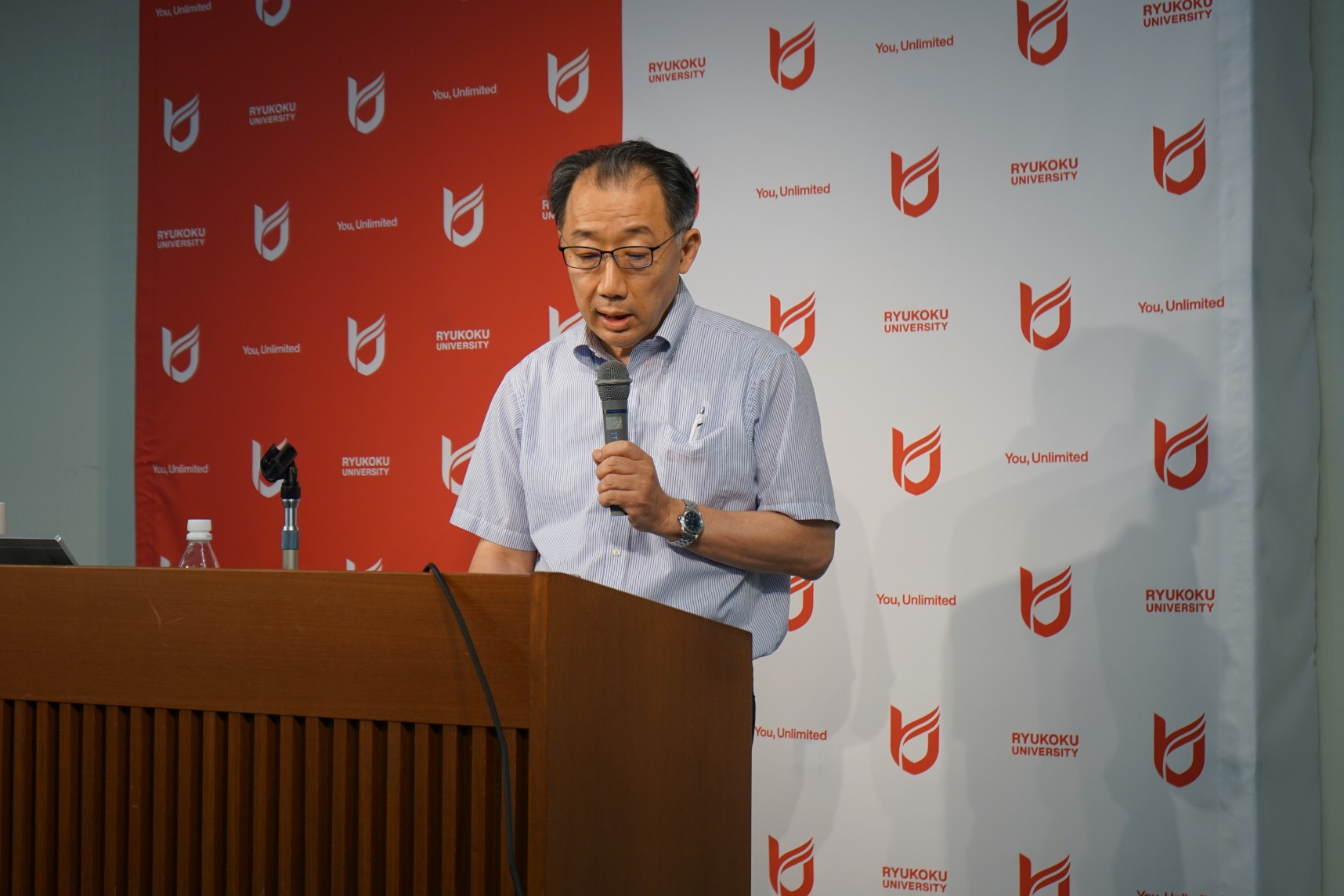
Natti Ronel (Professor, Faculty of Social Sciences, Bar-Ilan University, Israel)

Natti Ronel (Professor, Faculty of Social Sciences, Bar-Ilan University, Israel)

Abstract
What embodies the distilled essence of criminality? Positive criminology typically indicates any form of criminality to inevitably involve a process of separation and disintegration, being revealed in three related levels: Interpersonal, intrapersonal, and spiritual. Consequently, positive criminology continuously emphasizes successful integration as a leading means for crime desistance and offender rehabilitation. Spiritual criminology adds on it conscious attempt to bring together a universal essence of spiritual integrative knowledge which was intensively developed in Asian various cultures (e.g., vital religions). While diverse cultures might traditionally maintain different outlooks on spirituality, they all share a commonality that exists at their root of spirituality, which is also adopted by spiritual criminology. Accordingly, any form of criminality typically entails a marked degree of self-centeredness of those involved. Self-centeredness relates to an individual’s over-occupation with their needs, risks, desires, and expectations. It indicates the individual's personal level of ignorance, the degree of self-identification with one’s ego, or the individual's distance from God. At times, it might be projected into a certain group of belonging, to become group self-centeredness. Self-centeredness refers to a fundamental separation on the spiritual level, usually expressed also and influenced by the individual's intrapersonal and interpersonal levels of separation. Crime desistance and offender rehabilitation can be soundly achieved by a growing decrease of self-centeredness, in addition to employing integrating means. This might be exemplified by the Covid-19 pandemic and the worldwide official response of the authorities, which unfortunately increased social distance and personal fears. Consequently, it increased self-centeredness, which resulted in an increase of related phenomena such as substance abuse and addiction, domestic violence, and suicide. Both positive and spiritual criminology call for reversing this process by any attempt to increase faith and hope and to allow social opportunities for growing integration. Such means are estimated to have positive public health outcomes.

Summary of the Q&A Session

Question 1: What is the relationship between spiritual criminology and positive criminology?
Answer 1: Spiritual criminology goes beyond the usual distinctions of positive and negative, good and evil.
Question 2: Can your report today be applied to secular situations?
Answer 2: Today, I talked about spirituality, not about religion. Both secular and religious people do good and share similar experiences.

Question 3: If being a volunteer is so important, what is the significance of being an expert?
Answer 3: When you are an expert, you are firstly a volunteer who unconditionally wants to help others, beyond which you have the added value of being an expert.

Question 4: I would like to learn more about spiritual criminology and its relationship to religion. I am interested in religion as a political issue. What forms of religion and spirituality are beneficial to society? Who decides this and how? If there are inmates in prison who follow an antisocial religion, should they be allowed to practice their beliefs?
Answer 4: Religion is the act of praying and performing rituals, while spirituality is what is in the mind of the person performing the act. The separation is a shift from self-centeredness to other-centeredness and God-centeredness. Religious groups and gangs are self-centered if they are separated from society. It is difficult to determine what is self-centered and what is not. Rather, we can only say that we hope to grow out of that self-centeredness.

Question 5: I have been doing research on ”Aum Shinrikyo". I have met many prison chaplains, but none of them belong to Aum Shinrikyo. To define a religion as good or bad is to give the government the authority to define which religions are good or bad. I think there is a common interest in this point.
Answer 5: Any power has the potential for abuse. Crime is an abuse of power, and prisons are places where power is abused. Massacres have been committed in the name of religion. This is why spiritual criminology tries to provide ideas that go beyond the distinction between good and evil and focus on the battle against self-centeredness.

Question 6: The concept of self-centeredness is central to the argument, but why is suicide, in which the self is killed, a manifestation of self-centeredness?
Answer 6: Self-centeredness refers to a situation in which one is occupied with oneself. Suicide or self-injury is a kind of proof that one can control one's life. Suicide means to end the pain, which is a sign of self-centeredness.

Question 7: Could you provide us with more information about your clinical practice?
Answer 7: I have published a book on psychotherapy called "Twelve Tools," which is similar to the Twelve Steps. I treat a wide variety of people, from rich to poor. Some are drug addicts, some are sex addicts, some are violent, some are sexually violent. Some of my patients are Orthodox Jews. They are very religious, but many of them are sex addicts. Sex is legal, so they are not sex offenders, but there is no spirituality in this case. In the initial interview, I ask about their belief systems and religion. This is a good starting point. Sexually addicted people are constantly thinking about sex and are caught up in it. This treatment is difficult but possible.
Question 8: In recent years measures of the Ministry of Justice and the Ministry of Health have led to reversals. Addiction has become the focus of treatment and correction. What can be done to overcome this?

Answer 8: The government has nothing inherently to do with Alcoholics Anonymous (AA) or Narcotics Anonymous (NA). I teach a 12-step program at university and send my students to AA and NA programs as part of their education. In Israel, the government has provided facilities to help NA, and NA has been established in various cities. I would like to see more cooperation from the groups.

Question 9: In Japan, the elderly are isolated from society and many of them are in prison for committing crimes. How can we solve this problem?
Answer 9: If we build halfway houses, we will end up building another prison. Instead, it is important to rent a house locally and create a community, which is cheaper for the government. AA, NA, etc. can also be used in such communities to bridge the gap between society and those on the periphery of society.

Question 10: I want to know about the philosophy behind your spiritual criminology.
Answer 10: My source is the 12 steps, and I have traveled in search of spirituality within me. I've been to Japan, I've done Zen, I've been to India. The root of their commonality is something greater than the self.

Recorded by Hiroshi Tsutomi


a

龍谷大学 You, Unlimitedの記事一覧

お電話でのお問い合せはこちら

電話番号: