龍谷大学 You, Unlimited

Need Help?

  • Admission arrow_forward_ios
  • Faculties arrow_forward_ios
  • About arrow_forward_ios
  • Campus Life arrow_forward_ios

Vol.14 May 2026
Having too much confidence on evidence is dangerous. The importance of public sentiment in environmental protection

Overview

Quantitative means to clearly visualize complex phenomena can be a powerful tool for making effective decisions. But when it comes to solving contemporary social issues, we tend to unconsciously seek a single correct answer in the objective figures presented by experts—so-called ‘evidence’—and entrust our decision-making to them. Professor Eri Kanamori of Ryukoku University uses an accounting perspective to research the costs of environmental destruction and nuclear accidents. He expresses alarm at the prevailing social tendency to place excessive faith in such evidence and to leave matters entirely in the hands of experts. According to Professor Kanamori, the figures produced by experts do not capture the full picture when it comes to the intricately intertwined web of environmental issues. There are undoubtedly hidden risks that slip through the cracks of the underlying assumptions. In this article we explore the limitations of evidence, drawing on insights from Professor Kanamori’s accounting perspective. Through his research and practice, we examine the importance of the ‘common sense’ we must reclaim in order to challenge expert logic as well as the ‘environmental philosophy’ that lies beyond it.

Opinions

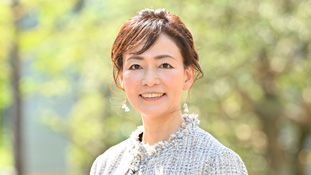
Supervisor: Eri Kanamori / *(Soon to be appointed as Professor) Faculty of Environmental Studies and Sustainability, Ryukoku University
*Scheduled to be established in April 2027 (Application documents submitted to the Ministry of Education, Culture, Sports, Science and Technology in April 2026).The plan is provisional and subject to change.

1. What cannot be calculated is treated as ‘zero’: the limits of evidence demonstrated by accounting

The figures that form the basis for national energy policy and other matters are calculated by experts.However, Professor Kanamori points out that there are structural limitations in the way these figures are compiled. A prime example is the calculation of the costs of nuclear power generation. ”When formulating energy policy, the government estimates and compares the costs of various power generation methods. However, the cost of nuclear power is particularly difficult to estimate. This is because it is said to take 100,000 years for waste such as spent nuclear fuel to become harmless.” So, how are the experts responding? “Under the rules, anything that cannot be reasonably estimated is excluded from the calculation. As a result, we’re faced with the paradox that, on paper, the cost of nuclear power is calculated to be lower than it is.” The fact that costs are deemed to be zero because they cannot be calculated rationally doesn’t mean that there is no risk. Rather, it means that uncertainties beyond human imagination have been excluded from the framework of the calculation. We must question the assumption that figures calculated by experts are therefore correct, and recognize the limitations of quantification.

2. The limits of science and technology and the dangers of relying solely on experts

There is a widespread belief in Japanese society that one can rest assured if matters are left to experts. However, Professor Kanamori warns against this kind of complacency.“ Not only are there limits to the figures we calculate, but there are also limits to the people who handle them. In reality, we may fall prey to the normalcy bias which leads us to overlook inconvenient data. Our judgements may also be influenced by specific vested interests or political pressure.” It is important to build social systems based on expert knowledge. That is precisely why it poses a significant risk to society if the evidence on which such decisions are based is deliberately manipulated or presented without admitting its uncertainties. “If citizens rely too heavily on limited specialist knowledge and stop thinking for themselves, decision-making in society becomes a closed-door affair and loses its transparency.” What is important is to not accept the evidence presented at face value. There is a need to foster an environment in which citizens themselves maintain a healthy skepticism and keep a watchful eye on policies and evidence.

3. Listening to our simple sense of unease: the personal involvement that drives society

Professor Kanamori argues that the simple sense of unease we intuitively feel—the thought that something isn’t quite right—can sometimes serve as a tool for getting to the heart of the matter. “Looking at examples from overseas, there are numerous cases where citizens facing health problems caused by environmental pollution have studied medical and academic literature themselves and pressed the government and companies for solutions. They stood up as stakeholders, engaged in discussions with experts on an equal footing, and brought about a change in society.” It is important to take a personal interest in the issues affecting our daily lives and to express our views as citizens. “It is entirely possible to acquire the specialist knowledge needed to drive social change by studying it only when the need arises,” the professor emphasizes. There is no need to tackle major issues that transcend national borders right from the start. The first step is to gain experience through activities within your immediate sphere—such as local communities or your immediate surroundings—that you can relate to personally. This experience is accumulated by not overlooking feelings of unease and consistently speaking out as those directly affected. In so doing, it gradually transforms into a force capable of driving social change.

4. Cultivating an imagination for sustainability through relative thinking

In social decision-making, it’s unavoidable that there will be rationalization based on cost calculations. On the other hand, in the fields of life and environmental protection, there exists a value—that of leaving no one behind—which cannot be fully measured in numerical terms. “For example, the only way to reduce the number of road traffic fatalities to zero is to ban cars altogether. Society as we know it functions by accepting a certain degree of risk. However, life is by its very nature something that we cannot cost-calculate. It is extremely dangerous to overlook that premise and allow only rational judgements to prevail,” says Professor Kanamori. To protect the things that cannot be quantified, we need a philosophy rooted in individual intuition and ways of life. This is the very opposite of universal expertise where the same result is obtained no matter who performs the calculation. Evidence-based macro-level policy debates, and micro-level expressions of emotion and belief rooted in personal philosophy are, by their very nature, incompatible. Therefore they will never fully converge. That is precisely why we need to understand the limitations and nature of both in relative terms. We cannot entrust society solely to the logic of experts. Rather, we realize a sustainable future by everyone—as active participants in society—continuously asking themselves “how do I want to live?” and “what do I want to cherish and protect?”

General Editorial Supervision

Eri Kanamori
/ *(Soon to be appointed as Professor) Faculty of Environmental Studies and Sustainability, Ryukoku University
*Scheduled to be established in April 2027(Application documents submitted to the Ministry of Education, Culture, Sports, Science and Technology in April 2026. The plan is provisional and subject to change).

Specializes in accounting/environmental and social systems. Began researching nuclear power plant accounting following the nuclear accident in 2011. Continued research into the nature of a society in which expert knowledge takes precedence over public sentiment. In particular, how accounting expertise has underestimated the costs of nuclear power and provided evidence for nuclear policy.

Supervision: Eri Kanamori

BEiNG

A medium for discussing society and oneself

We examine our rapidly changing world, use a multifaceted perspective to explore and address social issues, and question our own ways of being in the modern age.

Thoughts behind BEiNG

BEiNG is derived from “being”: a way of existence. The center letter “i” is written in lowercase to represent the self (I) existing in the midst of the times, as well as to evoke an exclamation mark, expressing that various surprising realizations and discoveries are hidden in this medium.