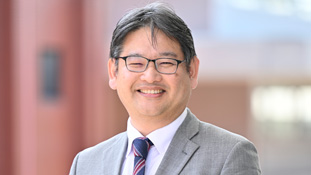
Supervisor Masataka Fukao / Vice President of Ryukoku University/Professor, Faculty of Policy Science, Ryukoku University
1. What are the things that have been devalued because they have fallen outside the market’s criteria for evaluation?
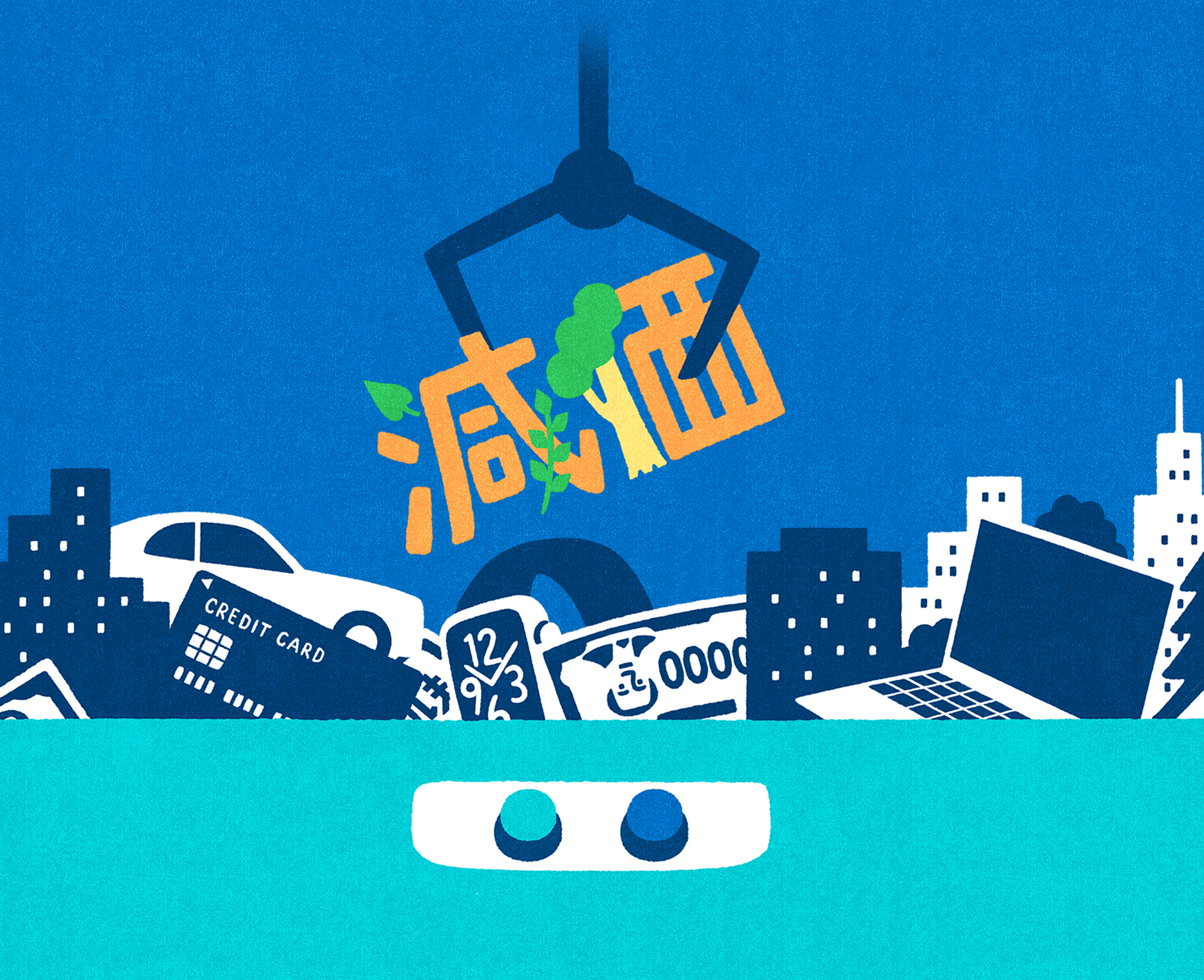
Japan’s period of rapid economic growth saw a significant migration of people to the cities. There was a demand for efficiency and a standardized workforce. In the course of this shift, primary industries such as agriculture, people’s relationship with nature, and ties with neighbors came to be regarded as ‘old-fashioned’ and ‘unprofitable.’ “In rural areas, people have been sending their children off to the city while telling them, ‘Don’t take a job like this. Go and make your mark in Tokyo.’ Hence, existing ways have been devalued over the course of time,” says Professor Fukao.
‘Devalued’ refers to a state in which one’s social and economic standing have been diminished according to the evaluative criteria of a particular era. This is not to suggest that the urbanization and economic growth of that era were entirely wrong. “It was a response to the demands of the times,” says Professor Fukao. “The decisions taken at the time were not necessarily bad ones. The problem lies in the fact that, as a result of continuing to move in a single direction, other values have been undervalued more than necessary.”
The diminished value has not been returned. Some areas have been preserved through farming practices, long-established local businesses, and activities that underpin local culture. In many places, however, the reality is that those carrying on these traditions often internalize social evaluation. “I really do think there’s something amiss with a society where, whilst you are working your heart out, you have to raise your children by telling them, ‘Don’t take over the business because it isn’t profitable’ or ‘Don’t take over the business because it’s too hard.’” says Professor Fukao. Rather than creating wholly new forms of value, what we are witnessing is a movement to rediscover values that have been sustained over time, along with the words and social means needed to connect and communicate them to society.
2. Rather than turning back the clock, to recover and reintegrate these values into modern society
Recovering devalued worth doesn’t necessarily mean abandoning urban life, modern technology, and economic activity in order to return to past practices. A ‘third way’ can be created by combining time-honored wisdom, livelihoods, culture, and relationships with modern technology and business models. That is Professor Fukao’s vision of recovery.
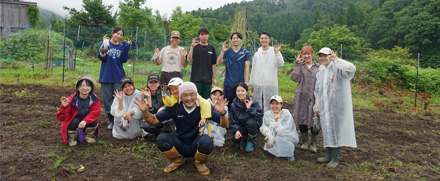
For example, suppose we have the same expression: ‘Rice planting: 10,000 yen.’ “People who know how grueling farming is see the expression one way,” says Professor Fukao. “They see the 10,000 yen as payment for a part-time job planting rice. However, when you show the expression to young parents in urban areas, they see it as paying 10,000 yen so their child can experience rice planting. Even though the words are exactly the same, the way they are interpreted is completely different.” In other words, the same activity can be viewed as having different values—such as work, education, or experience—depending on one’s perspective. Just as e-commerce connects pesticide-free agricultural produce with the consumers who seek it, so the combination of current technology with values that were previously difficult to make economically viable is creating a fertile ground for these ventures to flourish. The goal is not to choose between “the environment or economic growth” or “the market or the non-market,” but to reconnect different kinds of value. This is what it means to restore value in a way that transcends trade-offs.
3. Collective Impact: starting from a shared vision of society
For a value to become embedded in society, it must be acknowledged as a legitimate ‘choice.’ In the field of education, for example, alternative schools are a clear illustration of this. Initially, such schools were viewed as a ‘refuge’ for children who had fallen through the cracks of the compulsory education system. Now they are recognized as a valid choice in their own right. However, it is also true that as long as such practices and research remain ‘in isolation,’ it will take time for them to become established as viable choice.
One approach that is gaining attention as a potential solution is Collective Impact. Here a diverse range of organizations work together towards a single vision. In contrast to traditional models of university-industry collaboration, where academic expertise is applied to meet the particular needs of individual firms, this approach starts with a ‘shared vision of the society we aspire to build’. Universities, corporations, government bodies, financial institutions, and community stakeholders then pool their expertise and resources to pursue that vision. The key lies in how concretely we can define our shared vision of society. Effective action can be taken only when each participant draws up a concrete vision based on their own area of expertise and shares a common vision.
Under a collective impact framework, the role expected of universities differs from that of traditional university-industry partnerships. “Until now, universities have often spoken of ‘giving back’ knowledge to society,” says Professor Fukao. “However, co-creation is not merely about unilaterally giving back knowledge to society. It’s about creating a platform for shared reflection. Its true meaning lies in engaging with diverse stakeholders, crossing boundaries, and continually discovering new values and ways to recover them.”
Not being overly dependent on market-based standards of evaluation, universities are uniquely positioned to serve as hubs of collaboration, initiating dialogue from the question of what kind of society they want to create. “Ryukoku University possesses a founding philosophy rooted in Buddhism and a wealth of wisdom accumulated over thousands of years of reflection on how people should live their lives,” says Professor Fukao. “I believe that it is this wisdom that forms the foundation for co-creation.”
4. Everyone has a stake: small efforts can still make a difference
Even if there is a shared vision of society, values are unlikely to take root just through good intentions. “Everyone knows in their heart that this is a good thing,” says Professor Fukao. “But when it comes to actually negotiating with the banks, the attitude changes to: ‘Let’s make a profit rather than worry about that.’ Unless the lifeblood of investment and financing circulates, we have no choice but to be drawn back into old ways.” What is required is a means of making sustainable those efforts to restore the value of what has been devalued, rather than relying solely on good intentions. Professor Fukao is also devoting considerable efforts to establish financial conditions for coexistence, in order to curb excessive trends whilst promoting alternative choices.
However, even if we do everything we can, social change takes time.“The more daunting the challenge, the more those working hard on it are plagued by a sense of powerlessness,” says Professor Fukao. “Not everyone needs to be a participant. Cheering them on, making a donation, or simply voicing thoughts such as ‘I wish things were like this’ are all forms of participation, and they help to create a tailwind.” Followership is a form of participation that ensures that those who recognize problems and take action are not left to their own devices.
“Realize that you are personally affected by this,” says Professor Fukao. “It’s not about focusing on the negative, but about recognizing your own potential in a positive way. You might think you are powerless, but that’s not the case. Powerlessness is zero. Even a small amount of power is more than zero, and so it’s worth it.” Designs that accommodate small-scale participation are also important for recovering the value that has been eroded, and establishing such approaches is a viable choice within society.

 Access
 Request
 Search